
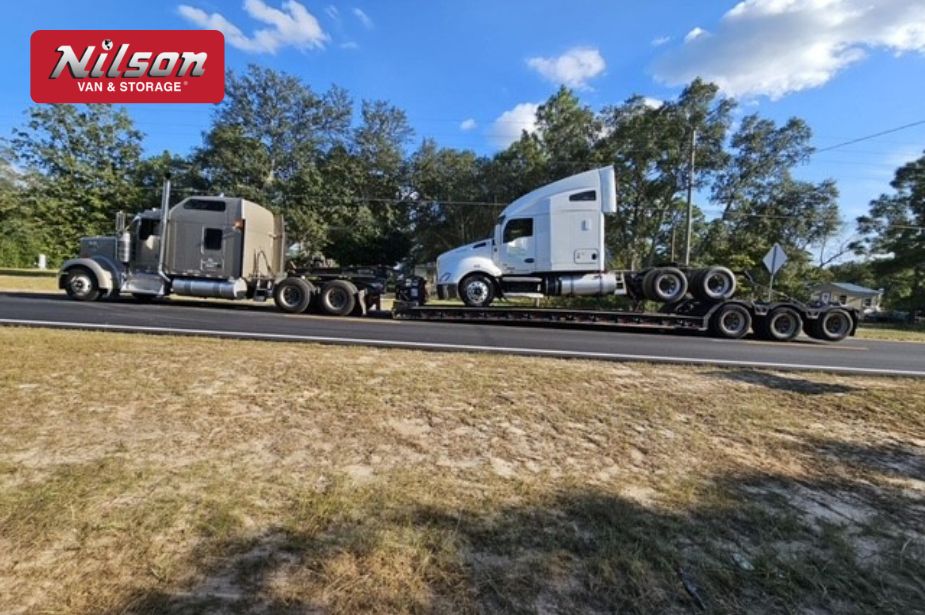
Planning an Industrial Machinery Move? A Guide to Heavy Equipment Transport in Blythewood, SC
Heavy Equipment Transport in Blythewood, SC requires more than putting large machinery on a truck and sending it to a new facility. A factory press, CNC machine, generator, packaging line, or industrial cabinet may require detailed measurements, access planning, specialized handling, and coordination with several people before moving day.
For businesses in Blythewood and throughout Richland County, the move plan must protect production schedules while accounting for building access, equipment condition, loading requirements, destination readiness, and valuation coverage. This guide explains how to organize an industrial machinery move, what information movers need, which logistical problems commonly cause delays, and when Nilson Van and Storage may be a practical partner for the project.
Planning Heavy Equipment Transport in Blythewood, SC
The strongest machinery moves begin with information, not equipment. Before requesting a quote or choosing a moving date, create a working picture of what is being moved, where it is located, where it is going, and how the move affects your operation. That information helps a moving company determine whether the project fits its services and what additional planning may be required.
Start With the Equipment List
Build an itemized inventory rather than describing the project only as “moving factory equipment.” Include the manufacturer, model, approximate weight, dimensions, power requirements, number of pieces, and whether the item is connected to other machinery. Note accessories such as control panels, removable tables, feeders, guarding, tooling, cables, and loose components.
A machine that appears to be one unit may actually need to be separated into several sections. Conversely, disassembling equipment that was designed to move as a complete unit can create unnecessary reassembly work. The equipment owner, plant engineer, manufacturer, or qualified technician should help determine what can be disconnected and what must remain intact.
Photographs are useful, but they should show more than the machine itself. Take pictures of the surrounding floor area, doorways, corridors, loading dock, ramps, overhead obstructions, stairs, elevators, and the proposed destination. Include a person or familiar object for scale when exact measurements are not yet available.
Identify the Move’s Business Constraints
Industrial machinery transport is also a scheduling project. Ask which production lines can be shut down, whether the move must occur during a maintenance window, and what work has to be completed before employees return to the area. A short physical move can still create a long operational interruption if power, compressed air, flooring, network connections, or inspection work are not coordinated.
Some businesses move one machine at a time to keep a production line operating. Others relocate an entire department during a planned closure. The right approach depends on the equipment sequence, the destination’s readiness, and the cost of lost production. A phased move may reduce disruption, but it can require more coordination and temporary staging space.
Create a list of decision-makers early. It may include a plant manager, facilities representative, maintenance supervisor, purchasing contact, information technology specialist, landlord, building manager, and moving coordinator. Giving each person a defined responsibility prevents a common problem: everyone assumes someone else has arranged access, disconnects, permits, or destination preparation.
Read also: Top 5 Ways to Save Money on Heavy Haul Transportation in Texas
Request a Site-Based Evaluation
Large equipment projects are difficult to estimate accurately from a brief phone description. A qualified moving representative may need to review the equipment, access points, floor conditions, loading area, and route between the origin and destination. The evaluation also gives you an opportunity to discuss the sequence of work and the information required for a meaningful quote.
At Nilson Van and Storage, the first useful conversation should focus on the actual scope rather than a generic promise to move anything of any size. Share the inventory, dimensions, photos, origin and destination addresses, preferred timing, and known restrictions. If the project involves work outside the company’s standard scope, ask what needs to be confirmed before scheduling.
For local and intrastate moves in South Carolina, proposals are non-binding. That makes an accurate scope especially important. Review what the proposal includes, what conditions could change the work, and which responsibilities remain with the facility, equipment owner, technicians, or other contractors.
Build a Practical Project Schedule
A usable schedule should include more than a loading date. Break the project into preparation, disconnecting, disassembly, packing or protection, loading, transportation, unloading, placement, reassembly, reconnection, testing, and production restart. Not every move requires every step from the moving company, so identify who owns each task.
Allow room for decisions that cannot be made until equipment is exposed or access is confirmed. For example, a machine may weigh more than its nameplate suggests once tooling and accessories are attached. A doorway may have adequate width but insufficient overhead clearance. A loading dock may be available but unsuitable for the equipment’s weight or dimensions.
When a manufacturing deadline is involved, a plan that includes contingency time is generally more useful than one that depends on perfect conditions. Confirm the final schedule with the origin and destination contacts, then distribute one current version so that changes do not circulate through outdated emails.
What Should You Evaluate Before Moving Industrial Machinery?
The most important pre-move questions concern weight, dimensions, access, condition, and responsibility. These details determine the equipment hauling approach and reveal problems while there is still time to correct them.
Measure the Complete Travel Path
Measure the machine and the route as a connected system. Record the equipment’s height, width, length, weight, center of gravity if known, and any components that extend beyond the main frame. Then measure doors, corridors, turns, dock openings, ramps, ceiling heights, elevators, and the final placement area.
Do not measure only the widest doorway. A machine may fit through an entrance but fail at the first turn inside the building. A tall unit may clear the door but contact lights, sprinklers, beams, or garage-door hardware. A route that works on paper may also be unusable if pallets, stored materials, parked vehicles, or temporary construction block it on moving day.
Mark the intended path and remove avoidable obstacles before the crew arrives. If building drawings are available, provide them for review, but do not rely on drawings alone. Renovations, new partitions, dock changes, and stored inventory can make an older plan inaccurate.
Review Floors, Docks, and Placement Areas
Industrial equipment concentrates weight over a relatively small footprint. The moving team needs to know about floor transitions, pits, drains, uneven surfaces, ramps, dock plates, raised platforms, and areas where the equipment will be positioned. The property owner, engineer, or facilities representative may need to confirm that the route and destination can accommodate the load.
This is also the time to determine whether the machine will sit temporarily in a staging area or go directly to its final position. Temporary placement can add a second handling phase and may require additional space, protection, and scheduling. Direct placement is often more efficient, but only if the destination is ready when the equipment arrives.
If a building has access rules, loading reservations, certificate requirements, restricted hours, or elevator procedures, obtain those requirements in writing. Downtown Columbia projects, multi-tenant industrial parks, and facilities with shared docks can require more coordination than a standalone building in Blythewood.
Read also: How to Keep Your Machinery Safe During Heavy Equipment Transport in North Charleston
Decide Who Handles Disconnection and Reconnection
Moving companies generally need equipment disconnected before handling begins, but the exact responsibility depends on the machinery and project scope. Electrical, gas, hydraulic, pneumatic, water, data, and process connections may require qualified technicians or the equipment manufacturer’s representative.
A clear responsibility matrix should answer four questions: Who disconnects the equipment? Who prepares loose parts? Who reconnects it? Who tests it before production resumes? If these answers are missing, the moving crew may arrive to find a machine still attached to utilities or a destination that cannot accept it.
For complex production systems, label cables, hoses, panels, and removable components before they are separated. Photograph connection points and keep small parts with the correct machine. These simple records can reduce reassembly confusion, especially when several similar units are moved during a plant relocation.
Account for Equipment Condition and Valuation
Document the machine’s condition before handling. Record existing dents, missing covers, oil residue, worn casters, cracked panels, and other visible issues. Include photographs and have the appropriate representative acknowledge the record. This establishes a useful baseline for the move review.
Ask how valuation coverage applies to the project. Valuation coverage is not the same as insurance, and the available terms, limits, exclusions, and procedures should be reviewed before the move. Do not assume that a machine’s purchase price, replacement price, book value, and declared value are interchangeable.
For expensive or highly customized equipment, the owner may also want to consult its insurance advisor and manufacturer. Those conversations are separate from the mover’s valuation terms, but they can help the business understand how the equipment is treated during the relocation.
Read also: Heavy Equipment Transport in Mount Pleasant, SC: What to Expect on Moving Day
Prepare a Decision Record
Before approving the project, collect the inventory, measurements, photos, access information, schedule, responsibilities, and valuation questions in one place. This record becomes the reference point if equipment is added, a doorway changes, or the move date shifts.
The best quote is not necessarily the shortest document. It is the one that makes the work understandable: what is included, what is excluded, what the customer must prepare, and what conditions may affect the final scope. That clarity is particularly important for Richland County equipment transport involving multiple pieces, buildings, or phases.
Coordinating Access, Transportation, and Facility Requirements
Equipment hauling in Blythewood, SC depends on more than the machine’s weight. The origin, route, truck access, loading area, and destination must work together. A plan that solves only the loading step can still fail when the vehicle cannot reach the dock or the receiving facility is not ready.
Coordinate With Both Facilities
Assign an origin contact and a destination contact who can make decisions on the day of the move. Confirm arrival instructions, parking or staging areas, dock reservations, gate procedures, building hours, contact numbers, and the location of utilities or restricted areas.
For leased facilities, include the landlord or property manager when building access, floor loading, elevators, docks, or exterior areas may be affected. Some properties require advance notice for large vehicles or moving crews. Requirements vary by building and municipality, so verify them with the responsible authority rather than relying on assumptions.
The destination should be ready before the equipment leaves the origin. Clear the placement area, complete construction or flooring work, arrange utilities, and confirm that the receiving path is open. Sending machinery to a site that cannot accept it can create additional handling, storage, and schedule problems.
Review Route and Equipment Requirements
The transportation plan may depend on the machinery’s dimensions, weight distribution, loading method, and whether it can be separated into smaller sections. Oversize or unusual loads may require additional route or scheduling considerations. The applicable requirements can vary by equipment type, route, jurisdiction, and transportation arrangement, so confirm details with the moving company and the relevant authorities when needed.
Do not make assumptions about the truck or loading method based only on a machine’s appearance. A compact machine may be dense and difficult to position, while a larger frame may be relatively light but awkward to support. Provide accurate specifications and disclose unusual features such as liquid reservoirs, batteries, fragile controls, sharp projections, or sensitive alignment points.
If the equipment has been idle, check for leaks, loose parts, and deteriorated hoses before preparation begins. The equipment owner should identify any fluids that must be drained or handled according to facility requirements. The moving team needs to know about these conditions before handling and loading are planned.
Plan for Protection and Loose Components
Industrial machinery often has vulnerable parts that are not obvious from a distance. Control screens, precision surfaces, exposed shafts, glass panels, doors, tooling, and alignment components may need individual protection. Moving blankets, wrap, crates, blocking, bracing, or other materials may be appropriate depending on the item and the agreed scope.
Loose components deserve the same attention as the main machine. Create a labeled parts list and decide whether accessories will travel with the equipment or separately. If a production line includes dozens of small pieces, group them by machine and use a sign-off process at both locations.
Packing support can be valuable when the plant team is focused on maintaining operations. Nilson Van and Storage provides packing-related moving support, but the appropriate level of assistance depends on the equipment, materials, and project scope. Confirm whether the moving team is packing, protecting, crating, labeling, or simply transporting items prepared by the customer.
Manage Changes Without Losing Control
Industrial moves change as preparation reveals new information. A machine may be heavier than expected, an access point may become unavailable, or the production schedule may shift. Keep one person responsible for approving scope changes and communicate revisions to the mover, facility contacts, technicians, and leadership.
A written change record should identify the affected equipment, new condition, schedule impact, added work, and approval. This is more reliable than leaving important changes in scattered text messages. It also gives the business a record of why the plan changed.
Nilson Van and Storage does not charge cancellation fees, but businesses should still discuss schedule changes promptly. A cancellation policy does not eliminate the practical effects of a missed production window, a reserved facility, or prepared equipment. Early communication gives everyone more options.
Reducing Downtime During a Factory Equipment Relocation
A machinery move is successful only when the business can return to planned operations. That means the relocation plan should connect physical handling with production, employee communication, testing, and contingency decisions.
Choose Between Phased and Single-Window Moves
A phased relocation moves selected equipment in stages. It may suit a plant that must continue operating, has limited labor available, or needs to test each area before moving the next. The trade-off is that equipment may operate across two locations temporarily, and the move can require repeated coordination.
A single-window move concentrates work during a planned shutdown. It can simplify the sequence and reduce the period of split operations, but it demands stronger preparation. Every machine, access point, technician, utility connection, and receiving area must be ready within the available window.
The decision should reflect production dependency, equipment complexity, staffing, and the cost of interruption. Do not choose a single-window move simply because it appears shorter on a calendar. If one unresolved machine blocks the restart, the entire schedule may be affected.
Create a Restart Sequence
List the order in which equipment will be placed, connected, inspected, tested, and released for use. A machine that supports several downstream processes may need priority even if it is not the largest item. Conversely, a large machine may need to be positioned first because it blocks access to other equipment.
Separate moving completion from production acceptance. The moving crew may finish placement while maintenance, engineering, or the manufacturer still needs to connect and test the equipment. Define who signs off on each stage so that the business does not mistake physical delivery for operational readiness.
For high-value or precision machinery, allow time to check alignment, leveling, calibration, environmental requirements, and manufacturer recommendations. The appropriate checks depend on the equipment, and the owner’s technical team should direct them.
Communicate With Employees and Vendors
Employees need clear information about when areas will close, where materials will be staged, which equipment is unavailable, and when normal access resumes. Vendors and contractors may also need revised delivery instructions if loading areas or entrances are occupied.
A short project briefing can cover the move sequence, restricted areas, contact people, escalation procedures, and expected completion milestones. Keep the briefing practical. Employees do not need every transportation detail, but they do need to know how the move affects their work.
If the project involves customer orders, production commitments, or inventory transfers, coordinate those decisions with operations leadership before setting the moving date. A mover can organize the physical relocation, but the company must decide how to manage production obligations.
Use Storage Only When It Solves a Real Problem
Storage can help when the destination is delayed, a lease overlap creates a temporary gap, or equipment must be removed before renovation begins. It can also create extra handling if the equipment is stored and then moved again. Compare the cost and schedule effect of temporary storage with direct delivery to the final facility.
If storage is being considered, confirm the item list, dimensions, access requirements, expected duration, preparation standards, and release process. Ask how the equipment will be identified and what information is needed when it is ready to leave storage.
Nilson Van and Storage supports storage-related moving needs, but the right arrangement depends on the equipment and timing. Discuss the planned storage period and future delivery requirements before choosing a temporary solution.
Bring In A Moving Expert Before Production Stops
Complex factory moves benefit from an early conversation with someone who can review the equipment list, access conditions, and schedule together. Our team at Nilson Van and Storage can help identify the information needed to evaluate a commercial moving project and clarify which tasks belong to the customer, technicians, facility, or moving crew.
Choosing A Heavy Equipment Moving Partner in Blythewood
The right moving partner should make the project easier to understand, not merely offer a vehicle and a date. Compare providers by their ability to discuss scope, communicate limitations, coordinate with facilities, and document responsibilities.
Questions to Ask Before Awarding the Project
Ask how the company evaluates equipment dimensions, weight, access, loading areas, and destination conditions. Ask whether the proposal identifies preparation work, packing, disassembly, placement, storage, and other services separately. If subcontractors or technicians may be involved, ask how those responsibilities will be coordinated.
You should also ask how schedule changes are handled, what information is required before the move, how condition documentation works, and how valuation coverage is explained. The answers should be specific enough for your project rather than generic statements about all machinery moves.
For local or intrastate South Carolina work, remember that the move is non-binding. Treat the estimate as a planning document that depends on the information and conditions reviewed. If equipment, access, timing, or services change, request an updated scope rather than assuming the original figures or schedule still apply.
Look for Communication That Matches the Project
A commercial relocation may involve more than one contact at the moving company. You may work with a coordinator, estimator, crew leader, warehouse representative, or other specialist depending on the project. What matters is knowing who owns communication and how changes reach the people doing the work.
Good communication includes practical questions. Has the moving company received the latest equipment list? Does it know about a blocked dock or revised building hour? Has the destination contact confirmed the route? Are technicians scheduled for the same window? These details often determine whether a move proceeds smoothly.
During the review, be candid about uncertainty. If the machine’s weight is estimated, say so. If the destination is still under construction, disclose it. Early uncertainty can usually be managed; undisclosed conditions are much harder to solve after the crew and equipment are committed.
Match the Service to the Actual Need
Some projects need transportation only. Others need packing, commercial moving coordination, temporary storage, long-distance transportation, or support for a broader office or plant relocation. Avoid paying for an unnecessarily broad package, but do not leave essential preparation unassigned simply to keep the initial quote low.
Manufacturing equipment movers should understand that machinery is part of a business system. The goal is not just to relocate an object. It is to transfer the equipment with a documented plan that accounts for access, handling, placement, timing, and the company’s ability to resume work.
Nilson Van and Storage serves commercial moving needs in the region, including projects connected with Columbia and the surrounding Richland County area. Service availability and project fit should be confirmed for the specific equipment, locations, timing, and requested tasks.
Prepare for the Final Review
Before signing or scheduling, compare the final scope with your original inventory. Confirm the origin and destination, equipment count, requested services, responsibilities, access assumptions, timing, storage needs, valuation coverage, and communication contacts. Ask questions about any language that is unclear.
Keep copies of the inventory, condition photos, approvals, building instructions, and updated schedule. Provide the moving company with the latest version and tell all internal contacts where the working documents are stored.
A professional review is not about eliminating every variable. Industrial projects always have conditions that may need adjustment. The purpose is to identify the important variables early, assign responsibility, and give the business a realistic path from preparation to restart.
Wrapping Up
Heavy Equipment Transport in Blythewood, SC is best approached as a coordinated industrial project rather than a simple delivery. Start with a complete inventory, verify dimensions and access, review floors and loading areas, assign disconnection and reconnection responsibilities, document equipment condition, and build a schedule that accounts for production and facility requirements.
Whether you are arranging industrial machinery transport in Blythewood, planning a factory equipment relocation, or coordinating Richland County equipment transport, clear scope is the foundation of a useful moving proposal. Nilson Van and Storage can discuss the project details, commercial moving needs, packing or storage considerations, and the information required to evaluate your move. Contact the team early, before a production window or facility deadline limits your choices.


FAQs - Heavy Equipment Transport in Blythewood
Our Recent Articles
Stay informed and inspired with the latest tips, insights, and updates from the Nilson Van and Storage blog. From expert packing advice and moving checklists to stories about our commitment to the community, our articles are here to make your relocation journey smoother and stress-free. Explore our recent posts to discover how we’re redefining the moving experience for Columbia, Myrtle Beach, Charleston, Sumter, Savannah, and beyond.
Printing Press Movers in Sumter: What to Ask Before Booking

Why Hotels Need a Reliable FF&E Logistics Partner for Renovation Projects