

Warehouse Storage for Small Businesses During an Office Relocation
Warehouse storage for small businesses can keep an office relocation organized when the new space is not ready, the move must happen in phases, or the business needs time to decide what belongs in the next office.
Instead of forcing every desk, file, fixture, and supply into a rushed move, temporary storage gives you room to coordinate the transition around your operations.
The right plan depends on more than available storage space. You need to consider access, inventory control, packing, timing, building requirements, and the cost of moving items more than once.
This guide explains how warehouse storage solutions work during an office relocation, when short term warehouse storage makes sense, and how to evaluate a commercial moving and storage provider such as Nilson Van and Storage.
Why Warehouse Storage for Small Businesses Helps During an Office Relocation
Office relocations rarely follow a perfectly clean timeline. A lease may end before the new suite is ready, construction may run late, furniture may arrive before the office
can receive it, or the business may need to keep operating while the move takes place. Warehouse storage for small businesses creates a buffer between those deadlines.
That buffer is valuable because it separates the physical movement of belongings from the final setup of the office. Your team can move items out of the old location, store them temporarily, and schedule delivery when the receiving space is prepared.
Common Reasons to Use Temporary Warehouse Storage
A small business may need commercial warehouse storage when:
- The new office is delayed by construction, permitting, renovations, or building access restrictions.
- The company is downsizing and needs time to sort furniture, equipment, files, or inventory.
- The move is phased so departments can relocate without shutting down the entire business.
- A lease overlap creates a short transition period between offices.
- The business is consolidating locations or combining office and warehouse operations.
Storage can also help when the move includes items that do not belong in the final office immediately.
Extra chairs, conference tables, archived records, seasonal displays, trade-show materials, and surplus supplies may be useful later but can obstruct the initial setup. Keep this in mind when arranging warehouse storage for small businesses.
Storage Is a Scheduling Tool, Not Just a Place to Put Items
The biggest benefit of warehousing services during a relocation is often timing.
A storage plan gives you more control over when items leave the old office and when they arrive at the new one. A quote for warehouse storage for small businesses should cover this work.
For example, a small professional firm may move its customer-facing staff first, then bring archive boxes and surplus furniture after the new suite has been organized.
A retailer or service company may store fixtures during a renovation while continuing to operate from another location. A growing business may store workstations until electrical, network, or flooring work is complete.
The practical lesson is simple: storage works best when it is included in the move plan from the beginning.
Adding it after the moving date has already been selected can create avoidable handling, access, and scheduling problems. These details matter for warehouse storage for small businesses.
When Storage May Not Be the Best Choice
Storage is not automatically the least expensive option. If the new office is ready within a few days and the items can move directly, storing them may add an extra handling stage.
Likewise, keeping rarely used furniture in storage may make sense only if the cost and future usefulness justify it. During warehouse storage for small businesses, labels and access rules matter.
Before choosing storage, identify what truly needs to be held, how long it may remain there, and whether the business will need access during the storage period. Those answers help determine whether direct delivery, temporary storage, or a phased move is the better fit.
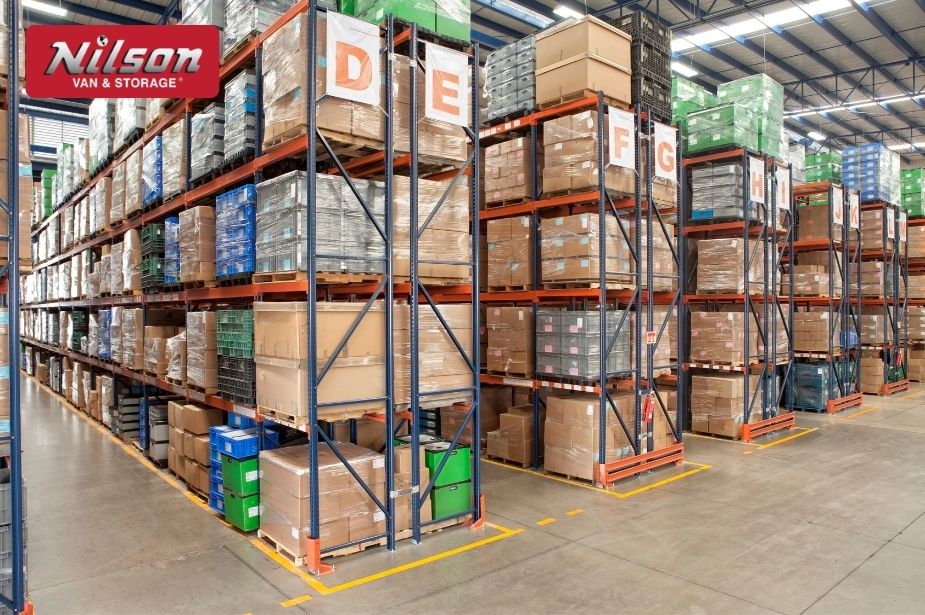
How to Plan Commercial Warehouse Storage Before Moving Day
Good warehouse management begins before the first box is packed. The goal is to create a clear record of what is being stored, where it belongs, how it should be handled, and when it is likely to be needed.
Small businesses often skip this step because the relocation is already consuming time. That usually makes the final delivery more difficult. These details matter for warehouse storage for small businesses.
A basic storage plan should connect the inventory to the office floor plan and the business schedule. You should be able to answer three questions: What is going into storage?
When will it be needed? How will the moving team know where it belongs when it comes out? These requirements help define warehouse storage for small businesses.
Build an Inventory Based on the New Office
Do not create an inventory only by room in the old office. Organize it around the new workplace as well.
A conference table, for example, may be stored with other large furniture but ultimately needs to go to a specific conference room. Identifying that destination early makes unloading and setup more efficient.
Useful inventory categories may include:
- Furniture and fixtures, such as desks, chairs, shelving, reception pieces, and conference-room equipment.
- Business materials, including supplies, printed materials, files, displays, and archived records.
- Technology and specialty equipment that require separate packing, labeling, or delivery instructions.
Mark items that are essential for the first day of operations. Those pieces should not be buried behind nonessential furniture or delivered during a later phase unless that timing is intentional. Ask about this step when reviewing warehouse storage facility for small businesses.
Separate Keep, Store, Donate, and Discard Decisions
A relocation is an opportunity to reduce the amount of material the business handles. Storing items that will never be used adds cost and creates another decision later. A quote for warehouse storage for small businesses should cover this work.
Set aside time for department leaders to review furniture, supplies, files, and equipment before packing. Ask whether each item is needed in the new office, needed later, appropriate for donation, or ready for disposal.
For records and equipment, follow the company’s own retention, privacy, and disposal requirements rather than assuming that every older item should be moved.
This step is especially important for small businesses because limited office space can make unused items feel like a problem long after the relocation is complete. During warehouse storage for small businesses, labels and access rules matter.
Label for Retrieval, Not Just Identification
A label that says “Office” is not enough for a multi-stage relocation. Better labels identify the department, destination room, item category, and priority. A simple code can work well, such as “FIN-204-PRIORITY,” provided everyone involved understands the system.
Keep a corresponding digital inventory with quantities and special instructions. Photograph unusual furniture, assembled workstations, equipment connections, or fragile items before they are packed.
The goal is not paperwork for its own sake. It is to reduce questions when stored items are requested later. These details matter for warehouse storage for small businesses.
Coordinate Access and Building Requirements
Office buildings may require certificates, loading dock reservations, freight-elevator windows, parking arrangements, or advance notice to property management. Requirements vary by building and location, so confirm them with the landlord or property manager before the move.
Downtown offices in Charleston, Columbia, or Savannah may have tighter loading access than a suburban business park.
A building may also limit the times when movers can use elevators or require floor protection. These details affect the sequence of packing, transportation, storage, and delivery.
Nilson Van and Storage can help customers coordinate the moving and storage portion of the plan, but building-specific rules still need to be confirmed with the appropriate property representatives. Ask about this step when reviewing warehouse storage for small businesses.
Choose a Storage Duration With Flexibility
A short term warehouse storage plan should include an expected release date and a realistic allowance for delays. If renovations are scheduled to finish on a particular Friday, ask what happens if the space is not ready that day.
A plan that allows reasonable adjustment is more useful than one based on an ideal timeline. Ask about this step when reviewing warehouse storage for small businesses.
Avoid promising an exact storage duration before you know the construction, lease, furniture, and building-access schedules. Your moving provider can discuss the available arrangement and the information needed to prepare an accurate quote.
Tell us about your move and get a personalized quote based on your requirements.
What Should You Compare in Warehouse Storage Solutions?
Warehouse storage solutions can look similar when viewed only by monthly cost. In practice, the service details often determine whether the relocation runs smoothly. Compare the entire process: pickup, inventory, handling, storage period, access requests, and final delivery.
A lower initial price may not be the best value if the arrangement does not match your access needs or requires your team to manage complicated handling on its own.
Ask specific questions before signing a service agreement. A phased office move can make warehouse storage for small businesses useful.
Storage Capacity and Item Fit
Discuss the types and approximate quantities of items involved. Desks, shelving, pallets, boxed files, equipment, and irregularly shaped fixtures use space differently.
A provider needs enough information to plan the storage arrangement rather than estimating solely from the number of boxes.
If the inventory is still changing, explain that early. A small business may add furniture after a lease negotiation or remove items during a downsizing review.
Clear communication helps the provider understand whether the quoted arrangement needs to accommodate changes. When comparing warehouse storage for small businesses, confirm this procedure.
Access During the Storage Period
Some businesses need storage only as a holding point until the final move. Others need to retrieve documents, equipment, or inventory before the office is ready.
Ask how access requests are handled, how much notice is needed, and whether partial retrieval changes the schedule or cost.
If you expect frequent access, organize the inventory with retrieval in mind.
Place time-sensitive or frequently requested items where they can be identified without disturbing the rest of the stored material whenever the arrangement permits. If access will be rare, prioritize efficient final delivery instead.
Handling, Packing, and Special Instructions
Packing may be part of the moving service, handled by your employees, or divided between both. Be specific about what your team will do and what you expect the moving company to handle. These details matter for warehouse storage for small businesses.
Files, electronics, artwork, medical-office equipment, laboratory items, and unusually heavy furnishings may need special preparation or instructions.
Do not assume that a provider knows how a specialized item should be disconnected, packed, or reassembled. Share manufacturer guidance or identify the qualified person responsible for preparation when appropriate.
Delivery and Setup Expectations
Ask whether the storage arrangement includes delivery to the new office and what information is needed before release.
Clarify whether the team will place furniture according to a floor plan, whether items will be delivered in phases, and which setup tasks are outside the moving scope.
A practical floor plan should show workstations, conference rooms, reception areas, storage rooms, and any items that must be positioned before others. Even a marked-up drawing can reduce confusion during unloading. Ask about this step when reviewing warehouse storage for small businesses.
Valuation Coverage and Written Terms
Review the valuation coverage available for the move and storage arrangement. Valuation coverage has specific terms, limits, and exclusions, and the terms should be understood before services begin. Ask what documentation is required and which conditions apply to your specific shipment.
You should also review the service description, estimated timing, payment terms, storage duration, access procedures, and responsibilities for packing or preparation.
For local and intrastate moves in South Carolina, Nilson Van and Storage states that moves are non-binding, so ask how the estimate is developed and what circumstances may affect the final charges.
These requirements help define warehouse storage for small businesses. Office moves are an exception: Nilson Van and Storage may provide a bid.
For qualifying Nilson Van and Storage services, there are no cancellation fees. Even so, notifying the company promptly when plans change is practical because it gives the team more opportunity to adjust scheduling and resources.
Our moving experts are here to assist you.
How Much Does Warehouse Storage Cost for a Small Business?
Warehouse storage cost depends on more than the number of months an office’s belongings remain in storage.
The total may be influenced by the volume and type of items, packing requirements, pickup and delivery, handling, access requests, distance, timing, and whether the move occurs in phases. These requirements help define warehouse storage for small businesses.
Because each relocation is different, a provider should have enough information about the inventory and schedule before giving a useful estimate.
Treat a general online price as a starting point, not a complete commercial moving budget. A phased office move can make warehouse storage for small businesses useful.
The Main Cost Drivers
The first factor is volume. A business with ten workstations and a few file cabinets has a different storage profile from a company holding a full office buildout, inventory, shelving, and equipment.
Large or awkward items may require more handling space than similarly sized boxes.
The second factor is service level. A basic holding arrangement may differ from a plan that includes professional packing, inventory preparation, multiple access requests, staged deliveries, unpacking, or furniture placement.
Decide which tasks your employees can realistically handle without interrupting operations. When comparing warehouse storage for small businesses, confirm this procedure.
The third factor is timing. End-of-lease deadlines, construction delays, peak moving periods, weekend requirements, and building access windows can all affect planning.
Do not choose a date solely because it appears convenient on the calendar; confirm that the old and new buildings can support it. Keep this in mind when arranging warehouse storage for small businesses.
Build a Relocation Budget in Phases
A useful budget separates the project into stages:
- Preparation, including sorting, packing, labeling, equipment preparation, and employee time.
- Removal and storage, including pickup from the old office and handling into the warehouse.
- Release and delivery, including transportation to the new location, placement, unpacking, and any later retrievals.
This approach makes trade-offs easier to see. For example, having employees pack low-risk office supplies may reduce service scope, but it also takes staff away from regular work and can create labeling inconsistencies.
A phased delivery may reduce congestion at the new office, but it can require additional coordination. When comparing warehouse storage for small businesses, confirm this procedure.
Request a Quote Based on Real Details
When requesting a quote, provide the origin and destination, approximate office size, item categories, estimated storage period, preferred move dates, access constraints, and whether packing or placement is needed.
Include information about elevators, loading docks, stairs, narrow corridors, parking restrictions, and building reservations if known.
If the final inventory is uncertain, say so. A transparent conversation about what is known and unknown is more useful than an artificially precise estimate.
Keep written notes about what the quote includes and what may be billed separately. When comparing warehouse storage for small businesses, confirm this procedure.
For South Carolina businesses planning local or intrastate moves, remember that Nilson Van and Storage describes those moves as non-binding.
That does not make budgeting impossible; it means the estimate should be treated as a planning figure that may change based on the actual work, inventory, and conditions.
Keep Storage Costs From Drifting
The best way to control cost is to control uncertainty. Finalize the keep-or-discard decisions, maintain an inventory, avoid unnecessary access requests, and communicate schedule changes as soon as they are known.
Also review stored items during the transition. If the business decides that certain furniture will not be used, arrange the next step instead of allowing it to remain in storage indefinitely.
A temporary decision should have a review date. A quote for warehouse storage for small businesses should cover this work.
How to Coordinate the Move, Storage, and Office Restart
Warehouse storage is only one part of an office relocation. The move succeeds when the storage plan connects to business continuity, employee communication, technology scheduling, and the new workplace setup.
A well-organized warehouse cannot compensate for an unclear restart plan. A phased office move can make warehouse storage for small businesses useful.
Start by identifying what the business must have available on the first operating day. That may include reception furniture, customer files, phones, computers, essential supplies, signage, or equipment needed for revenue-producing work. Rank these items before anything is loaded.
Use a Phased Move When Operations Must Continue
A phased move can reduce disruption when the company cannot close for several days. One group may move first while another continues working from the existing office.
The stored inventory can then be released in an order that matches the department schedule. A phased office move can make warehouse storage for small businesses useful.
This approach requires more coordination than a single move. Employees need clear instructions about packing their work areas, labeling equipment, protecting confidential materials, and reporting items that should not be moved.
Managers should also confirm which departments can tolerate downtime and which cannot.
Keep Technology and Furniture on Compatible Schedules
Workstations may arrive before the network is ready, or the network may be installed before desks and equipment are in place.
Coordinate furniture delivery with information-technology work, electrical completion, flooring, security access, and final cleaning. Keep this in mind when arranging warehouse storage for small businesses.
If electronics are being moved, assign responsibility for shutdown, disconnection, packing, reconnection, and testing.
Movers can handle the physical movement within the agreed scope, but specialized technical work may need to be completed by your IT staff or an appropriate service provider.
Prepare Employees for the Transition
Employees usually need more than a moving date. Tell them what to pack, what the company is moving centrally, how personal items should be handled, when work areas will be unavailable, and where they should report during each phase.
Keep this in mind when arranging warehouse storage for small businesses.
A short internal relocation guide can include department deadlines, labeling rules, important contacts, temporary work arrangements, and the expected first day in the new office.
Clear communication reduces last-minute boxes and prevents employees from assuming that an item is being moved when it has actually been placed in storage. These requirements help define warehouse storage for small businesses.
Plan for the Final Delivery
Before releasing items from storage, confirm that the new building is ready and that the receiving team has the current floor plan.
Recheck freight-elevator reservations, loading access, parking instructions, and contact information. Construction or building conditions may change after the original move date. During warehouse storage for small businesses, labels and access rules matter.
Have a representative available who can make placement decisions. If the moving crew has to wait while several departments decide where furniture belongs, the project can become slower and more complicated. A prepared receiving contact keeps questions moving toward a decision.
Use a Post-Move Review
After the office is operational, review what remains in storage and why. Some items may be needed for a later phase, while others may no longer fit the new workplace.
Set a date to revisit the inventory and decide whether to retrieve, donate, dispose of, or continue storing each category. During warehouse storage for small businesses, labels and access rules matter.
Nilson Van and Storage offers office moving and storage support for business relocations in the communities it serves, including Columbia, Myrtle Beach, Charleston, Sumter, and Savannah.
The right service arrangement depends on the location, inventory, access conditions, and requested timing, so discuss those details before finalizing the plan.
Wrapping Up
Warehouse storage for small businesses gives an office relocation more flexibility when dates, access, construction, or business operations do not line up perfectly.
It can support a phased move, protect the new office from unnecessary congestion, and give decision-makers time to sort belongings without rushing.
The strongest plans begin with an accurate inventory, clear labels, realistic timing, confirmed building requirements, and a written understanding of packing, access, delivery, valuation coverage, and estimated charges.
Compare warehouse storage solutions by the complete service—not just the monthly storage figure.
If your business is relocating in South Carolina or Georgia, Nilson Van and Storage can help you evaluate the moving and storage details that affect your transition.
Request a quote based on your actual inventory and schedule, then use that information to choose a plan your employees and new office can support.
Make us one of your preferred sources on Google!


FAQs - Warehouse Storage for Small Businesses
Our Recent Articles
Stay informed and inspired with the latest tips, insights, and updates from the Nilson Van and Storage blog. From expert packing advice and moving checklists to stories about our commitment to the community, our articles are here to make your relocation journey smoother and stress-free. Explore our recent posts to discover how we’re redefining the moving experience for Columbia, Myrtle Beach, Charleston, Sumter, Savannah, and beyond.

Logistics Planning for Business Relocation: A Step-by-Step Guide for US Companies

Office Cubicle Installation in South Carolina: Planning a Smooth Office Move