
How to Choose the Right Warehouse Facility for Your Business
Choosing the right warehouse facility can determine whether your inventory moves smoothly or becomes a source of delays, damaged goods, avoidable labor, and rising overhead.
The right commercial storage arrangement should match your products, handling needs, order volume, access requirements, and plans for growth—not simply the closest available building.
This guide explains how to compare warehouse storage solutions, evaluate business storage and warehouse services, estimate the space and support you actually need, and identify questions to ask before committing.
You will also learn when a moving and storage partner such as Nilson Van and Storage may help coordinate commercial storage, transfers, packing, or inventory changes.
What Your Warehouse Facility Must Support
A warehouse facility is more than a room where products sit. It is part of your operating system. The layout, access process, handling procedures, storage terms, and communication practices can affect order fulfillment, project schedules, customer service, and working capital.
Before comparing facilities, define the job the space must perform. A business storing seasonal merchandise has different requirements from a contractor holding equipment, a distributor managing frequent inbound and outbound shipments, or an office relocating during a renovation.
Start With Your Inventory Profile
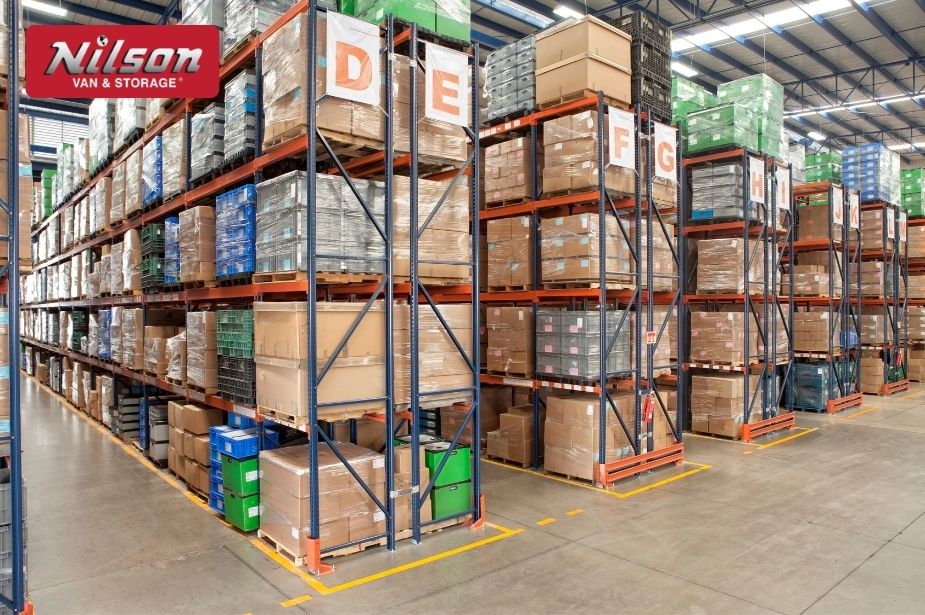
Make a practical inventory list before speaking with providers. Record what you store, how much space it occupies, how often items move, and whether products arrive on pallets, in cartons, crates, or oversized units. Ask the warehouse facility provider how this step is handled.
Also note characteristics that affect handling and placement, including weight, dimensions, fragility, stacking limits, labeling requirements, and whether individual items need to remain together.
A facility that appears large enough on paper may not work if aisles, clearances, or handling methods do not fit your inventory.
Consider your busiest period rather than only your average month. A retailer may need additional capacity before a seasonal launch. A contractor may require temporary space during a large project.
A manufacturer may need overflow storage when production and shipment schedules do not align. A suitable warehouse facility should fit those day-to-day needs.
Separate Storage From Fulfillment Needs
Some businesses need basic commercial warehouse storage: inventory is received, held, and released when requested. Others need a more active arrangement involving recurring pickups, item retrieval, staging, counting, packing, or delivery coordination.
These are different service models. If your team will handle most inventory access, a straightforward storage arrangement may be sufficient. If the facility or commercial moving partner will frequently handle items on your behalf, clarify the expected workflow before signing an agreement.
Ask how requests are submitted, how much notice is needed, who confirms quantities, and how discrepancies are addressed. Small gaps in this process can create larger problems when a customer order, construction deadline, or office opening depends on a particular item being available.
Define the Business Outcome
A warehouse should solve a business problem. You may be trying to reduce congestion at your current location, avoid a larger lease, hold inventory during a move, support expansion, or create room for a renovation. Include these details in the warehouse facility comparison.
Write down the result you need. For example, “free two loading areas by the first week of next month” is more useful than “find more space.” A clear outcome helps you compare providers based on usefulness rather than square footage alone.
At Nilson Van and Storage, commercial storage discussions are most productive when the operational goal is clear.
A business move, phased relocation, packing project, or temporary storage period may require a different plan from a long-term warehouse arrangement. Explain the full situation so the proposed service matches the actual transition.
Our moving experts are here to assist you.
How to Compare Warehouse Storage Solutions
Once you understand your requirements, compare facilities using the same criteria. Price matters, but it should not be the first or only filter.
A lower rate can lose its advantage if the space is difficult to access, the process is unclear, or your staff spends extra time locating and moving goods. This can affect the true operating cost of a warehouse facility.
Use the following categories to evaluate each option consistently.
Location and Access
“Warehouse storage near me” is often a useful starting search, but proximity alone does not guarantee convenience. Consider the routes your staff, vendors, customers, and delivery partners actually use.
A facility a few miles farther away may be more practical if it offers better appointment coordination or loading access. Compare this requirement before choosing a warehouse facility.
Ask about access hours, advance notice, pickup procedures, loading areas, and restrictions that could affect your schedule.
If your business operates in downtown Columbia, Charleston, Myrtle Beach, Sumter, or Savannah, building access and appointment coordination may deserve particular attention.
Traffic patterns, loading zones, elevators, building rules, and limited staging space can influence the true cost of each transfer.
Do not assume your normal delivery process will work at a warehouse. Confirm how vehicles arrive, where items are loaded, and who is responsible for coordinating with your team or building management.
Capacity and Layout
Compare usable space rather than advertised square footage. Ask how inventory is organized and whether you receive dedicated, shared, rack, pallet, floor, or containerized space, depending on the provider’s model. This can affect the true operating cost of a warehouse facility.
You should understand whether your goods can be grouped by project, customer, product line, or release date.
If items are likely to be retrieved individually, organization may matter more than maximum capacity. If you are storing large quantities for a single later move, a different layout may be more efficient.
Allow room for change. Filling every available inch at the start can leave no practical space for new inventory, access paths, packaging materials, or temporary staging. A useful plan accounts for normal growth and peak periods without paying for substantially unused capacity.
Handling and Communication
The quality of a warehouse arrangement often shows up in ordinary communication. You should know who receives instructions, who confirms a request, and how updates are recorded. A suitable warehouse facility should fit those day-to-day needs.
Ask whether your contact is a warehouse coordinator, account representative, moving specialist, or another designated person. Clarify how the provider handles changes to quantities, urgent requests, damaged packaging, missing labels, and delivery timing.
Request a written description of the service workflow. It should be clear enough that a new employee could understand what to do without relying on informal knowledge.
This is especially important when your business has several locations or when the person who arranged the storage will not manage every release. The right warehouse facility arrangement should make this step manageable.
Terms, Valuation, and Responsibility
Review the agreement carefully. Confirm the storage period, notice requirements, access process, handling charges if applicable, payment terms, and what happens when the arrangement ends. Ask which party is responsible for labeling, inventory counts, packing, loading, and transportation.
Discuss valuation coverage for the goods and understand its terms. Valuation options, limits, exclusions, and documentation requirements may vary by move or service.
Ask questions before goods enter storage rather than after an issue occurs. Include these details in the warehouse facility comparison.
For local and intrastate moves in South Carolina, Nilson Van and Storage states that moves are non-binding. That means a quote should be reviewed as an estimate rather than treated as a guaranteed final amount.
Ask how changes in inventory, access, services, or timing may affect the estimate. Office moves are an exception: Nilson Van and Storage may provide a bid.
Compare the Complete Cost
The storage rate is only one part of the decision. Your total cost may include transportation, packing materials, labor, loading, unloading, retrievals, staging, special handling, access-related delays, and the internal time your employees spend managing the arrangement.
Your warehouse facility should be able to support that workflow.
Build a simple comparison using the same assumptions for every provider:
- Monthly or project-based storage charges
- Transportation to and from the facility
- Packing, wrapping, labeling, and handling needs
- Expected release or retrieval activity
- Internal labor and administrative time
- Costs associated with access, schedule changes, or additional services
A more expensive option may be the better business decision if it reduces repeated handling or makes inventory easier to release.
Conversely, a premium service may not be worthwhile if your goods will remain untouched for a long period and your team needs little access. Review that point with each warehouse facility before committing.
Questions to Ask Before Choosing a Commercial Warehouse
A site visit and a written conversation can reveal differences that are difficult to see in an online listing. Prepare questions in advance, and ask each provider the same core questions so your comparison remains fair.
Questions About Daily Operations
Ask how inventory is received, identified, placed, retrieved, and released. If the provider offers multiple service levels, ask exactly what is included in the option being quoted. Keep this question on the warehouse facility evaluation list.
Useful questions include:
- How are goods labeled and organized after arrival?
- Who can authorize a release or pickup?
- What notice is normally required for access or retrieval?
- How are quantities and item condition documented?
- How are damaged cartons, missing labels, or discrepancies reported?
- Can inventory be separated by project, customer, or release date?
The answers should be specific. “We can usually accommodate that” is less helpful than a defined process with a responsible contact and clear timing expectations.
Questions About Your Building or Project
If inventory is being removed from an office, retail location, job site, or another warehouse, discuss the origin site as carefully as the destination.
Building management may require certificates, reserved loading times, elevator scheduling, required coverage documentation, or specific moving windows.
Requirements vary by property and should be confirmed with the building representative. Review that point with each warehouse facility before committing.
Ask whether the storage provider or moving company can coordinate packing, disassembly, wrapping, labeling, loading, transportation, and placement. You may not need every service, but separating responsibilities prevents gaps between vendors.
For an office relocation, for example, a company might place archived files and surplus furniture into storage while moving active workstations directly to the new location.
A phased plan can reduce congestion, but only if each group of items is labeled according to its destination and release timing.
Questions About Flexibility
Business needs change. A customer order may accelerate, a construction project may move, or a new lease may be delayed. Ask how the arrangement responds to changes in volume and timing. The right warehouse facility arrangement should make this step manageable.
Clarify whether you can add inventory, remove only part of a stored group, extend the term, or end storage earlier. Also ask whether there are cancellation charges.
Nilson Van and Storage’s stated policy is that it does not charge cancellation fees, but you should still confirm how any particular service arrangement is documented and whether other charges could apply when plans change.
Flexibility does not mean every request can happen immediately. It means the process for handling changes is understandable before you need it.
That distinction matters when a business is coordinating vendors, employees, customers, and building schedules at the same time. The warehouse facility decision should account for these limits.
Plan for a Realistic First Month
The first month often involves more activity than the rest of the storage term. Inventory may arrive in several loads, labels may need correction, and your team may discover that certain items need different placement or packaging.
Create a first-month plan that identifies:
- What enters storage first and why
- Which items must remain readily accessible
- Who approves changes to the inventory plan
- When the first retrieval or delivery is likely to occur
A provider should be able to discuss the practical sequence with you.
If the conversation focuses only on available space and not on movement, access, and communication, you may not yet be comparing complete warehouse storage solutions. A suitable warehouse facility should fit those day-to-day needs.
Our moving experts are here to assist you.
When Business Storage and Warehouse Services Make Sense
Commercial storage is useful when it supports a clear operational need. It is not automatically the best answer for every inventory challenge.
Compare storage with alternatives such as using existing space more efficiently, leasing a larger facility, outsourcing fulfillment, or moving goods directly to a final destination. Keep this question on the warehouse facility evaluation list.
Temporary Storage During a Business Move
A gap between locations is one of the most common reasons businesses need storage. The old lease may end before the new space is ready, or construction may prevent immediate occupancy.
Temporary storage gives the business more scheduling flexibility, but it also creates an additional transfer and handling stage.
To control that complexity, divide inventory into three groups: items needed immediately, items needed later, and items that can be reviewed before moving. Label each group by destination and priority.
A move team can then load and release items according to the business plan rather than treating every box or piece of equipment the same way. Ask the warehouse facility provider how this step is handled.
Nilson Van and Storage can be relevant when a commercial move includes packing, transportation, storage timing, or phased delivery. Explain whether your priority is speed, reduced congestion, access to selected items, or a single coordinated project so the service discussion stays focused.
Seasonal or Overflow Inventory
A business may need additional space for seasonal merchandise, trade show materials, promotional displays, equipment, or short-term project inventory. In this situation, forecast the highest volume and the likely release pattern. Include these details in the warehouse facility comparison.
If goods are accessed frequently, organization and retrieval procedures may be more important than the lowest monthly rate. If inventory is stored for one defined period and released in a few large groups, a different arrangement may be more efficient.
Avoid storing items simply because they do not fit at your main location. Review whether old stock, damaged packaging, obsolete materials, or unused equipment should be sold, recycled, donated, or discarded according to your company’s procedures.
Storage can create breathing room, but it should not conceal an inventory-management problem indefinitely.
Employee, Military, and Special Transition Needs
Some storage projects are connected to a person’s transition rather than ordinary business operations.
Military relocations, employee moves, temporary assignments, and senior transitions may involve a mix of household goods, work materials, or equipment with different timing requirements. Ask the warehouse facility provider how this step is handled.
These projects benefit from clear ownership records and a written release plan. Confirm who can authorize access, where items will ultimately go, and whether packing or delivery support is needed later.
Service requirements can vary by move type and location, so verify the details during the estimate process.
When Storage Is Not the Right Fit
Storage may be a poor choice when your inventory turns over rapidly, your customers expect same-day fulfillment, or your team needs unrestricted access throughout the day.
It may also be inefficient when the goods require specialized environmental, regulatory, or handling conditions that a general arrangement does not provide. The warehouse facility decision should account for these limits.
Ask what your business is giving up by moving inventory off-site. If staff must make frequent trips, records are difficult to maintain, or releases interrupt customer commitments, the apparent space savings may not justify the operational burden.
The best decision is not always the facility with the most capacity. It is the arrangement that improves your workflow without introducing a larger problem elsewhere. The warehouse facility decision should account for these limits.
Tell us about your move and get a personalized quote based on your requirements. 
How to Build a Warehouse Decision Before You Sign
After comparing providers, turn your findings into a short written decision. This final step prevents a rushed choice based on a single conversation or an attractive introductory rate.
Create a Requirements Sheet
List the facts a provider needs to quote and plan the work accurately.
Include approximate inventory volume, major item dimensions, weight concerns, access frequency, origin and destination locations, preferred timing, packing needs, and whether goods must remain grouped. Your warehouse facility should be able to support that workflow.
Be honest about uncertainty. If your inventory count is incomplete, say so. If a lease or construction schedule is not final, identify the range of possible dates. Good planning can accommodate reasonable uncertainty; hidden assumptions are more difficult to manage.
Score Options by Operational Fit
A simple scorecard can help your team compare providers. Rate each option on location, access, capacity, organization, communication, handling, flexibility, total cost, and fit for your expected storage period. Compare this requirement before choosing a warehouse facility.
Give the highest weight to the factors that affect your business most. A company with frequent inventory releases may prioritize access and response time. A business storing equipment during a long renovation may prioritize handling, labeling, and project coordination.
Do not let a spreadsheet create false precision. Use the scorecard to structure a discussion, then investigate any category where the information is incomplete or based on an assumption.
Confirm the Written Scope
Before you authorize the work, make sure the written scope reflects the conversation.
It should identify what is being stored, what services are included, which responsibilities remain with your team, and how changes will be handled. Your warehouse facility should be able to support that workflow.
Review the inventory description, access expectations, timing, valuation coverage, payment terms, and cancellation policy. If the agreement uses terms you do not understand, ask for an explanation in plain language.
For a move involving several locations, request a simple sequence showing what is packed, what is transported, what enters storage, and what is delivered later.
This is particularly helpful for commercial moves in Columbia, Charleston, Myrtle Beach, Sumter, Savannah, and surrounding areas where building schedules and access conditions may differ from site to site. Review that point with each warehouse facility before committing.
Prepare Your Team
A warehouse plan can fail even when the facility is suitable if employees do not know how to use it.
Assign one person to approve storage requests and maintain the inventory record. Tell staff where labels are placed, which items are urgent, and how to request a release.
Give vendors and building contacts the same schedule. If one party expects a delivery while another has not reserved access, the resulting delay may have nothing to do with the warehouse itself.
Wrapping Up
The right warehouse facility should fit the way your business receives, stores, accesses, and releases goods.
Start with your inventory profile and business objective, then compare location, layout, capacity, handling, communication, flexibility, valuation coverage, and total cost. A nearby facility is helpful, but an understandable process and dependable coordination may matter more.
Before committing, ask how the first month will work, how changes are handled, who controls access, and which services are included. Put the scope in writing and prepare your team to follow the same inventory and communication process.
If your warehouse decision is connected to a commercial move, packing project, phased relocation, or temporary storage period, Nilson Van and Storage can help you evaluate the moving and storage components together.
A clear plan makes it easier to choose business storage and warehouse services that support your operation today while leaving room for the next change. When comparing a warehouse facility, focus on fit—not just space, distance, or price.
Make us one of your preferred sources on Google!


FAQs About Choosing the Right Warehouse Facility
Our Recent Articles
Stay informed and inspired with the latest tips, insights, and updates from the Nilson Van and Storage blog. From expert packing advice and moving checklists to stories about our commitment to the community, our articles are here to make your relocation journey smoother and stress-free. Explore our recent posts to discover how we’re redefining the moving experience for Columbia, Myrtle Beach, Charleston, Sumter, Savannah, and beyond.

Data Center Relocation Checklist: Key Steps for a Successful IT Move

Cross Docking vs Traditional Warehousing: Which Is Right for Your Business?