
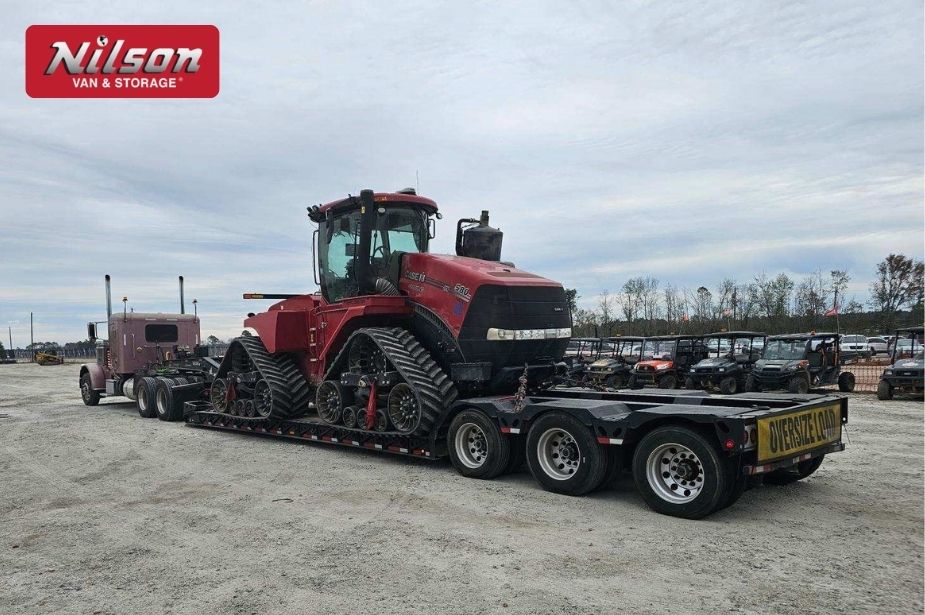
Movers for Heavy Items in South Carolina: A Practical Relocation Guide
Movers for heavy items can make the difference between a controlled relocation and a project disrupted by equipment access, unclear scope, or last-minute handling problems.
In South Carolina, moving a machine, commercial fixture, shop tool, generator, or other oversized item requires more planning than loading ordinary household boxes.
This guide explains how to prepare heavy equipment for relocation, what professional movers need to know before quoting the job, how South Carolina access and scheduling concerns affect the plan, and how to choose a moving company that fits the work.
It also explains where Nilson Van and Storage may help with heavy-item transportation, packing, storage timing, and related moving coordination.
Movers for Heavy Items: What Makes These Moves Different
Heavy-item moving is not simply a larger version of a household move. The equipment may be dense, unusually shaped, delicate internally, difficult to grip, or impossible to move through the available doorway without a carefully sequenced plan.
A professional assessment begins with the item and then works outward to the building, route through the property, vehicle requirements, timing, and final placement.
Weight Is Only One Part of the Problem
A compact machine can be more difficult to move than a larger piece of furniture if its weight is concentrated in one area or its frame cannot be tilted.
A commercial refrigerator, printing press, safe, industrial lathe, medical device, generator, or restaurant appliance may also have components that need to be disconnected, secured, or protected before handling. Clear instructions help movers for heavy items prepare for the site.
The practical questions include:
- What is the item’s approximate weight, height, width, length, and center of gravity?
- Can it be rolled, lifted, dismantled, or placed on appropriate moving equipment?
- Are there removable parts, fluids, batteries, glass panels, doors, drawers, or attachments?
- Does the item require a manufacturer, technician, electrician, plumber, or other specialist for disconnection or reconnection?
- These details affect labor, equipment, access planning, and the amount of time required. Guessing is rarely helpful.
When a customer describes an item as simply a “large machine,” the moving team may still need photographs, measurements, model information, and site details before determining whether the move is a suitable fit.
Ask movers for heavy items how they plan to address that requirement.
The Item’s Condition Matters
Before moving heavy equipment, document its existing condition. Photograph corners, control panels, doors, wheels, glass, hoses, cables, handles, and any visible marks.
If the equipment is already worn, unstable, leaking, or missing a component, note that before the move. Experienced movers for heavy items need this information when assessing the job.
This documentation helps separate pre-existing conditions from issues that may appear during unpacking or reassembly. It also gives the movers a clearer picture of where padding, wrapping, blocking, or additional protection may be appropriate.
Nilson Van and Storage can discuss valuation coverage for eligible moving services. Valuation coverage has its own limits and conditions, which should be reviewed before the move.
For a heavy or high-value item, ask questions early rather than assuming ordinary household-move expectations will apply.
Specialized Work May Need More Than Movers
Movers can handle transportation and moving-related labor, but some equipment requires work outside a moving crew’s role.
Disconnecting a hardwired machine, draining certain systems, capping lines, disconnecting gas, removing anchoring bolts, or reconnecting production equipment may require a qualified specialist. Clear instructions help movers for heavy items prepare for the site.
A useful division of responsibility is straightforward: identify who will disconnect, who will prepare the item for handling, who will move it, who will transport it, and who will reinstall or reconnect it.
Confirm this before the moving date. A truck arriving for equipment that is still bolted to a floor can create delays for everyone involved.
Why Early Information Improves the Quote
For ordinary furniture, a basic inventory may be enough to begin a conversation.
For heavy equipment, the quote process is more accurate when it includes photographs, measurements, approximate weight, pickup and delivery addresses, floor information, access details, and the desired placement at the destination.
Review this concern with movers for heavy items during the estimate.
The goal is not to make the process complicated. It is to prevent a mismatch between the requested service and the actual conditions at the property.
A detailed conversation also helps identify whether storage, packing, phased delivery, or a separate specialist should be part of the plan.
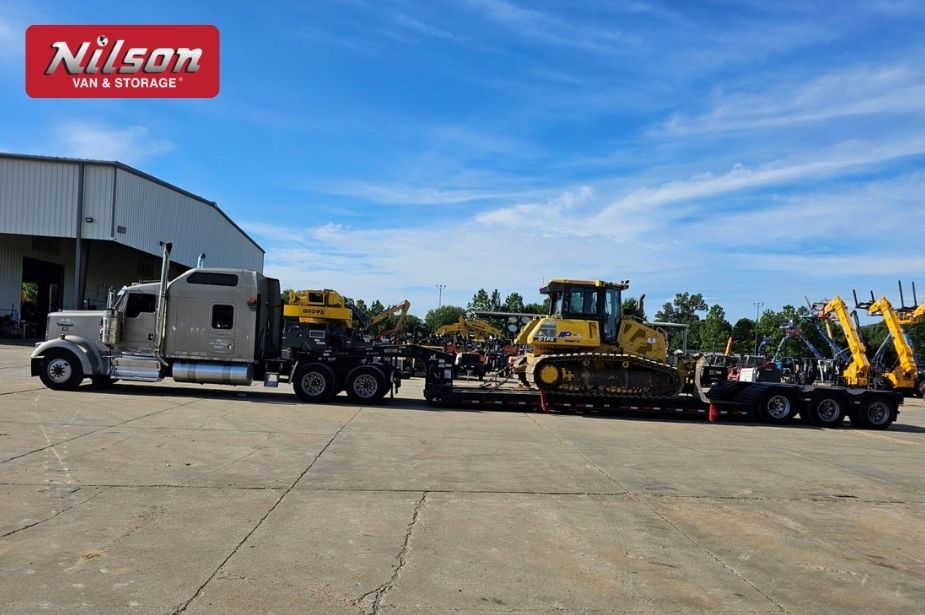
How to Prepare Heavy Equipment for a South Carolina Move
Preparation is where many heavy-item relocations are won or lost. The equipment may be ready for transport, but the property may not be ready for the equipment to leave or arrive.
Preparation should cover the item, the building, the access path, and the people responsible for making decisions on moving day. Give movers for heavy items an accurate picture of the route and item.
Build an Accurate Equipment Profile
Create a short equipment record for every heavy item. Include the manufacturer and model if available, approximate dimensions, estimated weight, current condition, and any parts that can be removed.
Note whether the item is powered, contains fluids, has glass, has a door or lid that can open, or is attached to a base or floor.
If the weight is uncertain, do not present an optimistic estimate simply to obtain a faster quote. Manufacturer information, equipment manuals, purchase records, or a qualified technician may provide a better starting point.
An inaccurate weight can affect the moving approach and the equipment selected for the job. Review this concern with movers for heavy items during the estimate.
Photograph the Entire Path
Photographs should show more than the item itself. Take pictures from the item to the exit, including the room, hallways, thresholds, ramps, elevators, stairs, loading areas, parking spaces, gates, and the final placement area. Include measurements where a passage appears tight.
A doorway that looks wide enough may become difficult when the item is placed on a dolly or protected with padding. A hallway may have a sharp turn, low ceiling, sprinkler head, handrail, or flooring transition that changes the plan.
These are practical details that experienced movers want to know before arrival. Clear instructions help movers for heavy items prepare for the site.
Confirm Building and Property Requirements
Commercial buildings, apartment communities, condominiums, hospitals, schools, and managed facilities may have rules for moving activity.
Requirements can include building-required certificates, elevator reservations, loading dock procedures, approved hours, parking instructions, freight elevator use, floor protection, or advance notice to building management.
Requirements vary by property, so confirm them directly with the responsible manager. Discuss that restriction with movers for heavy items before moving day.
In South Carolina cities such as Columbia, Charleston, Myrtle Beach, and Savannah-area destinations, access conditions may also vary by building type, downtown street layout, seasonal activity, or available loading space.
Do not assume a truck can remain directly outside the entrance for the entire job. Ask the property contact where the vehicle may stage and how long the loading area can be used. Discuss that restriction with movers for heavy items before moving day.
Prepare the Equipment Without Creating New Problems
Remove loose contents, shelves, trays, tools, and detachable accessories unless the moving plan specifically includes them in place.
Secure doors and drawers so they do not open during handling, but do not tape delicate surfaces without considering residue or finish damage. Protect controls, screens, polished surfaces, and exposed mechanisms according to the item’s material and condition.
Do not drain fluids or disconnect power unless the appropriate person is responsible for doing so. Some equipment may need special handling after being drained, and some systems can be damaged by improper disconnection.
Record how parts were removed and label hardware in sealed containers. Give movers for heavy items an accurate picture of the route and item.
Plan for the Person Who Makes Decisions
Someone with authority should be available at pickup and delivery, or a clearly designated representative should have written instructions.
That person should know what is being moved, where it will go, which areas are off limits, and who can approve changes if the original route is unavailable. Movers for heavy items should know about this condition in advance.
This matters when a piece cannot fit through the planned opening, when the destination area is not cleared, or when another trade is still working in the space. Quick decisions are easier when responsibilities have been settled before the crew arrives.
For moves involving several machines or a business transition, create a simple sequence: equipment to disconnect first, items to load first, destination placement order, and any items that must remain operational until a specific time.
That sequence can reduce downtime and help coordinate employees, contractors, property managers, and movers. Give movers for heavy items an accurate picture of the route and item.
Tell us about your move and get a personalized quote based on your requirements.
Planning Access, Timing, and Storage for Heavy Items
Heavy equipment relocation depends heavily on access and timing. A move can be well packed and properly scheduled yet still lose hours because the loading area is occupied, the elevator is unavailable, or the destination is not ready for placement.
A strong plan treats access as part of the move rather than an afterthought.
Pickup Access
At the pickup location, check the route from the equipment to the vehicle. Consider doorway widths, turning clearance, floor surfaces, stairs, elevators, ramps, exterior paths, gates, and overhead obstructions.
Identify whether the item must cross landscaping, uneven ground, gravel, or a surface that requires additional protection or a different approach. Ask movers for heavy items how they plan to address that requirement.
For a business, also consider customer traffic, employee access, production schedules, and deliveries. Moving a large piece during operating hours may be possible, but it may require barriers, a defined work zone, or a phased schedule.
Moving after hours may reduce disruption, but building access, staffing, and local scheduling rules need to be confirmed.
Delivery Access
The destination deserves the same level of attention as the origin. Measure the final route and confirm that the destination floor can accommodate the item.
If the item is going into a warehouse, workshop, office, retail space, or residence, clear the placement area before the crew arrives. Ask movers for heavy items how they plan to address that requirement.
A floor that can support the item is not the same as a floor that can support the item plus moving equipment and concentrated rolling weight.
If there is any question about structural capacity, consult the property owner, building engineer, or another qualified professional. Movers should not be expected to determine building-load requirements.
Timing in South Carolina
Weather, seasonal demand, local events, building schedules, and business operating hours can affect the practical timing of a relocation. South Carolina properties may have different access conditions during periods of heat, heavy rain, coastal activity, or increased tourism.
The appropriate schedule depends on the equipment, property, building rules, and route—not on a universal promise that every heavy move takes the same amount of time. Review this concern with movers for heavy items during the estimate.
Build flexibility into the plan where possible. If the equipment supports an important business function, identify what can continue operating until the last practical moment and what must be ready at the destination before disconnection begins.
When Temporary Storage Helps
Storage can be useful when the destination is under renovation, a lease date does not align, a business is moving in phases, or the final placement area is not ready.
It can also help prevent equipment from being delivered to a crowded jobsite where it could obstruct contractors or be exposed to unnecessary handling. Ask movers for heavy items how they plan to address that requirement.
Storage timing should be discussed before the move. Ask which items will enter storage, when they will be released, how they will be labeled, and whether the destination delivery will occur in one shipment or several.
Nilson Van and Storage offers storage as part of its moving-related services, subject to the details of the project and current service availability.
Local, Intrastate, and Longer-Distance Considerations
A move within the same building or nearby city may have different planning needs from an intrastate move across South Carolina.
A longer-distance relocation adds coordination around pickup windows, delivery planning, inventory records, and the condition of the destination site. Movers for heavy items should know about this condition in advance.
For local and intrastate moves in South Carolina, Nilson Van and Storage uses non-binding estimates.
That means the final cost can change if the actual scope, inventory, labor, access, or conditions differ from the information available when the estimate is prepared. Office moves are an exception: Nilson Van and Storage may provide a bid.
Provide complete information and ask what assumptions are included in the estimate so you can compare options fairly.
Our moving experts are here to assist you.
How to Compare South Carolina Movers for Heavy Items
Searching for the best movers in South Carolina or local movers in my area is a useful starting point, but search results alone do not tell you whether a company fits a specialized relocation.
The better question is whether the mover understands the item, the property, the service boundaries, and the decisions that must be made before loading begins.
Ask Questions That Reveal Operational Fit
A capable conversation should cover the equipment’s dimensions and weight, the pickup and delivery paths, building rules, disconnection responsibilities, packing needs, placement, storage, timing, and valuation coverage.
Be cautious of a quote that is offered without meaningful questions about the item or access. Share these details with movers for heavy items before scheduling.
Ask whether the company has handled comparable heavy items, what information it needs to evaluate the move, what the crew will and will not do, and how changes to the scope will be addressed.
You are not looking for a rehearsed answer. You are looking for a clear explanation of how the job will be evaluated. Share these details with movers for heavy items before scheduling.
Compare Scope, Not Just Price
Two estimates may appear different because they include different services. One may include packing or protective materials while another assumes the customer will prepare everything.
One may include a second location or storage while another prices only a direct pickup and delivery. Labor, travel, equipment, stairs, elevators, waiting time, and access conditions may also be treated differently.
Use a written scope to compare proposals. Confirm:
- Which items are included and whether additional inventory changes the estimate.
- Whether packing, disassembly, reassembly, storage, or placement is included.
- Which disconnect, reconnect, or specialist tasks remain the customer’s responsibility.
- How valuation coverage works and which conditions or limitations apply.
For local and intrastate moves in South Carolina, remember that an estimate from Nilson Van and Storage is non-binding. That does not make planning unimportant; it makes accurate information and clear communication even more important.
If the scope changes, discuss it as soon as possible. Share these details with movers for heavy items before scheduling.
Understand Cancellation and Valuation Policies
A customer should know what happens if a schedule changes. Nilson Van and Storage does not charge cancellation fees, according to the company’s stated policy.
Even so, prompt communication is practical because a change can affect building reservations, labor planning, storage arrangements, and the availability of a preferred moving date.
Ask about valuation coverage before the move, especially for equipment with a high replacement cost or unusual value. Valuation coverage follows its own terms and conditions.
Review the available terms and make sure you understand the process for documenting condition and reporting concerns. Experienced movers for heavy items need this information when assessing the job.
Know When a Site Review Is Worthwhile
A site review may be especially useful for dense, tall, delicate, awkwardly shaped, or high-value equipment; multiple machines; difficult stairs or access paths; commercial moves; and moves involving storage or phased delivery.
A remote review using photographs and measurements may provide useful information, while some projects require a more detailed evaluation. Discuss that restriction with movers for heavy items before moving day.
The purpose is not to create unnecessary steps. It is to reduce surprises that could have been identified before moving day. A good assessment may lead to a different schedule, additional preparation, specialist involvement, or a decision to move one item separately.
Choose Communication Over Assumptions
Heavy-item relocations often involve more than one decision-maker. A business owner may hire the movers, a facilities manager may control access, an equipment technician may handle disconnection, and an employee may receive the item at delivery.
Establish one primary contact and share the move plan with everyone who affects the schedule. Review this concern with movers for heavy items during the estimate.
Nilson Van and Storage supports residential and commercial moving needs, including packing, storage, local moving, intrastate moving, long-distance moving, military moving, and senior moving services where those services fit the project.
The right service combination depends on the inventory, location, access, and timing. A direct conversation is the best way to determine the appropriate scope. Clear instructions help movers for heavy items prepare for the site.
A Practical Heavy-Item Moving Day Plan
Once the scope and access plan are established, moving day should follow a clear sequence. The more unusual the equipment, the more valuable it is to avoid improvising.
A written plan does not need to be complicated; it needs to identify the people, item order, route, protection requirements, and destination instructions.
Before the Crew Arrives
Complete the preparation that was assigned to the customer or another specialist. Clear the route, reserve the elevator or loading area, move unrelated vehicles, remove loose contents, and confirm that the destination placement area is open.
Keep manuals, keys, access cards, and equipment records available. Share these details with movers for heavy items before scheduling.
Take final condition photographs and verify the inventory. If something has changed since the estimate—such as a new obstruction, an added item, a different delivery address, or a machine that is still connected—tell the moving coordinator before work begins.
Give movers for heavy items an accurate picture of the route and item.
During Loading
The crew should be able to identify each item and understand the intended route. Keep unnecessary personnel away from the work area, but ensure that the designated decision-maker is available.
Do not move an item independently between professional handling steps unless the moving plan specifically calls for customer participation.
If an unexpected condition appears, pause for clarification rather than forcing the original plan. A narrow turn, unstable component, blocked dock, or unavailable elevator may require a revised sequence.
The right response depends on the item and the property, so the crew and customer contact should agree on the next step. Discuss that restriction with movers for heavy items before moving day.
At Delivery and Placement
Before unloading, confirm the placement location and route again. Check that other trades, furniture, inventory, or construction materials have not entered the path.
If the item is going into a precise position, mark the intended area in advance and communicate orientation requirements. Movers for heavy items should know about this condition in advance.
After placement, inspect the equipment with the receiving representative. Photograph its condition and note any visible concerns promptly.
Reconnection, calibration, testing, and startup should be handled by the person qualified to perform those tasks unless they are specifically included in the agreed moving scope.
Common Mistakes to Avoid
Many avoidable problems come from small assumptions rather than dramatic errors. Customers may forget to reserve an elevator, underestimate a machine’s weight, leave contents inside drawers, assume
the mover will disconnect utilities, or deliver equipment before the destination floor is ready. Movers for heavy items should know about this condition in advance.
Other issues arise when a customer books a move using only a generic description such as “one heavy item.” The more information provided at the start, the more useful the planning conversation becomes.
If you are still deciding whether to move, sell, store, or replace the equipment, compare the cost and disruption of each option before scheduling. Experienced movers for heavy items need this information when assessing the job.
When a Phased Move Makes More Sense
A phased relocation may suit a business that must remain operational, a facility undergoing renovation, or a customer moving several pieces with different preparation requirements.
For example, nonessential equipment may move first, while a primary machine remains in service until the replacement area is ready.
Phasing can add coordination and storage needs, but it may reduce downtime and make access easier. The best approach depends on the equipment sequence, building restrictions, staffing, and destination readiness.
Discuss those trade-offs during the quote process rather than treating phased work as an emergency adjustment.
Wrapping Up
Movers for heavy items should be selected based on planning quality, communication, scope clarity, and fit for the equipment—not only on a low initial number.
Accurate dimensions, realistic weight information, photographs, access details, building coordination, specialist responsibilities, and destination preparation all contribute to a more predictable relocation.
Whether you are moving a single oversized household item, relocating shop equipment, coordinating a commercial transition, or arranging storage between locations, start with a complete description of the job.
Nilson Van and Storage can help evaluate moving, packing, storage, and transportation needs in South Carolina and determine which services fit the project.
Ask about valuation coverage, remember that local and intrastate South Carolina estimates are non-binding, and communicate schedule changes promptly.
Experienced movers for heavy items need this information when assessing the job. Office moves are an exception: Nilson Van and Storage may provide a bid.
With the right information gathered early, you can decide whether to move heavy items directly, prepare them in phases, use temporary storage, or involve a qualified specialist before the moving crew arrives.


FAQs - Movers for Heavy Items
Our Recent Articles
Stay informed and inspired with the latest tips, insights, and updates from the Nilson Van and Storage blog. From expert packing advice and moving checklists to stories about our commitment to the community, our articles are here to make your relocation journey smoother and stress-free. Explore our recent posts to discover how we’re redefining the moving experience for Columbia, Myrtle Beach, Charleston, Sumter, Savannah, and beyond.
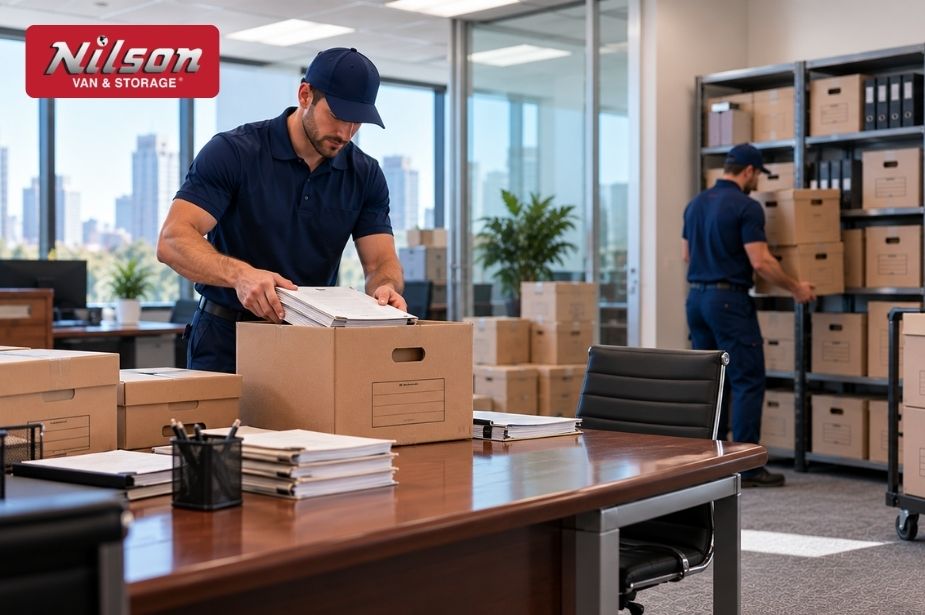
Legal Document Storage During a Law Firm Office Relocation Guide
Full Truckload Shipping for Businesses: 5 Benefits and When to Choose FTL Services