Shipping Heavy Equipment Overseas from South Carolina to the UK: A Business Guide
Shipping heavy equipment overseas from South Carolina to the UK requires more than arranging ocean transport. Your machine must be prepared for export, matched to the right loading method, documented correctly, and coordinated through port, customs, and final-delivery steps.
The decisions made before the equipment reaches the port can affect cost, timing, handling, and whether the shipment moves without avoidable delays.
This guide explains how to plan international heavy equipment shipping, evaluate RoRo and container options, prepare machinery, estimate costs, and choose the right transportation support.
Understanding the South Carolina-to-UK Shipping Process
International equipment moves usually involve several connected stages rather than one simple pickup and delivery.
A practical plan accounts for the equipment itself, the origin location, the U.S. export process, ocean transportation, UK import requirements, and delivery to the final site. Check this requirement before shipping heavy equipment overseas begins.
Start With the Equipment Profile
The first step is to document what is being shipped. A shipping provider or freight coordinator will typically need the make, model, serial number, operating weight, dimensions, value, and intended destination.
Include the machine’s length, width, and height in its transport-ready condition, not only the manufacturer’s published specifications.
Attachments can change the measurements significantly. Buckets, booms, forks, blades, outriggers, cabs, counterweights, and other removable components should be identified separately.
A machine that appears to fit a standard transport plan may require a different loading arrangement after attachments are installed. A clear scope makes shipping heavy equipment overseas easier to coordinate.
Also note whether the equipment is operational. A running excavator may be driven or winched into position, while a non-running unit could require specialized loading equipment or additional labor. This distinction matters for both RoRo shipping and inland movement to the port.
Map the Shipment From Pickup to Jobsite
A complete route may include:
- Pickup at a farm, construction site, dealer, warehouse, or industrial facility in South Carolina
- Inland transport to the Port of Charleston or another suitable export gateway
- Export documentation, terminal handling, and ocean freight
- UK port clearance, inland delivery, and final placement at the destination
Charleston may be a practical starting point for some South Carolina shipments, but the best port and routing depend on the equipment’s dimensions, the carrier’s sailing schedule, terminal requirements, and the delivery location in the UK.
A shipment going to London, Birmingham, Manchester, Glasgow, or a remote industrial site may require different final-mile planning. When shipping heavy equipment overseas, that handoff deserves attention.
The final destination should be described precisely. “The UK” is not enough for a useful delivery plan.
A commercial yard, active construction site, port facility, and rural property can have very different access conditions, unloading requirements, and appointment procedures. Businesses shipping heavy equipment overseas should document this condition.
Assign Responsibility for Each Handoff
International shipping works best when every handoff has a named party. Before booking, clarify who is responsible for export documents, customs entries, port charges, UK import clearance, duties and taxes, unloading, and final delivery.
Terms such as door-to-port, port-to-port, and door-to-door describe different scopes of work. They should not be treated as interchangeable.
Ask for the exact origin and destination points, included services, exclusions, and any charges that could arise if the equipment is delayed or requires special handling.
At Nilson Van and Storage, our role should be defined around the transportation services that match the shipment and its origin or destination needs.
For an overseas equipment move, that may involve coordinating the domestic portion, packing or preparation support, storage timing, and the broader moving plan.
Ocean freight, customs brokerage, and UK-side services should be confirmed specifically rather than assumed. Before shipping heavy equipment overseas, confirm who handles that step.

How to Prepare Heavy Equipment for Overseas Transport
Preparation protects the shipment from preventable complications. It also gives the carrier accurate information for selecting equipment, loading methods, and documentation.
The goal is not simply to make machinery look ready; it is to make the shipment measurable, accessible, documented, and suitable for the chosen transport method. Businesses shipping heavy equipment overseas should document this condition.
Clean, Inspect, and Document the Machinery
Many international shipments require equipment to be reasonably clean, particularly when soil, plant material, grease, or residue could create inspection concerns.
Requirements can vary by equipment type, origin, carrier, and destination authority, so confirm current instructions with the carrier, customs professional, or relevant UK authority.
Before pickup, photograph the machine from multiple angles. Capture serial plates, hour meters, existing dents, hydraulic lines, tires or tracks, attachments, and areas that are difficult to inspect after loading.
Written condition notes should match the photographs. Check this requirement before shipping heavy equipment overseas begins.
Remove personal items, loose tools, unsecured components, and materials that are not included in the shipment. Drain or manage fluids only according to carrier and regulatory instructions.
Fuel, batteries, pressurized systems, hazardous materials, and other regulated components may have specific requirements. Do not guess about these items; ask before the equipment is collected.
Make the Machine Transport-Ready
A transport-ready machine may require folded booms, lowered cabs, retracted outriggers, secured buckets, removed attachments, or protected control surfaces.
The correct configuration depends on the equipment and loading method. When shipping heavy equipment overseas, that handoff deserves attention.
If attachments are removed, label them and record their dimensions and weight. Small parts should be packaged so they remain with the shipment without obstructing access or creating a handling issue. Heavy loose components may need their own skid, crate, rack, or lifting plan.
Check tires, tracks, steering, brakes, lifting points, tie-down locations, and access panels. A machine does not necessarily need to be fully operational, but the loading team must know whether it can start, steer, roll, lift, or be winched.
This information should be provided before dispatch, not discovered at the terminal. When shipping heavy equipment overseas, that handoff deserves attention.
Decide Whether Packing Is Necessary
Not every piece of heavy machinery needs the same protection. Some self-propelled equipment may be prepared for RoRo transport, while smaller or disassembled equipment may be suitable for a container, flat rack, or other specialized arrangement.
Crating can be useful for attachments, parts, electronics, and sensitive components, but it adds labor, materials, and dimensional weight. A clear scope makes shipping heavy equipment overseas easier to coordinate.
A common mistake is to treat packing as an all-or-nothing decision. In practice, the best plan may combine methods: the main machine moves as a unit, removable accessories are secured separately, and vulnerable controls or exposed parts receive additional protection.
Choose protection based on the equipment’s geometry, loading process, exposure during handling, value, and destination requirements.
Overpacking can increase cost and handling time, while under-preparing can create documentation, inspection, or damage concerns. These details affect the plan for shipping heavy equipment overseas.
Build a Document Package Early
The paperwork should be assembled before the pickup date. Depending on the shipment, documents may include commercial invoices, packing information, proof of ownership, serial-number records, export filings, transport instructions, and customs documents.
The required package varies by shipment and trade arrangement.
The UK importer may need an EORI number and may be responsible for import declarations, duties, VAT, and any applicable product or machinery requirements. These matters should be confirmed with the importer’s customs broker or qualified trade professional.
A transportation provider can help identify information needed for the move, but should not replace professional customs advice. Businesses shipping heavy equipment overseas should document this condition.
Tell us about your move and get a personalized quote based on your requirements.
Choosing Between RoRo, Container, and Specialized Options
The loading method is one of the most important decisions in heavy equipment shipping overseas. It affects cost, handling, schedule, dimensions, preparation, and the number of times the machine is transferred between transport modes.
When RoRo Shipping May Fit
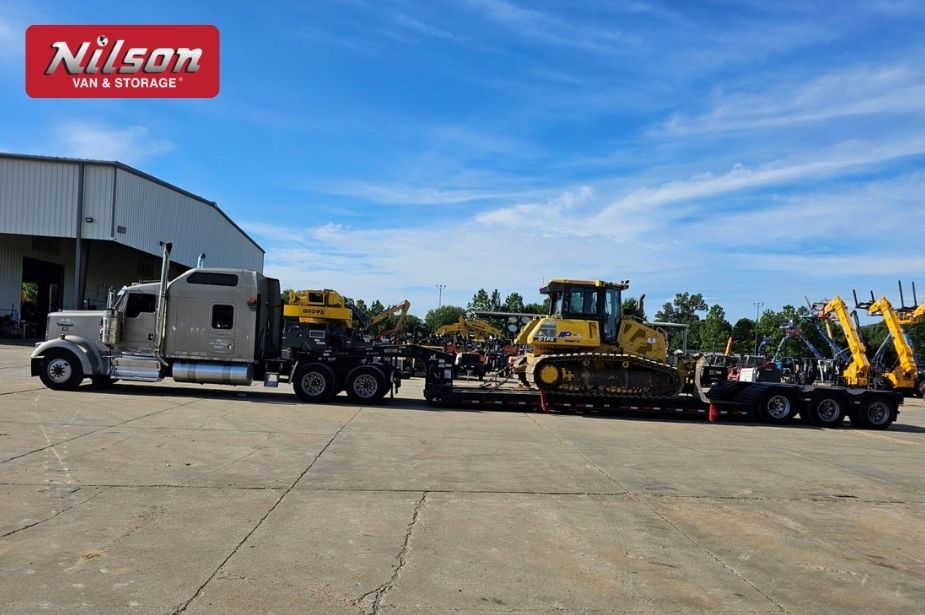
RoRo, or roll-on/roll-off shipping, is commonly considered for wheeled or tracked equipment that can be driven, towed, or positioned onto a vessel deck or cargo area.
It may be a practical option for larger machinery that does not fit inside a standard container. Before shipping heavy equipment overseas, confirm who handles that step.
RoRo can reduce the need to disassemble certain machines, but it is not automatically the least expensive choice.
The carrier may have specific limits for dimensions, operating condition, fuel, batteries, attachments, and securing points. Sailing schedules and destination-port availability also affect the decision.
Before choosing RoRo, confirm:
- Whether the equipment can move under its own power or requires winching
- The exact height, width, length, and weight accepted by the carrier
- How attachments, keys, loose parts, and accessories must be handled
- Where the machine will be delivered after discharge and how it will be unloaded
RoRo is often considered for excavators, loaders, agricultural machinery, lifts, and other mobile equipment, but suitability must be determined case by case. This is a useful checkpoint when shipping heavy equipment overseas.
When Containers or Flat Racks May Be Better
Containers can work for smaller equipment, disassembled machinery, parts, tools, and accessories that fit within the container’s internal dimensions and weight limits.
They can provide a more enclosed shipping arrangement, but the equipment must be loaded, blocked, braced, and secured correctly.
Flat racks or other specialized equipment may be considered when a machine is too wide or tall for a standard container but can be loaded and secured within the carrier’s rules.
These options may involve different terminal handling charges and availability constraints. Shipping heavy equipment overseas depends on accurate information here.
The key question is not simply, “Which method costs less?” It is, “Which method fits the machine with the fewest unnecessary handling steps?” A lower ocean rate can be offset by disassembly, crane work, crating, storage, terminal fees, or complicated delivery requirements.
Compare the Total Shipment, Not One Line Item
When evaluating international heavy equipment shipping, compare the full movement from origin to destination.
Ask whether each quote includes pickup, loading, inland transport, export handling, ocean freight, terminal charges, documentation support, customs brokerage, destination handling, duties and taxes, unloading, and final delivery.
Shipping heavy equipment overseas depends on accurate information here.
A quote that covers only port-to-port ocean freight may appear attractive because it excludes much of the work. A more complete quote may look higher but provide a clearer view of the actual project cost.
Before reviewing costs, gather the machine’s confirmed specifications and agree on who handles each pickup, port transfer, and delivery stage.
A written description of those responsibilities will make the pricing section more useful and reduce the chance of comparing quotes that cover different work.
Have questions about your upcoming move? Our team is ready to help.
Estimating the Cost of Shipping Heavy Equipment Overseas
The cost of shipping heavy equipment overseas depends on the machine, route, preparation, service scope, and destination requirements. There is no reliable single price based only on the equipment’s weight.
Two machines with similar weights can produce very different quotes because their dimensions, operating condition, loading requirements, and delivery locations differ.
Main Cost Factors
The most important pricing inputs usually include the following:
- Equipment dimensions, weight, value, and operating condition
- Pickup distance and access conditions in South Carolina
- Loading, lifting, disassembly, crating, blocking, and securing requirements
- Port, terminal, documentation, and ocean-freight charges
- UK customs clearance, duties, VAT, storage, unloading, and inland delivery
Oversized dimensions can affect the transport method even when the equipment is not exceptionally heavy. A tall machine may require a different trailer or vessel arrangement.
A wide machine may need permits or route planning for the domestic leg. A non-running machine may require a winch, crane, or additional labor at pickup and delivery. These details affect the plan for shipping heavy equipment overseas.
Why the Cheapest Quote May Not Be the Best Value
A low initial number may exclude destination charges, customs services, terminal handling, or final-mile delivery. It may also assume that the equipment is operational, clean, accessible, and ready to load.
If those assumptions are wrong, additional work can be required after the booking is made. This is a useful checkpoint when shipping heavy equipment overseas.
Ask for assumptions in writing. For example, confirm whether the quote assumes a level pickup surface, normal access, a running machine, standard business-hour delivery, customer-provided unloading equipment, or a particular port. Clear assumptions make comparisons more useful.
Valuation coverage should also be discussed. Valuation options, limits, exclusions, and applicable charges should be reviewed for the specific shipment. At Nilson Van and Storage, we explain applicable valuation terms before the move.
Reduce Avoidable Cost Without Cutting Necessary Services
You may reduce unnecessary expense by consolidating attachments, preparing accurate measurements, completing cleaning and documentation before pickup, and choosing a destination where the equipment can be unloaded efficiently.
Flexible scheduling may also provide more routing options, although availability and sailing schedules vary. Businesses shipping heavy equipment overseas should document this condition.
Do not remove services that the equipment genuinely needs. Skipping proper securing, customs preparation, or destination planning can create larger costs through storage, rehandling, missed appointments, or delays.
The better objective is a complete and accurate quote, not the lowest incomplete estimate. Check this requirement before shipping heavy equipment overseas begins.
Review The Quote Before Booking
A useful quote should identify the equipment, origin, destination, transport method, included services, exclusions, assumptions, payment terms, and expected timing.
It should also explain what happens if the machine’s dimensions change or if the equipment is not ready when the carrier arrives.
For South Carolina moves that include a local or intrastate segment, remember that local and intrastate moves in South Carolina are non-binding.
International arrangements can have different quote terms, so review the documents for the specific shipment rather than applying a local moving assumption to the entire overseas project. A clear scope makes shipping heavy equipment overseas easier to coordinate.
Coordinating Customs, Delivery, and Business Continuity
The ocean crossing is only one part of the project. Many operational problems occur at the handoffs between the shipper, carrier, terminal, customs representative, importer, and final delivery team.
A written coordination plan reduces uncertainty and gives the business a way to respond when dates or requirements change. Shipping heavy equipment overseas depends on accurate information here.
Clarify UK Import Responsibilities
The UK consignee or importer should confirm who will file the import declaration, provide the required identification, classify the equipment, pay duties and VAT when applicable, and arrange release from the port.
Commodity classification and tax treatment can vary by equipment type, purchase arrangement, origin, and intended use. Before shipping heavy equipment overseas, confirm who handles that step.
The importer should work with a customs broker or qualified trade adviser when needed. Transportation providers can coordinate shipment information, but the importer remains responsible for confirming the legal and financial requirements that apply to the transaction.
Include accurate descriptions rather than vague labels such as “machine parts” or “construction equipment.” Provide the make, model, serial number, condition, quantity, value, and intended use where requested.
Consistent information across the invoice, packing details, booking, and customs entry helps prevent avoidable questions.
Plan the UK Delivery Before the Vessel Departs
Do not wait until the equipment arrives in the UK to think about final delivery.
Confirm the destination address, site contact, opening hours, access restrictions, unloading surface, available lifting equipment, and appointment requirements. Shipping heavy equipment overseas depends on accurate information here.
A machine may fit through a site entrance but still be difficult to place because of overhead obstructions, soft ground, narrow approaches, restricted turning space, or an active work zone.
Ask the receiving site to provide photographs, measurements, and delivery instructions when the location is not familiar.
If the equipment requires a crane, forklift, ramp, or other unloading resource, assign responsibility in advance. Clarify whether the delivery team is expected to unload or whether the receiving party must provide equipment and personnel.
Protect the Business Schedule
For a construction contractor, dealer, manufacturer, farm, or rental company, the equipment may be tied to a contract or project milestone.
Build flexibility into the schedule because vessel departures, port release, customs processing, weather, inspections, and final-mile appointments can change. A clear scope makes shipping heavy equipment overseas easier to coordinate.
If the equipment is replacing a failed unit, identify a temporary operating plan. If it is needed for a planned project, avoid scheduling labor and site activities around an unconfirmed arrival date.
Keep the buyer, seller, importer, customs contact, carrier, and receiving site aligned on updates.
Nilson Van and Storage can be a useful planning resource for the moving and domestic transportation portions that fall within the agreed service scope.
Our team can also help identify the information needed to discuss pickup access, equipment preparation, storage timing, and delivery coordination.
International scope should always be confirmed for the specific shipment. When shipping heavy equipment overseas, that handoff deserves attention.
Speak With A Moving Expert About UK Delivery Planning [Speak With An Expert]
The shipment plan should connect these stages, including equipment preparation, transport to the export gateway, documentation, and the handoff to the overseas carrier. Keep the responsible contacts together so your business can resolve a change before it becomes a delay.
Building a Practical Shipping Plan From South Carolina
Once the equipment, route, loading method, and responsibilities are understood, turn the information into a working plan.
The strongest plans are specific enough for each party to act on and flexible enough to accommodate normal changes in international freight. These details affect the plan for shipping heavy equipment overseas.
Use A Shipment Readiness Timeline
Several weeks before pickup, gather dimensions, weight, value, photographs, serial numbers, operating-condition details, destination information, and importer contacts. Request quotations using the same information so providers can be compared fairly.
Before booking, confirm the selected transport method, port, sailing or routing assumptions, document responsibilities, valuation coverage, pickup conditions, and destination arrangements.
Schedule cleaning, disassembly, crating, or attachment removal early enough to correct problems before dispatch. This is a useful checkpoint when shipping heavy equipment overseas.
Shortly before pickup, verify that the machine is in the promised condition, loose items are removed or packed, keys and documents are available, access is clear, and the site contact knows what will happen.
Recheck the dimensions if the machine has been modified or reassembled.
Prepare Questions for Every Provider
A capable provider should be able to explain what information is needed and where the company’s responsibility begins and ends. Ask: These details affect the plan for shipping heavy equipment overseas.
- Which parts of the move are included from South Carolina to the UK?
- Is the proposed method RoRo, container, flat rack, or another arrangement, and why?
- What assumptions affect the price or loading plan?
- Who handles export documentation, customs clearance, unloading, and final delivery?
- What happens if the equipment is non-running, oversized, delayed, or not ready?
The answers matter more than a broad claim that the company handles international shipping. You need to know who coordinates each step and which services must be arranged by another party. These details affect the plan for shipping heavy equipment overseas.
Consider Storage When Timing Does Not Align
Equipment may need temporary storage if the jobsite is not ready, the buyer’s import arrangements are delayed, or the shipment leaves South Carolina before the receiving team can accept it. Storage can be useful, but it adds handling, timing, and cost considerations.
Ask where the equipment will be stored, how it will be accessed, whether it needs special preparation, and who authorizes release. If attachments or parts are stored separately, keep an updated inventory so the shipment can be reunited efficiently.
Nilson Van and Storage offers storage as part of its broader moving and relocation services where appropriate to the customer’s needs and agreed scope. Confirm the storage arrangement, access terms, and handling details before relying on it for an overseas equipment schedule.
Request A Complete Quote Before Booking Overseas Transport [Get A Free Quote]
Once the route, handling method, and responsible parties are clear, review the full quotation against your business schedule. Confirm what is included at origin, at the port, and after arrival, and record any assumptions that could change before shipping begins.
Wrapping Up
Shipping heavy equipment overseas from South Carolina to the UK is a coordination project involving equipment preparation, loading decisions, export documentation, ocean transport, UK import responsibilities, and final delivery planning.
The best approach starts with accurate measurements and a clear description of the machine, then matches the equipment to an appropriate method such as RoRo, container, flat rack, or another specialized option.
When comparing the cost of shipping heavy equipment overseas, look beyond the ocean-freight line. Review pickup, loading, preparation, port handling, customs responsibilities, destination charges, unloading, valuation coverage, and final delivery.
Confirm every assumption in writing and plan the UK jobsite before the equipment departs South Carolina.
Nilson Van and Storage can help customers evaluate the moving, transportation, packing, and storage portions that fit the agreed service scope.
Whether your shipment begins at a construction site, dealer, farm, warehouse, or commercial facility, a detailed conversation is the right next step for determining what information and coordination your equipment requires.
Make us one of your preferred sources on Google!


FAQs - Shipping Heavy Equipment Overseas
Our Recent Articles
Stay informed and inspired with the latest tips, insights, and updates from the Nilson Van and Storage blog. From expert packing advice and moving checklists to stories about our commitment to the community, our articles are here to make your relocation journey smoother and stress-free. Explore our recent posts to discover how we’re redefining the moving experience for Columbia, Myrtle Beach, Charleston, Sumter, Savannah, and beyond.
Warehouse Storage for Small Businesses During an Office Relocation
Logistics Planning for Business Relocation: A Step-by-Step Guide for US Companies