
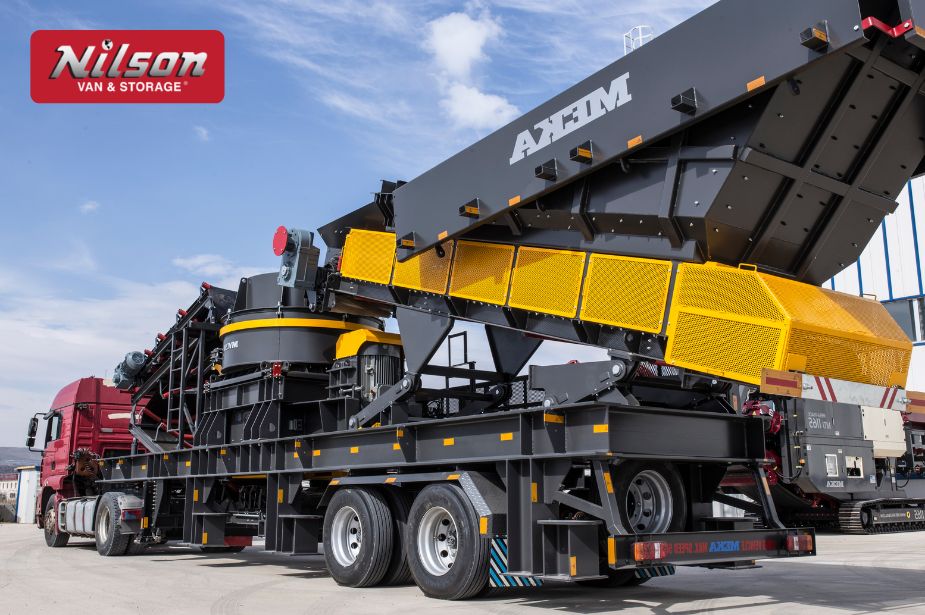
Heavy Equipment Transport in Bluffton, SC: How to Plan a Smooth, Damage-Free Move
Heavy Equipment Transport in Bluffton, SC, requires more than arranging a truck and choosing a pickup time; the equipment, access conditions, loading method, route, and receiving site all have to work together. A poorly planned move can lead to delays, avoidable handling issues, or equipment arriving at a jobsite before the crew is ready for it.
Bluffton’s growing construction activity, Lowcountry road network, narrow access points, gated communities, and proximity to Hilton Head and Beaufort County can make equipment moves especially detail-sensitive. This guide explains how to plan an heavy equipment move, what information a moving company needs, how to prepare the machine, and how Nilson Van and Storage can help you organize the transportation process around your project.
Heavy Equipment Transport in Bluffton, SC: Start With the Equipment and Jobsite
The first planning mistake we see is treating every machine as if it can be moved the same way. A compact excavator, skid steer, scissor lift, landscaping machine, generator, or larger construction unit may each require a different loading approach, amount of space, and access plan. Before requesting equipment hauling in Bluffton, SC, identify exactly what is being moved and where it must go.
Document the Machine Before Scheduling
Create a basic equipment profile before speaking with a transporter. Include the manufacturer’s make and model, operating weight, overall length, width, height, and any attachments. If the machine has a bucket, boom, forks, counterweights, outriggers, or removable components, note whether those parts will travel attached or separately.
Photographs are useful because specifications do not always show the condition or configuration of a particular unit. Take pictures from each side, including the controls, tires or tracks, attachment points, hydraulic lines, doors, mirrors, and any existing dents or paint damage. This creates a practical reference for the condition before loading and helps the moving team understand what they will encounter.
If the equipment has been modified, tell the transporter. Added cages, oversized tires, custom racks, extended booms, or other changes can affect dimensions even when the original factory specifications appear straightforward.
Inspect the Pickup and Delivery Sites
The machine may fit on the transport equipment while still being difficult to load or unload at the site. Look at the entire approach, not just the parking area. Consider driveway width, turning space, overhead branches, utility lines, drainage features, soft ground, slopes, gates, temporary fencing, and nearby structures.
For a Bluffton commercial property, the site manager may need to reserve a loading area or coordinate access with a landlord. At a residential construction site, the builder may need to confirm that the driveway or unfinished surface can accommodate the equipment and loading activity. A site near Hilton Head may also involve community entry procedures, limited staging space, or delivery windows set by a property manager.
The receiving site should be ready before the equipment leaves the origin. A machine that arrives while the excavation area, slab, access lane, or crew is unavailable may need to wait, be repositioned, or require additional coordination. Those issues are easier to solve before scheduling than during delivery.
Separate Transportation From Jobsite Operation
Moving equipment to a site does not automatically mean the transporter will operate it once it arrives. Confirm who is responsible for unloading, positioning, setup, fuel, battery charging, testing, and final placement. If a piece of equipment needs to be driven or operated during loading, identify the qualified person who will handle that task.
This distinction matters for rental equipment, contractor-owned machinery, and equipment being transferred between jobs. A clear handoff prevents the common assumption that transportation includes every activity surrounding the machine.
Build a Practical Information Packet
A useful request for equipment transport should include the following:
- Equipment specifications, photographs, attachments, and current condition.
- Pickup and delivery addresses, site contacts, access restrictions, and preferred dates.
- Any known loading requirements, building rules, gate procedures, or staging limitations.
Providing this information early helps the moving company assess the move rather than guess at its requirements. It also gives you a more meaningful quote and reduces last-minute changes.
For a construction contractor comparing construction equipment movers in Bluffton, the quality of the initial questions is often more revealing than a quick low estimate. A professional conversation should address dimensions, access, timing, handling, valuation, and the receiving plan before the move is placed on the calendar.
How to Plan an Equipment Move Around Bluffton Access Conditions
The Lowcountry presents a mix of suburban development, established neighborhoods, commercial corridors, bridges, gated communities, and active construction zones. That does not make every move difficult, but it does make access planning important. A transporter needs enough information to determine how the equipment will reach the loading area and how it will be received at the destination.
Review Access From the Property Entrance Inward
Start at the public entrance and work toward the equipment’s final position. Check whether the transporter can enter the property, turn, approach the loading area, and leave without needing to reverse through a constrained space. Look for low clearances, narrow gates, parked vehicles, construction materials, landscape features, and temporary barriers.
For a downtown Bluffton or older Lowcountry property, the challenge may be limited staging rather than distance. For a new development, the approach may change from week to week as roads, curbs, utilities, and homes are completed. Send updated photographs when conditions have changed since the original estimate.
Coordinate With Property Managers and Site Supervisors
Commercial buildings, condominiums, planned communities, marinas, resorts, and construction sites may have rules for delivery vehicles and loading activity. Ask the property manager or general contractor about reservation requirements, access codes, delivery hours, elevator or dock limitations, and who must be present when the equipment arrives.
Do not rely on a general statement such as “the truck can get in.” The relevant questions are more specific: Where can it stage? Is there room to load or unload? Can the gate remain open? Is the surface firm enough for the equipment and handling process? Who will direct the transporter to the final placement area?
Account for Weather and Ground Conditions
Rain can change the practicality of an equipment move even when the route and schedule remain unchanged. Unfinished lots, grass shoulders, gravel approaches, and recently graded surfaces may not handle the combined weight of the equipment and loading operation as expected. A wet access point can also become difficult to use without damaging the site.
Ask the project contact to identify an alternate staging area if the primary access point becomes unavailable. The alternate plan might involve a paved entrance, a different gate, or a delayed delivery window. The right response depends on the site and the equipment, so discuss the condition with the moving company rather than making an assumption on the day of the move.
Consider the Relationship Between Bluffton, Hilton Head, and Beaufort County
Equipment transport near Hilton Head may involve island access, community restrictions, limited laydown areas, or delivery coordination that differs from a typical warehouse or open construction lot. A move within Beaufort County may be relatively close in mileage while still requiring careful scheduling because of site access and the number of parties involved.
That is why Lowcountry equipment transport should be planned by more than mileage alone. Pickup and delivery windows, access conditions, equipment dimensions, and the readiness of both sites can influence the work involved more than the map distance.
Keep the Schedule Flexible Enough for Real Conditions
A project schedule may state that equipment is needed on a particular morning, but the transportation plan should identify a workable delivery window and a responsible site contact. If concrete placement, excavation, utility work, or a subcontractor’s arrival depends on the machine, communicate that dependency early.
At Nilson Van and Storage, our team can review the information available for a move and help clarify the planning questions that need answers before scheduling. Availability and requirements depend on the equipment and the specific origin and destination, so an early conversation is more useful than waiting until the jobsite is under pressure.
Choosing Handling, Packing, and Valuation Options for Machinery
Equipment transport is not only about the machine’s size. The way it is prepared and handled can influence the amount of time required, the likelihood of contact with surrounding components, and how clearly responsibilities are understood. A good plan addresses loose parts, moving assemblies, attachments, controls, and documentation before loading begins.
Prepare Moving Parts and Loose Components
Review the manufacturer’s instructions and the equipment’s normal transport requirements. Secure or remove loose tools, detachable controls, small accessories, removable guards, and items stored inside compartments. If a boom, arm, mast, bucket, fork, or stabilizer must be lowered, locked, folded, or removed, identify the procedure before the movers arrive.
Do not improvise with hydraulic, electrical, or mechanical components. If a part requires specialized preparation, arrange for the equipment owner, dealer, mechanic, or qualified operator to complete that step. The moving crew needs to know what has been done and what remains to be handled.
Clean mud and heavy debris from tracks, tires, undercarriages, and attachment areas when practical. This helps reveal existing conditions and reduces the chance that loose material interferes with loading or handling. It also makes the before-and-after inspection easier to understand.
Use Condition Documentation as a Communication Tool
A written condition report does not need to be complicated. Record visible scratches, dents, rust, cracked glass, worn tires, missing covers, leaks, and other existing conditions. Note the equipment’s hour-meter reading if relevant to your internal records, and take date-stamped photographs.
Share the documentation with the appropriate project contacts. When more than one party owns, rents, or operates the equipment, clarify who can approve preparation steps and who will receive the machine. This is particularly important when a contractor, equipment rental company, property owner, and jobsite supervisor are all involved.
Understand Valuation Coverage
Ask how valuation coverage applies to the move and what information is needed for the shipment. Nilson Van and Storage provides valuation coverage, not insurance. The applicable terms and options should be reviewed for the particular move rather than assumed from another shipment or a prior experience.
Valuation is not a substitute for documenting condition, identifying high-value components, or explaining unusual equipment features. Those steps support a clearer understanding of the shipment before transportation begins. If you have questions about what is available, raise them while requesting the estimate.
Compare More Than the Initial Number
When comparing equipment hauling Bluffton SC options, evaluate whether each estimate reflects the same scope. One proposal may assume the machine is ready at the curb with an open staging area, while another may include more detailed handling or coordination. Differences in preparation, access, timing, attachments, and delivery requirements can change the work involved.
Ask whether the estimate is based on final dimensions, whether the quote includes the stated origin and destination conditions, and what changes would require a revised review. For local and intrastate moves in South Carolina, Nilson Van and Storage states that estimates are non-binding. That makes accurate information and clear communication especially important when planning the budget.
A useful comparison should also clarify what is not included. For example, equipment operation, site preparation, specialty lifting, disassembly, reassembly, permits, or third-party services may require separate discussion depending on the move. Do not assume these activities are included unless they have been specifically reviewed.
Plan Around Project Changes
Construction work changes quickly. If a gate moves, the machine gains an attachment, the delivery site changes, or the equipment becomes unavailable, tell the moving company as soon as possible. A revised plan may be straightforward when there is time to evaluate it; the same change can create a serious scheduling problem when reported at pickup.
You may also like: How to Pick the Right Trailer for Heavy Equipment Transport in Lexington, SC
Scheduling and Coordinating a Commercial Equipment Move
A heavy equipment move often supports a larger business activity: opening a site, shifting a crew, completing a phase of work, returning rented machinery, or transferring assets between locations. The transportation appointment should therefore fit into the operating schedule rather than exist as an isolated event.
Choose the Date Based on Readiness, Not Hope
Select a pickup date only after the equipment can be released and the destination can receive it. Confirm that the machine is available, the operator or site representative is assigned, access is open, and the required paperwork or rental instructions are ready.
If the equipment is leaving an active jobsite, identify who will clear nearby materials and vehicles. If it is arriving at a new site, confirm where it will be placed after unloading. A delivery window is much more useful when someone has authority to make decisions at the property.
Establish a Communication Chain
Name one primary contact at pickup and one at delivery. Include a backup contact if the move is supporting a time-sensitive commercial project. These people should know the equipment, the site conditions, the planned handoff, and the decisions they are authorized to make.
A simple communication plan should answer four questions: Who confirms the machine is ready? Who approves access? Who receives it? Who communicates a change in site conditions? Without those answers, a small issue can move through several people before anyone can resolve it.
Plan for Buildings, Neighborhoods, and Shared Access
A commercial move may take place near active businesses, residents, customers, or other contractors. Coordinate loading activity so it does not conflict with an entrance, fire lane, customer queue, scheduled event, or another delivery. Property restrictions may vary, and the manager or local authority may need to confirm what is permitted at the site.
For moves connected to a business relocation or facility change, consider whether other assets are traveling at the same time. Separating equipment transportation from office furniture, records, or general contents may make the project easier to stage, but it also requires a clear inventory and handoff plan.
Confirm What Happens If Timing Changes
Construction schedules, equipment releases, weather, and site access can change. Ask how a change should be communicated and how much notice is practical. Nilson Van and Storage does not charge cancellation fees, but availability and scheduling can still be affected when an appointment changes, so early notice remains the best approach.
Do not wait until the transporter is already en route to disclose a new address, a blocked entrance, a larger attachment, or an unavailable site contact. Those details can affect whether the original plan still works.
Use a Written Move Summary
Before the appointment, keep one written summary containing the equipment description, dimensions, photographs, contacts, addresses, access notes, scheduled window, valuation questions, and known exclusions. Send updated information when the project changes.
For contractors managing several machines, create one summary per unit rather than combining everything into a vague list. This makes it easier to identify which equipment is ready, which unit has special requirements, and which destination contact is responsible for each delivery.
A coordinated plan gives everyone the same version of the move. It also gives the transporter a better chance to identify questions while there is still time to address them.
The global moving service market was estimated at USD 20.71 billion in 2024. Market projections indicate growth to USD 21.42 billion in 2025 and USD 30.01 billion by 2035, representing a CAGR of 3.43% throughout the 2025–2035 forecast period.
Read Also: 5 Things to Know Before Hiring Heavy Equipment Transport in Garden City, GA
When Professional Equipment Transport Is the Better Fit
Some equipment moves are small enough for an owner or contractor to manage with existing resources. Others involve machinery that is too large, valuable, awkward, or operationally important to handle casually. The decision should be based on the actual demands of the move, not only on the distance between addresses.
Consider the Equipment’s Size and Configuration
A machine may be difficult to move because of its weight, height, width, attachments, articulation, low clearance, or limited tie-down points. Even equipment that appears compact can require careful loading when it has a high center of gravity, fragile controls, exposed components, or a configuration that changes its dimensions.
If the move requires disassembly, specialized loading equipment, or coordination with several parties, professional planning may reduce uncertainty. The transporter can also tell you what information is still needed before determining whether the requested move can be handled as described.
Consider the Cost of Project Disruption
A delayed piece of equipment can hold up operators, subcontractors, inspections, deliveries, and scheduled work. The financial impact is not limited to transportation. It may include idle labor, rescheduling, rental extensions, missed production, or a jobsite that cannot proceed as planned.
That does not mean professional transportation is always the most economical choice. It means the comparison should include the value of the equipment, the consequences of a delay, the resources required to prepare it, and the time your own team would spend coordinating the move.
Consider Ownership and Accountability
When equipment belongs to a rental company, lender, customer, or business partner, the condition and handoff expectations may be more formal. Clarify who can approve transport, who documents the condition, and who signs for receipt. If multiple parties provide instructions, designate one person to resolve conflicts before pickup.
For a company moving equipment between Bluffton, Hilton Head, Savannah, Charleston, or another service area, a professional moving coordinator can help organize the information flow around the transportation request. The exact service fit depends on the equipment and locations, so discuss the details rather than assuming that every machine or move follows the same process.
Ask Useful Questions Before Booking
Before choosing a provider, ask how the company evaluates dimensions, site access, attachments, condition documentation, valuation coverage, and schedule changes. Ask what information is required for a quote and whether the estimate is binding or non-binding for the type of move you are considering.
You should also ask how the company prefers to receive photos, who should be present at pickup and delivery, and what happens if the equipment or site differs from the information originally provided. Direct answers at this stage are more valuable than broad promises.
For South Carolina local and intrastate moves, remember that Nilson Van and Storage’s estimates are non-binding. A detailed request still matters because it provides a stronger basis for discussing the work involved. If the move is part of a larger commercial relocation, the company may also be able to discuss related moving, packing, or storage needs where appropriate.
Read Also: How to Plan Heavy Equipment Transport in Tybee Island, GA for Tight Coastal Job Sites
Wrapping Up
Planning Heavy Equipment Transport in Bluffton, SC, starts with accurate equipment details, realistic access information, and a receiving site that is ready for the handoff. Document the machine’s condition, disclose attachments and modifications, coordinate gates and staging areas, identify responsible contacts, and allow time to review changes before the appointment.
The best equipment move is not necessarily the one with the shortest route or lowest initial number. It is the plan that matches the machine, the property, the schedule, and the responsibilities of everyone involved. That approach can reduce surprises and help protect the continuity of your project.
Nilson Van and Storage can review the details of a local, intrastate, commercial, long-distance, or related moving request and explain the information needed to plan the next step. Valuation coverage is available rather than insurance, South Carolina local and intrastate estimates are non-binding, and the company does not charge cancellation fees. Ask questions early, provide complete site information, and choose a transportation plan you understand before the equipment is scheduled.


FAQs - Heavy Equipment Transport in Bluffton, SC
Our Recent Articles
Stay informed and inspired with the latest tips, insights, and updates from the Nilson Van and Storage blog. From expert packing advice and moving checklists to stories about our commitment to the community, our articles are here to make your relocation journey smoother and stress-free. Explore our recent posts to discover how we’re redefining the moving experience for Columbia, Myrtle Beach, Charleston, Sumter, Savannah, and beyond.
How to Choose the Right Warehouse Facility for Your Business
Data Center Relocation Checklist: Key Steps for a Successful IT Move