5 Things to Know Before Hiring Heavy Equipment Transport in Garden City, GA
Heavy Equipment Transport in Garden City, GA requires more planning than booking a truck and providing an address. The machine’s dimensions, operating weight, loading method, route, delivery site, and scheduling requirements all affect how the move should be arranged.
For contractors, manufacturers, port-related businesses, and industrial operators in the Savannah area, a small planning mistake can create delays at a jobsite or terminal. This guide explains five important considerations before hiring a carrier, including equipment details, access planning, trailer selection, documentation, and quote comparison.
Understand the Equipment Before Requesting a Quote
The first step in arranging industrial machinery transport Garden City businesses can rely on is identifying exactly what needs to move. A carrier cannot accurately evaluate the project from a general description such as “excavator,” “generator,” or “plant equipment.” Similar machines can have very different weights, dimensions, attachment requirements, and loading needs.
Providing complete information early gives the transportation team a better basis for planning. It also reduces the possibility of a revised quote or last-minute equipment change after the move has already been scheduled.
Record Dimensions, Weight, and Attachments
Prepare the manufacturer’s specifications when available. The most useful details typically include the machine’s length, width, height, operating weight, ground clearance, wheelbase, and center of gravity. Include detachable components such as buckets, booms, counterweights, outriggers, forks, masts, cutting heads, or other attachments.
A machine’s transport dimensions may be smaller after certain components are removed. However, disassembly should not be assumed. Some attachments require specialized tools, trained personnel, or a qualified technician, and removing them may affect the equipment owner’s warranty or operating requirements.
Tell the carrier whether the machine rolls, tracks, steers, starts, and brakes under its own power. A non-running machine may require a winch, crane, forklift, or other loading arrangement. That detail can change the equipment hauling Garden City GA plan substantially.
Explain the Machine’s Condition
A working machine that can be driven onto a trailer is handled differently from equipment that is disabled, damaged, partially disassembled, or filled with material. Mention fluid leaks, missing tires or tracks, low batteries, locked controls, damaged steering, and any components that cannot be removed.
For equipment that has been used at a jobsite, clean excess mud, debris, and loose material where practical. This helps the crew inspect tie-down points and identify the machine’s actual dimensions. It also makes it easier to see whether attachments are secured for transport.
Gather Photos Before Scheduling
Photos are often more useful than a long description. Take clear images of all four sides, the identification plate, the loading points, the attachment connections, and the intended pickup and delivery areas. Include a photo with a person, doorway, gate, or other familiar reference when scale is difficult to judge.
At Nilson Van and Storage, our coordinators can use the information you provide to discuss the move requirements and determine what additional details are needed for a more informed quote. If the equipment is associated with a larger commercial relocation, packing, storage, or facility move, explain that at the beginning rather than treating the machinery as an isolated shipment.
Industrial equipment may also need temporary storage between a project’s closing date and the receiving site’s readiness. Confirm the timing and handling requirements before choosing a transportation plan.
Match the Trailer and Loading Method to the Machine
Trailer selection is not simply a matter of choosing the largest available option. The right setup depends on weight distribution, deck height, machine width, loading angle, ground conditions, bridge and route considerations, and how the equipment will be secured. Asking about the equipment plan before accepting a quote can reveal whether the provider has understood the move.
When a Lowboy Trailer May Be Appropriate
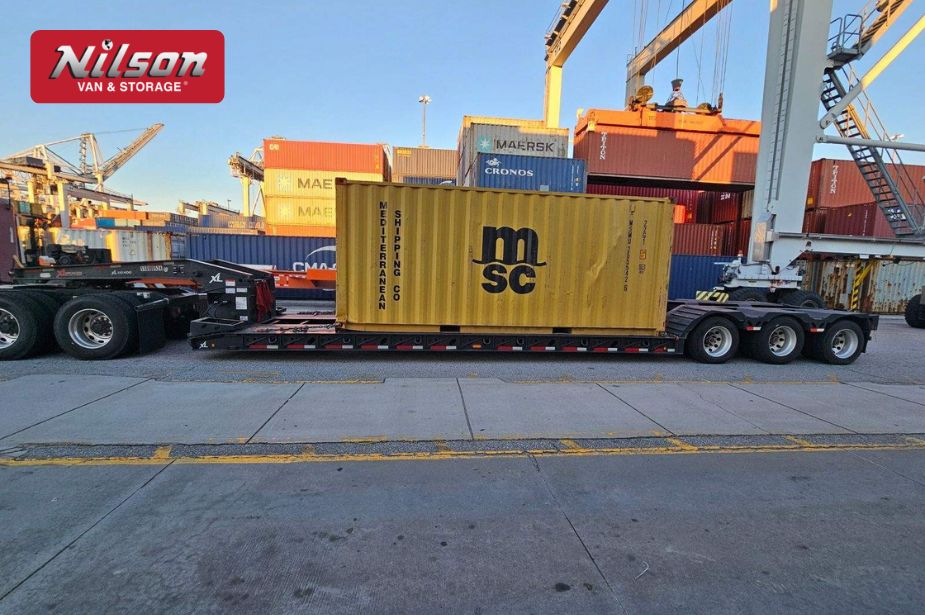
A lowboy trailer is commonly considered for tall or heavy machinery because its lower deck can help reduce the overall transport height. That can matter when moving construction equipment, industrial machinery, or other high-profile loads through areas with overhead restrictions.
A lowboy trailer is not automatically the right choice for every shipment. The machine’s dimensions, axle distribution, loading approach, and destination access still need to be reviewed. Depending on the load, other trailer types may be more suitable.
Ask the carrier to explain the proposed trailer and why it fits the machine. You should also ask whether the quoted arrangement assumes the equipment will be operational, whether an escort or special routing review may be needed, and whether loading assistance is included or arranged separately.
Review Loading and Unloading Conditions
The pickup location must support the loading process, not merely provide a street address. A carrier may need level ground, adequate turning room, a firm surface, open gates, clearance from overhead lines, and enough space to position the trailer.
The delivery site should be reviewed with the same care. A new facility may have a narrow entrance, unfinished pavement, construction barriers, limited staging space, or a dock that cannot accommodate heavy equipment transport. A machine can arrive at the correct address and still be difficult to place if the receiving area has not been prepared.
If a crane, forklift, ramp, winch, or loading crew is needed, identify who will provide it and who will coordinate its arrival. Do not assume that the transportation quote includes specialized loading equipment unless the scope says so clearly.
Plan for the Actual Site, Not Just the Route
Industrial machinery movers in the Savannah area often coordinate with multiple parties: equipment owners, project managers, terminal personnel, general contractors, facility managers, and receiving crews. Each party may have different access windows or documentation requirements.
For a Port of Savannah equipment transport project, confirm the terminal or facility’s appointment process, entry instructions, staging rules, identification requirements, and receiving hours with the responsible facility contact. Port procedures can vary by terminal, cargo type, appointment, and current operating conditions, so the transportation provider should not be expected to guess these details.
A short site review can prevent a long delay. Share gate widths, road grades, construction conditions, overhead restrictions, dock details, and any time-sensitive delivery constraints before the quote is finalized.
Read also: Heavy Equipment Transport in Cayce: What to Know About Permits and Oversize Loads
Check Route, Access, and Oversize Requirements Early
The third consideration is the route between Garden City and the delivery point. Heavy equipment transport may involve more than distance. The load’s size and weight can affect routing, permits, scheduling, escorts, and the sequence of pickup and delivery activities.
Know When the Load May Be Oversize
A shipment may require additional review when its height, width, length, or weight exceeds applicable limits. Requirements for oversize load transport in Georgia can depend on the vehicle and load configuration, the route, and the authorities involved. The carrier should evaluate the shipment details and explain which arrangements are included in the quote.
Do not rely on a general statement that “permits are handled.” Ask whether permits, route planning, escorts, tolls, or other charges are included, excluded, or dependent on final measurements. Requirements may change if an attachment is left installed or if the machine is loaded in a different orientation.
Because regulations and route conditions can vary, confirm current requirements with the transportation provider and the relevant authorities when appropriate. A professional provider should be willing to identify open questions rather than promise an exact arrangement without reviewing the load.
Coordinate the Schedule Around Site Operations
Heavy machinery frequently supports a project deadline. A paving contractor may need equipment before a road crew arrives. A manufacturer may need a machine delivered before installation personnel are scheduled. A port-related shipment may depend on a terminal appointment or vessel-related timeline.
Build the schedule around realistic pickup and receiving windows. Include time for site access, loading, paperwork, inspections, route conditions, and unloading. Avoid setting a delivery appointment so tightly that there is no room for normal changes in site readiness.
If the move crosses state lines, takes place during a restricted access period, or involves a downtown, industrial, or port-adjacent location, mention that immediately. The earlier the provider understands the operating environment, the easier it is to identify scheduling constraints.
Read also:
Confirm Who Handles Communication
A move with several participants needs one clear communication path. Decide who can authorize changes, who will meet the driver or crew, who confirms the equipment is ready, and who signs for delivery. Provide current phone numbers for pickup and delivery contacts.
For a commercial move, ask for the expected communication points before, during, and after transportation. You do not need constant updates, but you do need to know how schedule changes, access problems, or equipment questions will be addressed.
Nilson Van and Storage can discuss transportation planning as part of a broader commercial, industrial, or relocation project when the equipment move is connected to other moving needs. The important point is to make the project scope clear before the day of pickup.
Compare Heavy Equipment Transport Quotes Carefully
The lowest quote is not always the least expensive option once missing services, site delays, or changed equipment details are added. Compare moving quotes by scope rather than by the total number alone.
Ask What the Price Includes
A useful quote should identify the equipment being moved, the pickup and delivery locations, the proposed trailer or transport arrangement, the expected timing, and the services included. It should also show known exclusions or conditions that could change the price.
Ask specifically about loading and unloading, disassembly, reassembly, permits, escorts, storage, waiting time, tolls, site access assistance, and additional handling. Not every project needs each item, but unclear responsibility creates problems when the move is underway.
For a Garden City shipment connected to the Port of Savannah, clarify whether terminal appointments, access charges, staging, or facility-specific requirements are part of the transportation scope. The transportation provider may need information from the terminal or receiving facility before finalizing the plan.
Discuss Valuation Coverage
Ask what valuation coverage is available for the move and what conditions apply. Valuation coverage is not the same as insurance, and the terms should be reviewed before the shipment is scheduled. The appropriate level may depend on the type of equipment, its declared value, its condition, and the services being provided.
Nilson Van and Storage offers valuation coverage for applicable moving services. Ask the coordinator to explain the available terms for your specific shipment rather than relying on a general assumption about coverage.
Confirm Changes and Cancellation Terms
Large equipment projects can shift because of weather, construction delays, production schedules, vessel activity, or a receiving site that is not ready. Ask how schedule changes are handled, how much notice is requested, and what happens if the equipment description changes.
Nilson Van and Storage does not charge cancellation fees. Even so, it is sensible to communicate changes as early as possible because outside vendors, permits, appointments, or specialized equipment may have their own requirements or costs.
For Georgia transportation projects, do not assume that terms used for a local or intrastate South Carolina move apply automatically. Nilson Van and Storage’s local and intrastate South Carolina moves are non-binding, but the terms for a Garden City, Georgia project should be confirmed for that specific service and shipment.
Look for Specific Questions, Not Just a Fast Price
A provider that asks about weight, dimensions, condition, access, attachments, and delivery requirements is gathering information that affects the actual move. A provider that quotes immediately without asking for those details may be using assumptions that later need to be corrected.
Request a written summary of the agreed scope. Keep copies of equipment specifications, photographs, contact information, site instructions, and any approved changes. Those records help everyone work from the same information.
The moving service industry is experiencing steady growth, with the global market projected to reach USD 30.01 billion by 2035, up from USD 21.42 billion in 2025, at a CAGR of 3.43% between 2025 and 2035.
Read Also: Heavy Equipment Transport in Richmond Hill, GA: How to Get Machinery to Your Job Site on Time
Choose a Provider That Can Coordinate the Details
The final consideration is the provider’s ability to manage communication and practical details from pickup through delivery. Heavy equipment transport is a service decision, but it is also a coordination decision. The right questions help you distinguish between a plan that has been reviewed and one that is still based on assumptions.
Questions to Ask Before Hiring
Ask whether the provider has reviewed the equipment’s actual measurements and weight, what trailer arrangement is being considered, and whether the machine must be operational for loading. Confirm who handles permits or route-related requirements and whether specialized loading equipment is included.
Also ask how the provider handles changes in site access, what information is needed from the receiving facility, how valuation coverage works, and who your primary contact will be. If storage may be needed, ask how the storage period, pickup timing, and release process fit into the overall plan.
These questions are not intended to make the process difficult. They expose the decisions that can otherwise appear unexpectedly on pickup day.
Read Also: Heavy Equipment Transport in Bluffton, SC: How to Plan a Smooth, Damage-Free Move
Consider the Full Project Timeline
A machinery move may be one step in a larger sequence. The equipment may leave a construction site, spend time in storage, move through a port or industrial facility, and then continue to a new project. The best transportation plan accounts for those transitions instead of treating every leg as unrelated.
For example, a contractor relocating from one Garden City jobsite to another Savannah-area project may need equipment released after a final work shift and delivered before a crew is mobilized. A manufacturer may need a machine collected after production testing and held until the installation area is prepared. In both cases, timing and communication matter as much as the miles traveled.
If you are moving an office, plant, warehouse, or commercial operation at the same time, discuss the complete scope with the coordinator. Nilson Van and Storage provides commercial moving, packing, storage, and related moving services where applicable, so a combined project may be easier to evaluate when all requirements are disclosed from the start.
Prepare a Handoff Record
Before pickup, create a simple record containing the machine identification, visible condition, attachment list, operating status, photographs, keys, manuals, and special instructions. Note who releases the equipment and who is authorized to receive it.
At delivery, compare the equipment with the record and identify any questions promptly. Keep the transportation paperwork with the project file, especially if the equipment will be installed, stored, leased, or transferred to another party after arrival.
Our moving experts are here to assist you.
Wrapping Up
Hiring Heavy Equipment Transport in Garden City, GA is easier when you treat the move as a coordinated project rather than a simple vehicle booking. Start with accurate dimensions and weight, disclose the machine’s condition, review loading and site access, evaluate the route and any oversize requirements, and compare written quotes by scope.
Port-related equipment, construction machinery, industrial assets, and oversized loads each create different planning questions. A lowboy trailer may be useful in some situations, while another trailer or loading method may fit better. The correct choice depends on the actual equipment and the pickup and delivery conditions.
Nilson Van and Storage can help you discuss the information needed for a Garden City or Savannah-area transportation plan, along with related commercial moving, packing, and storage needs when they apply. Before scheduling, make sure the equipment details, timing, access instructions, valuation coverage, and responsibilities are clear. That preparation gives you a more realistic quote and a better-organized move.


FAQs - Heavy Equipment Transport in Garden City, GA
Our Recent Articles
Stay informed and inspired with the latest tips, insights, and updates from the Nilson Van and Storage blog. From expert packing advice and moving checklists to stories about our commitment to the community, our articles are here to make your relocation journey smoother and stress-free. Explore our recent posts to discover how we’re redefining the moving experience for Columbia, Myrtle Beach, Charleston, Sumter, Savannah, and beyond.
How to Choose the Right Warehouse Facility for Your Business
Data Center Relocation Checklist: Key Steps for a Successful IT Move