Heavy Equipment Transport in Richmond Hill, GA: How to Get Machinery to Your Job Site on Time
Heavy Equipment Transport in Richmond Hill, GA can determine whether your crew starts work on schedule or waits for a machine that has not arrived. Moving a bulldozer, excavator, skid steer, telehandler, or other large unit requires more than securing equipment to a trailer; it requires accurate dimensions, route planning, site coordination, and clear timing expectations.
For contractors, developers, utility crews, and equipment owners in Richmond Hill and Bryan County, the right transport plan reduces avoidable delays at the job site. This guide explains what to prepare, which details affect the move, how delivery coordination works, and how Nilson Van and Storage can help you request a moving quote for your equipment transport needs.
What Heavy Equipment Transport in Richmond Hill, GA Involves
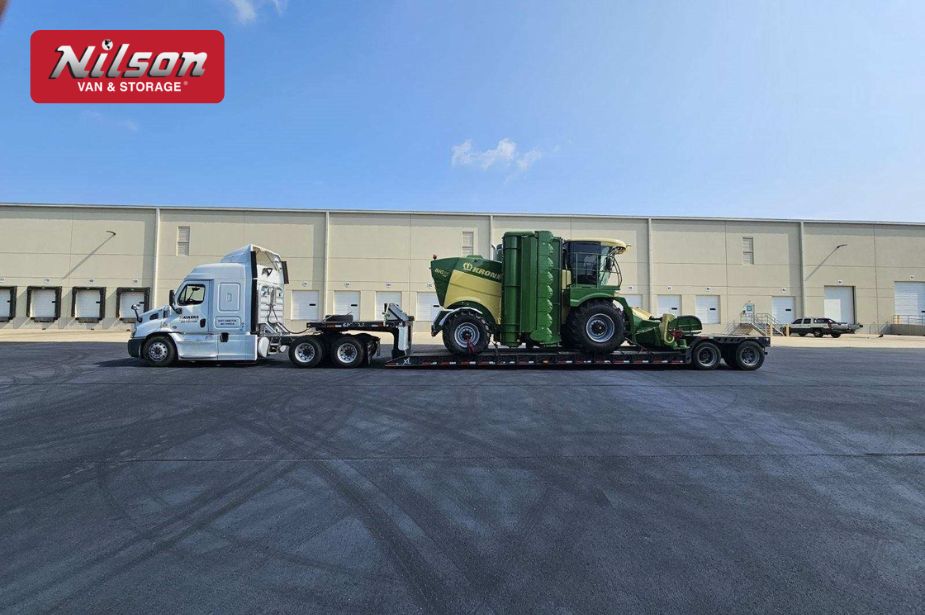
Heavy equipment transport in Richmond Hill, GA is the planned movement of oversized, overweight, or difficult-to-load machinery from one location to another. In Richmond Hill, that may mean moving equipment from a yard, dealership, project location, storage property, or another Georgia community to a developing job site. The exact approach depends on the machine, origin, destination, route, and delivery conditions.
Start With the Equipment, Not Just the Destination
A transport provider needs an accurate description of the machinery before discussing scheduling. A compact excavator and a full-size excavator may serve similar project functions, but their dimensions, loading requirements, and transport arrangements can differ substantially. The same applies to bulldozers, loaders, cranes, graders, lifts, and attachments.
Have the following information available:
- Equipment type, make, model, and approximate operating weight
- Overall length, width, height, and any removable attachments
- Whether the equipment runs, steers, and can be loaded under its own power
- Pickup address, delivery address, requested date, and job-site contact
- Photos showing the machine, access points, and any unusual features
Measurements should reflect the transport configuration rather than a brochure specification. For example, a bucket, blade, counterweight, boom, or cab height can change the dimensions that matter for loading and routing. When measurements are uncertain, photographs and model information help the coordinator identify what needs to be confirmed.
Why Richmond Hill Job Sites Require Advance Coordination
A delivery address is not always the same thing as a workable unloading location. New construction sites may have temporary entrances, changing grades, active subcontractors, limited staging space, or unfinished surfaces. Residential developments and commercial properties may also have access restrictions that change as construction progresses.
That is why equipment transport should be planned around the actual delivery point, not simply the street address. A coordinator may need details about the gate, entrance width, turning area, available ground space, overhead obstructions, and the person authorized to receive the machinery.
Choose Timing Around the Work Schedule
An equipment delivery window should account for more than the time on the road. Loading, route conditions, site access, unloading, inspection, and unexpected changes at the property all affect the working schedule. If the machine is needed for excavation on Monday morning, arranging arrival late Monday may not meet the project’s real requirement.
Build the plan backward from the first task that depends on the equipment. Then allow time for site confirmation and communication with the transport team. Earlier planning is especially valuable when multiple machines must arrive in sequence or when the project cannot easily substitute another unit.
How to Prepare Machinery for Job Site Equipment Delivery
Good preparation gives the transport team accurate information and helps prevent avoidable problems during loading and unloading. It also clarifies who is responsible for attachments, loose components, fuel considerations, keys, documentation, and condition checks. The preparation standard can vary by machine and provider, so confirm the specific requirements before the scheduled move.
Inspect and Document the Equipment
Before pickup, walk around the machine and record its existing condition. Photograph all sides, the cab, tracks or tires, attachments, hydraulic components, control areas, and any visible wear. Note existing dents, scrapes, leaks, cracked glass, missing covers, or other conditions that could be questioned later.
This documentation is not a substitute for the provider’s paperwork, but it creates a useful reference for the owner, contractor, and receiving team. It is particularly helpful when equipment changes hands between a rental company, dealer, project manager, and transport provider.
Confirm that removable parts are identified and accounted for. Buckets, forks, blades, augers, quick couplers, counterweights, ramps, tools, and loose accessories should not be assumed to travel with the primary machine unless they have been discussed in advance.
Make the Machine Transport-Ready
The machine should be available at the agreed pickup time, with keys and operating information accessible to the person handling the handoff. Depending on the equipment and transport arrangement, preparation may include lowering or securing components, removing attachments, checking fluid leaks, retracting booms, or addressing non-running conditions.
Do not make last-minute modifications simply to reduce the apparent size of a machine. A change that affects balance, attachment security, or loading may create a new issue. Instead, provide the equipment’s actual configuration to the coordinator and ask what preparation is expected.
If the machinery does not operate, say so before the quote is prepared. Non-running equipment may require different loading arrangements, additional equipment, or a revised schedule. Hiding that detail until pickup can lead to delay and extra coordination at the origin.
Confirm Valuation Coverage and Documentation
Ask how valuation coverage applies to the equipment and what documentation is needed. Valuation coverage is not the same as insurance, and the terms should be reviewed before the move. The appropriate amount may depend on the equipment type, declared value, transport arrangement, and provider requirements.
For commercial equipment, also confirm purchase orders, rental records, ownership information, delivery instructions, and the names of the authorized pickup and receiving contacts. Keeping those details together gives everyone one reliable source of information when the machine is ready to move.
Requesting a free moving quote from Nilson Van and Storage early in the planning process can help you identify which equipment details and site conditions need to be confirmed before scheduling.
What Affects Equipment Hauling Times and Delivery Windows
On-time equipment delivery depends on the relationship between the machinery, the route, and the job site. A transport provider can plan around known conditions, but no provider should promise an exact result without reviewing the equipment and delivery circumstances. The more complete the information is at the beginning, the more useful the schedule becomes.
Route and Access Information
Richmond Hill projects can involve subdivision streets, established commercial corridors, rural properties, industrial areas, and sites that are still under development. The most direct route is not automatically the best route for a large load. Road restrictions, bridge considerations, turning requirements, low clearances, construction activity, and local access rules may affect planning.
Provide the exact origin and destination, not only a nearby landmark. If the final approach uses a private road or temporary construction entrance, explain that clearly. A map pin, site plan, entrance photograph, or written access instruction can help distinguish the public address from the actual unloading area.
Delivery Window and Site Readiness
A workable delivery window should identify when the site will be ready, who will meet the driver, where the machine will be placed, and what happens if the crew is delayed. The receiving contact should be reachable during the planned window and able to approve placement or direct the final approach.
Before delivery, verify that the entrance is open and not blocked by stored materials, parked vehicles, fencing, equipment, or active work. Confirm that the planned unloading area can accommodate the machinery and that the surface conditions match the equipment’s needs. If the site has changed since the original quote, update the coordinator rather than assuming the original plan still applies.
Communication Between the Project Team and Transport Provider
One person should own the transport details. That individual can coordinate the equipment owner, site superintendent, general contractor, rental company, and transport provider. Without a clear point of contact, small changes can produce conflicting instructions.
Share schedule changes as soon as they are known. A delayed foundation pour, a closed entrance, a missing operator, or a change in equipment location may affect pickup or delivery. Early notice gives the parties more options than a message sent after the machine is already in transit.
For larger projects, create a simple delivery brief that includes the equipment list, sequence, origin, destination, access notes, site contact, requested window, and contingency contact. This is especially useful when bulldozers, excavators, loaders, and attachments must arrive in a particular order.
Plan for Conditions That Are Still Changing
Construction sites rarely remain static. A route that worked for one delivery may be blocked by new grading, concrete forms, trenching, or material storage a week later. Treat the site review as a current condition check, not a one-time formality.
When the equipment is critical to a project milestone, consider whether a backup date, alternate entrance, or temporary staging location is available. That does not eliminate every delay, but it gives the project team a practical response if the original unloading plan changes.
Read also: Heavy Equipment Transport in Cayce: What to Know About Permits and Oversize Loads
How to Evaluate Construction Equipment Transport in Richmond Hill
Choosing an equipment hauler is not only a price comparison. The lowest initial number may not be the best value if it excludes attachments, assumes a different machine configuration, or leaves site coordination to a busy project team. A useful quote should make the assumptions visible so you can compare providers fairly.
Ask What the Quote Includes
Request clarification on the equipment description, pickup and delivery points, transport configuration, requested dates, loading expectations, attachments, and any special site conditions. If a quote is based on incomplete dimensions or an unconfirmed address, treat it as preliminary rather than final.
Ask how changes are handled if the machine is not ready, the delivery entrance changes, or the site contact cannot receive the equipment. You should also understand what information is needed to confirm the schedule and whether the move is local, intrastate, or part of a longer-distance project.
For South Carolina local and intrastate moves, Nilson Van and Storage states that moves are non-binding. That means your planning conversation should focus on clear information, realistic scheduling, and confirmation of the current details rather than treating an early estimate as an unconditional commitment. Policies and move-specific terms should be reviewed with the company before booking.
The global moving service market was valued at USD 20.71 billion in 2024 and is projected to grow from USD 21.42 billion in 2025 to USD 30.01 billion by 2035, registering a compound annual growth rate (CAGR) of 3.43% during the forecast period (2025–2035).
Compare Experience With Similar Equipment Needs
Ask whether the provider has reviewed the actual machinery and whether the team understands the difference between a running and non-running unit, a machine with attachments, and a machine that must be positioned in a restricted area. You do not need a long sales presentation; you need evidence that the provider is asking the right operational questions.
A capable coordinator should want to know where the equipment is, how it will be loaded, what must arrive with it, who will receive it, and what the site looks like now. Those questions often reveal more about the quality of the plan than a broad claim about handling large machinery.
Consider Timing, Cost, and Operational Impact Together
Transport cost is only one part of the decision. A late bulldozer can leave a grading crew idle. A missing excavator can affect trenching, utility work, material deliveries, and subcontractor sequencing. On the other hand, rushing a move without confirming access can create a failed delivery attempt or require a new arrangement.
Compare the quote against the cost of downtime, equipment rental extensions, labor waiting time, and project rescheduling. You do not need to assume that a premium option is always necessary. Instead, match the transport plan to the consequences of a missed window and the importance of the machine to the work sequence.
Confirm How Changes and Valuation Are Handled
Before accepting a proposal, ask how changes to the equipment, route, schedule, or delivery location are documented. Ask what valuation coverage is available and what limitations or paperwork apply. Keep the final instructions in writing so the owner, project team, and transport provider are working from the same information.
Nilson Van and Storage can discuss the moving quote process and the details needed to evaluate a Richmond Hill equipment move. The company also states that it does not charge cancellation fees, but you should still communicate changes promptly because a revised plan may affect scheduling and coordination.
Read Also: Heavy Equipment Transport in Bluffton, SC: How to Plan a Smooth, Damage-Free Move
When Should You Arrange Equipment Hauling in Richmond Hill, GA?
The best time to arrange equipment hauling is before the machine becomes the project’s immediate bottleneck. Exact lead time depends on equipment size, origin, destination, route, requested date, site readiness, and current availability. Rather than relying on a generic number of days, start when you know the equipment and the work milestone it supports.
Begin With a Transport Intake
A useful intake can be completed before every detail is final. Gather the model, dimensions, operating weight, attachments, condition, origin, destination, preferred dates, and access notes. If the equipment is being purchased, rented, or transferred, include the expected release date and the person responsible for handing it over.
This information helps separate a straightforward move from one that needs additional planning. It also reduces repeated calls between the dealer, owner, contractor, and receiving site.
Build the Schedule Around the First Work Activity
Work backward from the first task that requires the equipment. If an excavator is needed for utility trenching, the delivery plan should leave time for unloading, placement, operator orientation, and any site adjustments before trenching begins. If a bulldozer supports grading, consider how its arrival affects survey work, material placement, and the next subcontractor.
Avoid scheduling delivery for the exact moment the crew is expected to begin work. A narrow plan has little room for a delayed site opening, a changed entrance, or a receiving contact who is handling another project issue.
Read Also: How to Plan Heavy Equipment Transport in Tybee Island, GA for Tight Coastal Job Sites
Use a Staged Plan for Multiple Machines
Multiple pieces of equipment may not need to arrive on the same day. Staging deliveries around the construction sequence can reduce congestion and make it easier to verify each machine at handoff. The right order depends on the project, available space, and the role of each unit.
For example, a site may need grading equipment before material handling equipment, while another project may require an excavator and attachments together. Discuss the sequence rather than assuming every machine should be transported as one shipment.
When to Call a Moving Expert
Speak with a moving expert when the equipment is oversized, non-running, unusually configured, time-critical, or headed to a changing construction site. A conversation is also worthwhile when several parties control different parts of the move, such as a dealer releasing the machine, a contractor receiving it, and a project manager controlling site access.
The goal is not merely to arrange a truck. It is to make sure the equipment description, schedule, route information, and handoff responsibilities match the job site’s actual needs.
Our moving experts are here to assist you.
Wrapping Up
Heavy Equipment Transport in Richmond Hill, GA works best when the transport plan begins with accurate equipment details and ends with a confirmed, workable delivery location. Identify the machine and attachments, document its condition, explain whether it operates, verify the route and access conditions, appoint a receiving contact, and schedule around the first job activity that depends on the equipment.
For construction equipment transport in Richmond Hill, Bryan County equipment transport, and related job site equipment delivery needs, clear communication is as important as the physical move. Nilson Van and Storage can help you discuss the information needed for a moving quote, valuation coverage, scheduling expectations, and changing site conditions. Start early enough to review the details before your machinery becomes the reason the project is waiting.


FAQs - Heavy Equipment Transport in Richmond Hill, GA
Our Recent Articles
Stay informed and inspired with the latest tips, insights, and updates from the Nilson Van and Storage blog. From expert packing advice and moving checklists to stories about our commitment to the community, our articles are here to make your relocation journey smoother and stress-free. Explore our recent posts to discover how we’re redefining the moving experience for Columbia, Myrtle Beach, Charleston, Sumter, Savannah, and beyond.
How to Choose the Right Warehouse Facility for Your Business
Data Center Relocation Checklist: Key Steps for a Successful IT Move