Printing Press Movers in Sumter: What to Ask Before Booking
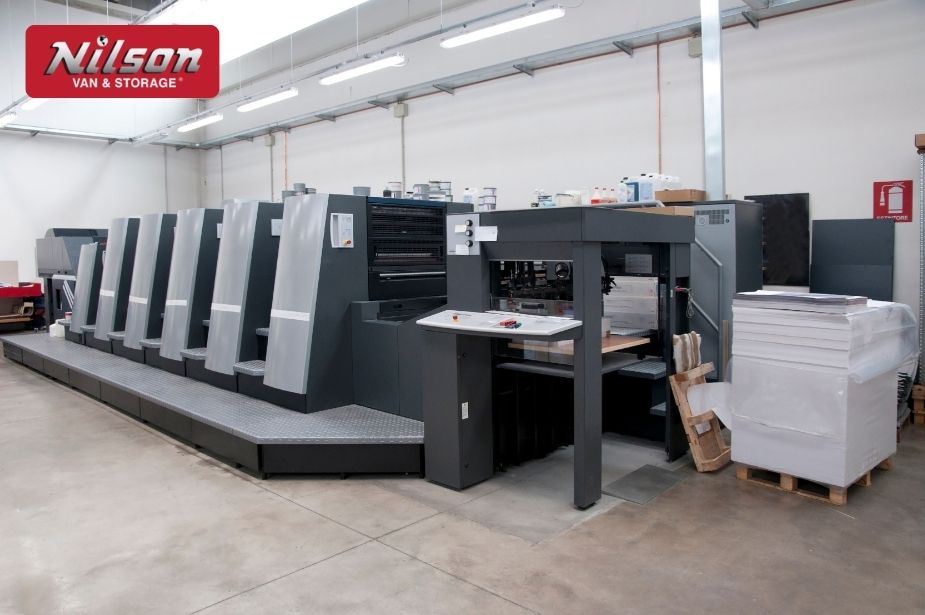
printing press movers in Sumter need to solve more than a transportation problem when a press, cutter, folder, or packaging line has to be relocated. The equipment may be heavy, unusually shaped, sensitive to impact, and positioned inside a building that was never designed for frequent machinery moves.
For printing press movers, this detail helps keep the plan practical and clear.
For printing and packaging companies, the right plan accounts for equipment specifications, rigging, building access, protection, transportation, production downtime, and installation coordination. This guide explains what to ask before booking printing press relocation services and how Nilson Van and Storage can help Sumter businesses organize the moving process with clearer expectations.
What printing press movers Need to Know About Your Equipment
A reliable estimate begins with accurate information about the machinery. A press that looks manageable on a factory floor can require a completely different moving plan once its weight, center of gravity, height, and route through the building are considered. printing press movers planning works better when this point is confirmed early.
Gather Weight, Dimensions, and Configuration Details
Before contacting movers, collect the manufacturer’s specifications for each item. Include the press model, approximate weight, length, width, height, and any removable components. Also identify whether the equipment includes ink systems, feeder units, delivery systems, dryers, compressors, electrical cabinets, control consoles, or attached conveyors.
The listed machine weight is only one part of the planning process. A long press may need to be turned in a confined area, while a tall piece of industrial printing equipment may not clear a door, sprinkler line, loading dock, or low ceiling.
A machine with a heavy upper assembly may also require a different lifting approach than a lower, evenly distributed load of the same total weight.
If the equipment will be separated into sections, ask the manufacturer or technician which components may be removed and who is authorized to disconnect them. Movers should not guess about electrical, hydraulic, pneumatic, or mechanical connections.
Clear documentation helps everyone understand what the moving crew will handle and what must be completed by your equipment technician. A stronger printing press movers starts with clear information rather than guesses.
Explain the Origin and Destination Conditions
The same press can be straightforward to move from one industrial building to another and difficult to move within a single facility. Describe both locations in practical terms:
- Floor level, mezzanine, basement, or elevated platform
- Door and hallway dimensions, dock details, ramps, elevators, and turning areas
- Floor construction, transitions, thresholds, drains, columns, and overhead obstructions
Share photos, floor plans, equipment layouts, and a proposed route whenever possible. If a machine must pass through a storefront, narrow corridor, or shared commercial entrance, mention that early. A walkthrough or virtual survey may reveal planning issues that are not obvious from a basic address and equipment list.
That is why printing press movers should be organized around access, timing, and services.
Identify Special Handling Requirements
Ask whether the manufacturer has instructions for lifting points, transport orientation, locking mechanisms, vibration limits, or preparation before relocation. Some machines have removable covers or exposed components that require special protection. Others need shipping braces, tie-down points, or manufacturer-approved procedures before they can be moved.
A qualified mover should want this information before providing a final plan. If a company offers a firm answer without asking about the machine, the building, or the route, treat that as a reason to ask more questions.
Printing businesses often move more than one machine at a time. Include related equipment such as guillotine cutters, bindery equipment, digital presses, wide-format printers, pallet wrappers, packaging machinery, racks, and production tables. A complete inventory makes it easier to coordinate labor, equipment, staging space, and the order of work.
With printing press movers, small details can change the schedule and final scope.
How to Evaluate printing press movers in Sumter
Moving heavy equipment requires more than a truck and several people. The mover must understand how the machinery will be prepared, lifted, supported, protected, loaded, transported, unloaded, and positioned at the destination. Your questions should reveal whether the company has a workable process or is simply estimating from a list of items.
Ask About Rigging and Specialized Handling
Ask the mover to explain the planned rigging approach in plain language. Depending on the site and machine, the plan may involve machinery skates, lifting devices, gantries, forklifts, ramps, blocking, cribbing, or other specialized equipment. The correct method depends on the equipment’s weight distribution, lifting points, floor conditions, clearances, and route.
Nilson Van and Storage can use this printing press movers information to coordinate the right support.
You should also ask who will determine the moving method, how the team will verify clearances, and whether a site visit is needed before work begins. A mover does not need to promise a particular technique before reviewing the conditions.
In fact, a careful plan may change after the crew sees a narrow turn, uneven threshold, restricted dock, or overhead obstruction.
Clarify the division of responsibility. For example, the printing equipment manufacturer or service technician may need to disconnect, drain, brace, or reassemble certain components, while the moving company handles positioning and transport. Put those responsibilities in writing so the press is not waiting on an unplanned task when the crew arrives.
Good printing press movers preparation also gives customers more control over the next step.
Understand Loading, Transport, and Protection
Ask how the mover will protect the equipment during preparation, loading, transit, unloading, and placement. Protection may include wrapping, padding, blocking, bracing, covers, edge protection, and methods for preventing components from shifting. The exact materials and procedures should reflect the equipment rather than follow a generic household moving checklist.
Questions worth asking include:
- How will loose or removable parts be labeled and tracked?
- How will doors, controls, rollers, screens, and finished surfaces be protected?
- How will the equipment be supported and restrained during transportation?
- What information does the crew need about the machine’s orientation or center of gravity?
Do not rely on the phrase “fully protected” without asking what it means for your press. A useful answer describes the steps, identifies who performs them, and explains any items that must be prepared by your staff or a technician.
Valuation is another important part of the conversation. Nilson Van and Storage provides valuation coverage options for a move, but valuation coverage should be described as valuation coverage. Ask how the available coverage applies to your shipment and what documentation may be required.
The details can vary by move and equipment, so review the terms before booking. The right printing press movers plan reduces confusion before the move is underway.
Compare Estimates by Scope, Not Just Price
A low estimate may omit disconnection, rigging, stairs, long carries, waiting time, specialty equipment, storage, installation coordination, or difficult access. A higher estimate may include a more complete scope. Compare proposals line by line and ask what assumptions were used.
For a Sumter business, the proposal should make clear whether it covers local or intrastate transportation, labor, packing or protective materials, equipment handling, storage if needed, and placement at the destination.
Local and intrastate moves in South Carolina are non-binding, so ask how changes in the move conditions, inventory, access, or requested services could affect the final charges. Every printing press movers decision should connect back to the actual inventory and access conditions.
Nilson Van and Storage supports local and intrastate moving in South Carolina, along with commercial moving and storage services. Those services may be useful when a press is moving between facilities, when the destination is not ready, or when equipment must be staged while construction or electrical work is completed.
Request a Free Quote Based on Real Information
A free moving quote becomes more useful when it is based on equipment specifications, photos, access details, and the desired schedule. Give the mover enough information to identify potential complications before the crew is assigned.
Plan the quote around the complete project, not just the truck portion. If your business needs packing, temporary storage, commercial relocation support, or coordination with other vendors, include those needs in the initial conversation. Clear printing press movers communication helps prevent last-minute surprises.
Tell us about your move and get a personalized quote based on your requirements. 
What Building Access and Site Protection Should You Plan?
Building access often determines whether a press relocation takes a few controlled moves or becomes a complicated project. In Sumter, printing companies may operate in industrial parks, older commercial buildings, shared warehouses, retail-facing facilities, or spaces with loading areas that were designed for routine deliveries rather than oversized machinery.
Measure the Entire Route, Not Just the Door
Record the dimensions of every point the equipment must pass through. That includes the loading dock opening, exterior doors, interior doors, corridors, turns, ramps, elevators, and the final setup area. Measure clear opening dimensions rather than relying on nominal door sizes. Early printing press movers coordination can make the moving process easier to manage.
Also check for:
- Door closers, protective bollards, rails, sprinkler heads, light fixtures, and low beams
- Dock height, dock plates, ramps, pavement transitions, and loading-zone restrictions
- Floor capacity, soft surfaces, seams, thresholds, and areas where equipment must turn
A route that works on a drawing may not work with the machine tilted, supported on skates, or carried on a lifting device. This is why an experienced commercial mover may request photographs, a video walkthrough, or an in-person survey before finalizing the plan.
Coordinate Building Management and Other Vendors
Tell the property manager, landlord, general contractor, electrical contractor, equipment technician, and receiving team about the proposed move. Confirm whether the building requires certificates, scheduling requests, elevator reservations, dock reservations, parking arrangements, or advance notice for large vehicles. Requirements vary by property, so verify them directly with the responsible party.
Professional printing press movers support is most useful when the details are documented in advance.
If the press is entering a newly renovated area, ask who is responsible for floor protection, wall protection, door removal, temporary barriers, and cleanup. Do not assume the mover or landlord has included these items unless the written scope says so.
At the destination, make sure the final location is ready before the equipment arrives. Electrical service, compressed air, ventilation, drainage, network connections, anchoring, and machine-leveling needs may require separate specialists. Moving the press into an unfinished area can create extra handling, storage, and scheduling problems.
Protect the Work Area and the Equipment
Commercial relocation protection should address both the machinery and the facility. Discuss how floors, walls, door frames, finished surfaces, and nearby production areas will be protected during the move. The plan should also account for dust, debris, packaging materials, and the need to keep unrelated operations separated from the work area.
For printing press movers, this detail helps keep the plan practical and clear.
If the facility remains open, establish a communication point for the moving crew and identify areas that must remain accessible. A short pre-move meeting can resolve questions about employee access, customer deliveries, alarms, restricted rooms, and emergency contacts without forcing decisions during the move.
For businesses with limited space, temporary storage may be useful. Nilson Van and Storage offers storage support as part of its broader moving services. Ask about the specific storage arrangement, access expectations, inventory process, and timing before placing equipment or related materials into storage.
printing press movers planning works better when this point is confirmed early.
A site plan, equipment list, and access checklist can make this phase much easier. The goal is not to predict every detail perfectly. It is to identify constraints early enough that the moving team, building manager, and technicians can coordinate around them.
According to Market Research Future, the global moving services market is expected to grow from USD 20.71 billion in 2024 to approximately USD 30.01 billion by 2035, representing a compound annual growth rate (CAGR) of 3.43% during the 2025–2035 forecast period.
How Should You Plan Scheduling, Downtime, and Transportation?
A press move affects more than the hours when equipment is being handled. Production may stop before the crew arrives while files, materials, ink, packaging stock, and work-in-progress are cleared. Production may also remain limited after placement while technicians reconnect, level, test, and calibrate the equipment.
Build a Realistic Downtime Window
Start with the full sequence rather than asking only how long transportation will take. Your working schedule may include preparation, disconnecting, component removal, route protection, rigging, loading, transportation, unloading, placement, reassembly, utility connections, testing, and production restart. A stronger printing press movers starts with clear information rather than guesses.
The actual time can vary with machine size, access, crew requirements, travel distance, technician availability, building rules, and unexpected conditions discovered during the move. Ask the mover to identify which portions are estimates and which depend on another vendor.
For a printing business, a useful schedule also identifies decision points. For example, the team may need to confirm that the destination floor is ready before the press leaves the origin. The equipment technician may need to approve the reassembled machine before production resumes.
These checkpoints help prevent a transportation date from being mistaken for a production restart date. That is why printing press movers should be organized around access, timing, and services.
Choose the Date Around Business Priorities
Consider the effect of the move on customer deadlines, press runs, shipping commitments, employee schedules, and material deliveries. A weekend or off-shift move may reduce interruption, but building access, labor availability, technician schedules, and property rules must be confirmed before assuming that option will work.
If the move is part of an expansion or lease transition, create a short overlap period when possible. Having both locations available can allow inventory, packaging supplies, or secondary equipment to move in stages.
When no overlap exists, confirm exactly when the old space must be empty and when the new space can receive the machinery.
Nilson Van and Storage can discuss local moving, commercial moving, storage timing, and related relocation needs for businesses in Sumter. The right combination depends on the equipment, origin, destination, and schedule rather than on a standard package. With printing press movers, small details can change the schedule and final scope.
Prepare for the Transportation Leg
Provide accurate origin and destination addresses, dock instructions, contact information, access hours, and any restrictions on vehicle arrival. If the destination is in a busy commercial area or shared industrial complex, coordinate where the vehicle will stage and how the crew will reach the loading area.
Ask how changes will be handled if the building is not ready, the route becomes unavailable, or the receiving contact cannot accept the equipment. A written communication plan should list who can authorize a change and how the decision will be documented.
Nilson Van and Storage can use this printing press movers information to coordinate the right support.
For South Carolina local and intrastate moves, estimates are non-binding. That does not make planning unnecessary; it makes clear communication more important. Give the mover updated information promptly and ask how additional work, waiting, access changes, or inventory changes may affect the move.
Plan for Materials and Production Restart
Separate production materials from the machine itself. Label tooling, plates, screens, dies, rollers, ink supplies, manuals, cables, spare parts, and removable components. Photograph connection points before disassembly if the equipment technician recommends doing so. Good printing press movers preparation also gives customers more control over the next step.
After placement, allow time for the people responsible for reconnection and testing. A press that is physically in position may not be ready to run. Confirm who will level or anchor it, reconnect utilities, reinstall components, test functions, and approve the first production run.
Have questions about your upcoming move? Our team is ready to help.
How Do You Plan Installation and Choose the Right Moving Partner?
Installation is where many equipment moves reveal the difference between a complete relocation plan and a basic delivery. The mover may position the press, but installation, calibration, utility connection, and production approval may belong to the manufacturer, dealer, service technician, or another specialist.
Define What Installation Means
Ask each company to define terms such as placement, set-in-position, disassembly, reassembly, installation, and startup. These words can describe different levels of work. One proposal may include placing the press on the prepared floor, while another may include reassembling removed sections but exclude calibration and utility connections.
The right printing press movers plan reduces confusion before the move is underway.
A useful scope identifies:
- What the moving crew will disconnect, remove, protect, transport, position, and reassemble
- What the equipment technician or manufacturer must perform
- What your business must prepare before the crew arrives
If the press requires anchoring, leveling, electrical work, compressed air, ventilation, or network configuration, assign each task to a qualified party. Confirm whether the equipment manufacturer requires an authorized technician for any portion of the process.
Look for Communication and Documentation
A qualified mover should be willing to discuss the project in detail, provide a written scope, explain assumptions, and identify information still needed. You should know the planned origin and destination, inventory, access conditions, labor scope, equipment requirements, storage arrangements if applicable, valuation coverage, schedule assumptions, and change process.
Every printing press movers decision should connect back to the actual inventory and access conditions.
Ask how the crew will label parts, document pre-existing condition, communicate delays, and confirm placement. These details matter when a press contains many cables, covers, feeders, trays, or small components that could be difficult to identify later.
You can also ask for relevant commercial moving experience without expecting the mover to claim that every press is identical. The strongest answer will focus on process: site assessment, equipment data, route planning, handling methods, protection, coordination, and clear responsibility boundaries.
Review Policies Before You Sign
Read the proposal and service documents before booking. Confirm what is included, what is excluded, how changes are addressed, how valuation coverage works, and which items require separate vendors. Nilson Van and Storage has no cancellation fees, but you should still review the timing and documentation requirements for changing or cancelling a scheduled move.
Clear printing press movers communication helps prevent last-minute surprises.
For local and intrastate moves in South Carolina, the move is non-binding. Ask questions if the inventory, route, access, service scope, or timing changes after the estimate. Keeping the mover informed is one of the best ways to reduce last-minute misunderstandings.
Do not treat an estimate as a substitute for a site plan. A proposal can be accurate only in relation to the information provided. If the machine is heavier than reported, the dock is unavailable, the route changes, or the installation scope expands, the project may need to be reassessed.
Early printing press movers coordination can make the moving process easier to manage.
Use a Practical Booking Checklist
Before selecting printing press movers in Sumter, confirm that you have answers to these questions:
- Has the mover reviewed the equipment weight, dimensions, configuration, and route?
- Are rigging, loading, transport, protective materials, unloading, and placement clearly assigned?
- Have building management, technicians, and receiving contacts been included in the schedule?
- Is downtime based on the full relocation and restart process rather than truck travel alone?
- Are valuation coverage, non-binding estimate terms, cancellation terms, storage, and change procedures understood?
Nilson Van and Storage can be a useful starting point for a Sumter commercial relocation conversation when your project involves moving heavy equipment, coordinating storage, or planning a local or intrastate move. Share the details early so the scope can be discussed in relation to your facility and production needs.
Wrapping Up
Choosing printing press movers is a project decision, not simply a price comparison. The best planning starts with accurate equipment data and continues through rigging, building access, protection, transportation, scheduling, downtime, placement, and installation coordination. Professional printing press movers support is most useful when the details are documented in advance.
Before booking, ask the mover to explain the handling method, identify responsibility boundaries, review the entire route, and provide a written scope. Confirm how valuation coverage works, remember that South Carolina local and intrastate moves are non-binding, and review the company’s cancellation terms before scheduling.
For printing and packaging companies in Sumter, Nilson Van and Storage can discuss commercial moving, local and intrastate relocation, storage timing, and related planning needs based on the actual project.
A detailed conversation early in the process gives your business a better chance to coordinate the move around production commitments and make an informed decision about printing press movers.


FAQs - Printing Press Movers in Sumter
Our Recent Articles
Stay informed and inspired with the latest tips, insights, and updates from the Nilson Van and Storage blog. From expert packing advice and moving checklists to stories about our commitment to the community, our articles are here to make your relocation journey smoother and stress-free. Explore our recent posts to discover how we’re redefining the moving experience for Columbia, Myrtle Beach, Charleston, Sumter, Savannah, and beyond.
Why Hotels Need a Reliable FF&E Logistics Partner for Renovation Projects
Moving in the Rain in Germany: Pros, Cons & Tips