Heavy Equipment Transport in Dalzell, SC: How to Plan Moves Between Job Sites
Heavy Equipment Transport in Dalzell, SC, requires more than arranging a truck and choosing a pickup time; the machine, route, site conditions, and job schedule all have to work together. Whether you are moving an excavator from one Sumter County project to another or bringing a bulldozer into a new development near Dalzell, a poorly planned move can create delays, access problems, and avoidable handling complications.
This guide explains how to plan construction equipment transport in Dalzell, what information a transporter needs, when short-term equipment storage in Sumter may help, and how to compare hauling options. You will also learn what to confirm before scheduling equipment hauling with Nilson Van and Storage.
Heavy Equipment Transport in Dalzell, SC: Start With the Machine and the Move
The right transport plan begins with the equipment itself and the exact job-site transition. A compact machine moving a short distance may require a very different arrangement from a large excavator or bulldozer traveling through multiple access points. Identifying those differences early gives the carrier a clearer picture of the equipment hauling requirements.
Match the Transport Method to the Equipment
Start by recording the machine’s make, model, approximate dimensions, operating weight, and any attachments that will travel with it. Include buckets, blades, forks, breakers, augers, booms, counterweights, or detachable components. A machine’s transport dimensions may change significantly when an attachment remains installed.
The equipment’s height, width, length, and weight affect loading, trailer selection, route planning, and site access. A machine that appears manageable in a yard may become more difficult to position once its attachment, ramps, or loading approach is considered.
For example, excavator and bulldozer hauling often requires attention to boom position, blade placement, counterweight configuration, and the available loading surface. The carrier may need to understand whether the equipment can be driven onto the trailer, whether it needs preparation before loading, and whether detachable parts should move separately.
Define the Job-Site Transition
“Moving equipment between job sites” can mean several different things. The machine may be traveling from a completed project to a new site, leaving a dealer or rental yard, moving from a repair facility, or going into temporary storage before its next assignment.
Give the transporter both addresses, the desired pickup and delivery windows, and the reason for the move. A direct project-to-project transfer may be scheduled differently from a move that includes staging, storage, or a delayed delivery date.
Also identify who will be present at each location. The person receiving the machine should know where it will be placed, who can authorize unloading, and what site restrictions apply. If the project manager, equipment owner, and general contractor are different parties, establish a single point of contact before the move begins.
Identify Conditions That Can Change the Plan
Several details can affect the work even when the distance between sites is short. Examples include a narrow entrance, soft ground, overhead obstructions, steep grades, construction fencing, limited turning space, active work zones, or a site that is not ready for delivery.
A transporter should know about these conditions in advance rather than discovering them when the equipment arrives. Photographs, measurements, gate information, and a simple description of the approach can be more useful than a general statement that the site is accessible.
If the site is still under development, access can change from one day to the next. Confirm the condition of the entrance close to the scheduled move and tell the carrier if grading, paving, utility work, or other construction activity may affect the delivery area.
Prepare the Information Needed for a Quote
A useful quote request should include the equipment description, pickup and delivery locations, preferred dates, dimensions, weight, attachments, loading conditions, and any storage requirement. If you do not have exact measurements, provide the machine identification information and explain what is uncertain.
Nilson Van and Storage can review the details of a Dalzell equipment move and help determine what information is needed before scheduling. For South Carolina local and intrastate moves, remember that quotes are non-binding under the company’s stated policy, so the final scope should be discussed carefully as equipment and site details are confirmed.
Tell us about your move and get a personalized quote based on your requirements. 
How to Plan Access, Timing, and Site Coordination
The transportation portion is only one part of a successful equipment move. A trailer can arrive on time and still face a delay if the entrance is blocked, the loading area is occupied, or the receiving crew is not available. Good coordination connects the carrier’s schedule with the realities of both job sites.
Build a Pickup and Delivery Window
Construction schedules change frequently, but equipment transport still needs defined time windows. Start with the date the machine must leave the first site and work backward from the date it must be ready at the next site. Account for equipment preparation, loading, transit, unloading, and any time needed to position the machine.
Avoid scheduling a delivery for the exact moment a crew is expected to begin work unless there is no practical alternative. A short buffer can help when the site is busy, the machine requires additional positioning, or the receiving area changes during the day.
If the equipment is essential to a concrete pour, grading phase, demolition activity, or other time-sensitive operation, communicate that dependency. The transporter may need to understand which date is preferred and which date would create an operational problem.
Coordinate the People at Both Locations
At pickup, someone should be able to identify the correct machine, provide access, and explain any operating or loading considerations. At delivery, someone should direct the equipment to the intended location and confirm that the site is prepared.
The owner, contractor, equipment operator, and transport coordinator may each hold different information. Assigning one person to consolidate updates reduces conflicting instructions. Make sure that person has current phone numbers for the site contacts and knows who can approve changes.
For commercial projects, include the move in the project communication plan. A short notice to the superintendent, site manager, subcontractors, and gate personnel can prevent a truck or trailer from arriving before the access team is ready.
Read Also: Local or Long-Distance? How to Plan Heavy Equipment Transport in East Sumter, SC
Review Job-Site Access Before the Truck Arrives
Walk or inspect the planned entrance before pickup whenever possible. Look at the gate width, surface condition, turning area, overhead clearance, nearby parked vehicles, and the space available for unloading. Do not evaluate only the final parking spot; consider the entire approach.
A site that receives delivery from one direction may not work from another. Dalzell and surrounding Sumter County projects can include established commercial areas, residential developments, rural parcels, and changing construction entrances. The access plan should match the actual location rather than relying only on a street address.
Ask whether the location has building, property-management, neighborhood, or municipal requirements for large deliveries. Rules and restrictions can vary by property and jurisdiction. Confirm them with the responsible property or local authority instead of assuming that a normal delivery schedule applies.
Plan Around Weather and Ground Conditions
Ground conditions matter when heavy equipment transport is being loaded, unloaded, or positioned. Recent rain can change a previously usable surface, especially at a developing site. If the delivery area is unpaved, identify a firm location where the equipment can be unloaded and staged.
You should also communicate whether the machine is expected to remain at the entrance, move directly into the work area, or wait for a later crew. This distinction affects where the transporter needs to place it and how much room is required.
A practical move plan includes a backup contact and a process for discussing a changed site condition. It is better to resolve a question before dispatch than to improvise after the equipment has arrived.
Confirm What Happens if the Project Date Changes
Construction schedules can move because of inspections, subcontractor delays, material shortages, or weather. Ask how a schedule change will be handled and provide notice as soon as you know the original date may not work.
Nilson Van and Storage states that it does not charge cancellation fees. Even so, prompt communication remains important because a changed date can affect equipment availability, crew coordination, storage arrangements, and other scheduled moves.
Tell us about your move and get a personalized quote based on your requirements.
Compare Equipment Hauling Options for Sumter County Projects
Once the machine and site requirements are clear, compare options based on fit rather than distance alone. The lowest initial estimate may not be the best choice if it excludes preparation, storage timing, attachment handling, or the access information needed to complete the move efficiently.
Direct Transport Versus Staged Movement
A direct move takes the equipment from the pickup site to the delivery site with no planned holding period. This can be practical when the receiving job site is ready and the machine must begin work soon after arrival.
A staged movement includes a temporary stop, such as a storage location, equipment yard, repair facility, or another approved site. It may be useful when the first project ends before the next one begins, when the destination is not ready, or when a contractor is consolidating several machines before a new phase of work.
Staging adds coordination. Confirm who controls access, how the equipment will be released, whether the storage period is short or open-ended, and how the machine will move from storage to the next job site.
When Short-Term Equipment Storage in Sumter Helps
Short-term equipment storage in Sumter can bridge the gap between project schedules. It may help when a machine must leave a completed site, but the next location is waiting on grading, permitting, building access, or another construction milestone.
Storage should be treated as part of the move plan, not as an afterthought. Discuss the equipment type, approximate dimensions, expected duration, access needs, and delivery instructions. If attachments or parts are separated from the main machine, identify how they will be labeled and reunited later.
Storage is also worth considering when several machines need to be moved in stages. A contractor may prefer to clear one job site, hold equipment temporarily, and then coordinate delivery to a new project once the receiving area is ready. Whether that approach is practical depends on the equipment, timing, access, and agreed storage arrangements.
Lowboy Transport in Sumter County and Other Trailer Considerations
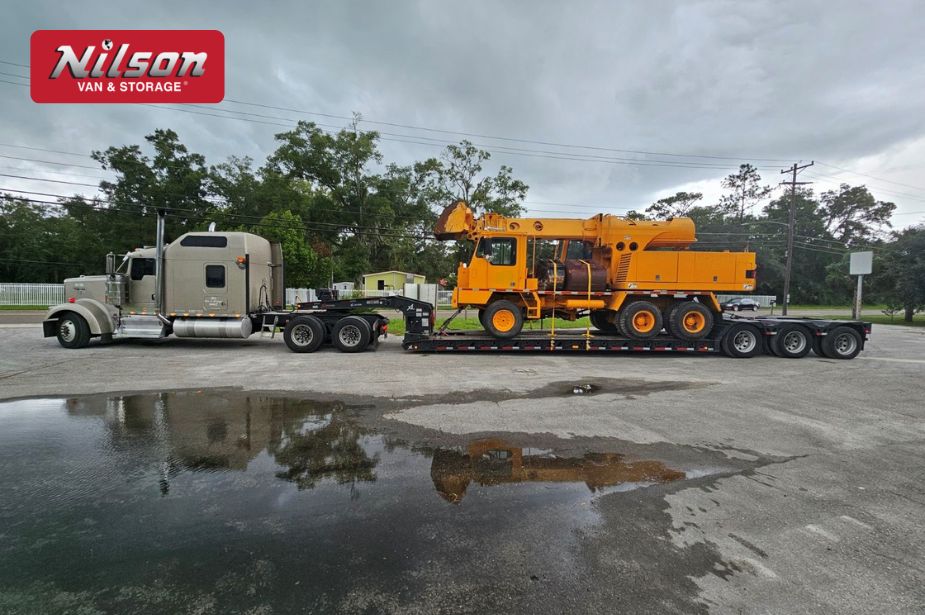
People often use “lowboy transport” to describe a trailer arrangement suited to large or heavy machinery. The correct equipment depends on the machine’s weight, dimensions, loading method, route, and the transporter’s available resources. Do not assume that every lowboy trailer configuration fits every excavator, bulldozer, crane, lift, or attachment combination.
When requesting equipment hauling in Dalzell, ask how the transporter will account for the machine’s operating weight and loaded dimensions. If a component must be removed, clarify who performs that work and how the component will move. Loading and unloading responsibilities should be understood before the date is confirmed.
Route requirements may also vary with the load. Oversize or overweight moves can involve requirements that depend on the equipment, route, jurisdiction, and transportation arrangement. Those details should be reviewed for the specific move rather than inferred from a general rule.
What to Compare in a Transport Quote
Compare the scope of each quote, not just the price. Check whether it addresses pickup, delivery, loading and unloading expectations, attachments, storage, access conditions, schedule assumptions, and any known special handling.
Local or intrastate move, Nilson Van and Storage identifies its quotes as non-binding. Ask questions if the equipment description changes, if the route changes, or if the project adds a storage stop. The company also provides valuation coverage rather than insurance, so review the available terms and limits for the specific move.
At this stage, a written equipment profile is valuable. It gives every party the same reference point and makes it easier to identify what has changed before dispatch.
You may also like: How to Prepare Your Machinery for Heavy Equipment Transport in Irmo, SC
Have questions about your upcoming move? Our team is ready to help.
Prepare the Equipment and Confirm the Move Details
Preparation reduces confusion at pickup and gives the transport team a clearer working plan. The exact preparation steps depend on the machine and the instructions of its owner or manufacturer, so equipment-specific guidance should take priority over a generic checklist.
Complete an Equipment Condition Review
Record the machine’s visible condition before loading. Photographs should show the overall equipment, attachments, identifying marks, and any existing dents, scratches, leaks, or missing components. Use a date-stamped record if your company’s process allows it.
Remove loose personal items, tools, debris, and unsecured materials from the cab or equipment compartments. Secure doors, access panels, and detachable parts according to the equipment owner’s instructions. If the machine has special starting, braking, steering, or operating requirements, communicate them before pickup.
The purpose of this review is not to create unnecessary paperwork. It gives the owner, carrier, and receiving team a shared record of the machine’s condition and contents before the move.
Confirm Attachments, Parts, and Accessories
Attachments often create the most confusion during heavy equipment transport. A bucket, blade, grapple, breaker, fork, or auger may affect the total loaded dimensions or require separate placement. List each component that will travel and state whether it remains attached.
Label loose components and confirm where they should be delivered. If an attachment is staying at the original site, note that clearly so the receiving team does not expect it. If a component will travel separately, confirm how it will be loaded, documented, and received.
Review Documentation and Contact Information
Keep the equipment identification details, move addresses, site contacts, quote information, and scheduling notes together. If a general contractor or equipment owner requires specific release forms or delivery records, identify those requirements early.
Requirements can vary by project, property, equipment type, and jurisdiction. The transporter may need accurate information to review the move, but the equipment owner remains responsible for providing any documents required by its contract, lender, rental company, or project authority.
Confirm Arrival Instructions Before Dispatch
Before the equipment leaves, confirm the delivery entrance, staging area, contact person, approximate arrival window, and any gate or property instructions. If the receiving site has multiple entrances, provide the one intended for the equipment and explain where the driver should report.
If the site is not ready, decide whether delivery should be delayed, redirected to an agreed storage location, or handled under another documented arrangement. Do not assume that a transporter can leave heavy equipment unattended at an unapproved location.
Know What to Ask Nilson Van and Storage
A useful planning conversation should cover the machine’s specifications, pickup and delivery conditions, timing, storage needs, attachments, valuation coverage, and the terms that apply to the move. Share changes as soon as possible, especially changes to equipment size, job-site access, or the delivery date.
At Nilson Van and Storage, our team can discuss the details of a Dalzell or Sumter County equipment move and identify the information needed to evaluate the request. If the project includes residential access, commercial coordination, packing of related items, or temporary storage, explain the full situation rather than requesting transport as an isolated task.
Read Also: What to Know About Heavy Equipment Transport in Pinewood, SC for Hard-to-Reach Job Sites
Wrapping Up
Heavy equipment transport in Dalzell, SC, is easier to coordinate when the machine, route, job-site access, timing, attachments, and storage plan are reviewed together. Start with accurate dimensions and weight, inspect both locations, assign clear contacts, and decide whether a direct move or short-term staging arrangement fits the project schedule.
For excavator and bulldozer hauling, construction equipment transport in Dalzell, or a move between job sites in Sumter County, ask detailed questions about the transport scope and valuation coverage. Keep in mind that local and intrastate South Carolina moves are non-binding with Nilson Van and Storage, and confirm how changes will be handled as the project develops.
The next step is to assemble the equipment details and site information before requesting a quote. Nilson Van and Storage can help you discuss the move requirements, storage timing, and coordination needs so you can make a more informed decision about the transportation plan.


FAQs - Heavy Equipment Transport in Dalzell, SC
Our Recent Articles
Stay informed and inspired with the latest tips, insights, and updates from the Nilson Van and Storage blog. From expert packing advice and moving checklists to stories about our commitment to the community, our articles are here to make your relocation journey smoother and stress-free. Explore our recent posts to discover how we’re redefining the moving experience for Columbia, Myrtle Beach, Charleston, Sumter, Savannah, and beyond.
How to Choose the Right Warehouse Facility for Your Business
Data Center Relocation Checklist: Key Steps for a Successful IT Move