How to Prepare Your Machinery for Heavy Equipment Transport in Irmo, SC
Heavy equipment transport in Irmo, SC requires more than putting a machine on a trailer and heading to the next jobsite. Excavators, skid steers, compact loaders, lifts, and other machinery each have different dimensions, weights, loading points, and preparation needs, so incomplete information can create delays before the move even begins.
Whether you are moving heavy equipment near Lake Murray, sending machinery to another South Carolina jobsite, or preparing a machine for a longer-distance shipment, this guide explains what to inspect, document, disclose, and coordinate before hauling begins. You will learn how to prepare equipment for hauling and what to discuss with a professional transporter such as Nilson Van and Storage.
What Heavy Equipment Transport in Irmo, SC Requires Before Pickup
The best transport plans begin with accurate equipment information. A transporter needs to understand the machine, the pickup and delivery locations, and the conditions at both sites before determining how the move should be coordinated. Guessing at dimensions or assuming that a machine can be loaded the same way as another piece of equipment often creates avoidable complications.
Start With the Machine’s Actual Specifications
Record the equipment’s make, model, operating weight, overall length, width, and height. Include attachments, buckets, forks, blades, booms, counterweights, cabs, and other components that will travel with the machine. A compact excavator without its bucket may have very different transport requirements from the same excavator with an attachment installed.
Manufacturer specifications are useful, but the machine’s current configuration matters just as much. Added guards, wider tracks, aftermarket attachments, filled tanks, or temporary components can change the measurements. If possible, measure the equipment in the condition in which it will be collected rather than relying only on an old specification sheet.
A few photographs can also improve the planning conversation. Photograph each side of the machine, the attachment points, the control area, the tires or tracks, and any existing damage. These images help establish the equipment’s condition and give the moving team a clearer picture of what will be handled.
Explain the Pickup and Delivery Environment
A machine may fit on the planned equipment carrier but still be difficult to collect if the site has limited access. Describe the entrance, driveway, gate width, turning area, surface conditions, overhead obstructions, slopes, and nearby structures. Commercial sites may have active work zones, while residential or rural properties around the Lake Murray area may have narrow drives or soft ground.
At the delivery location, identify where the machinery should be placed and whether the receiving area will be clear. If the equipment is going to a construction site, confirm who will direct the driver, who controls site access, and whether the site has a preferred arrival window.
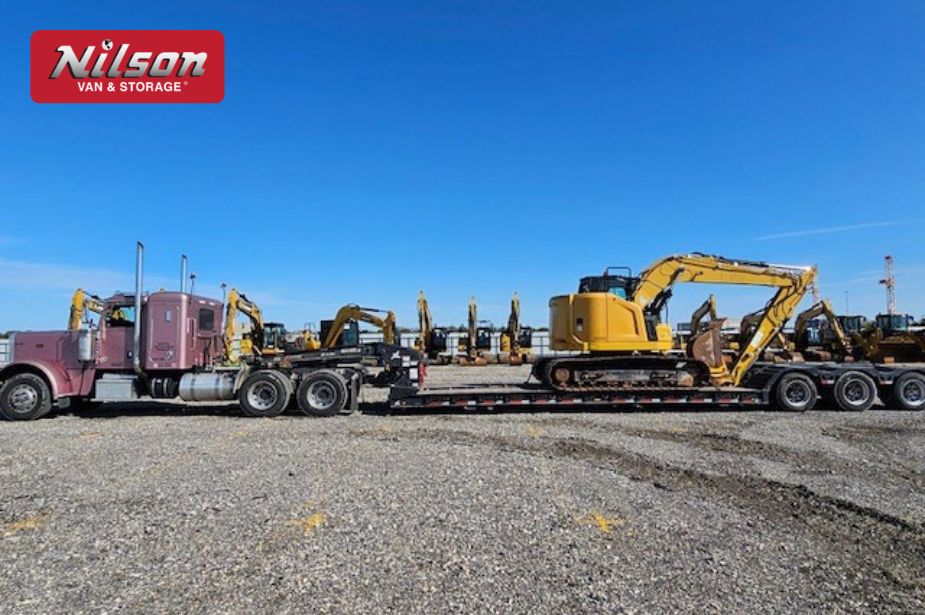
This information is especially important for excavator transport in Irmo because an excavator’s boom, counterweight, tracks, and attachment can affect both its loaded dimensions and the space needed for positioning after arrival.
Identify Whether the Machine Runs
Tell the transporter whether the equipment starts, moves under its own power, steers, brakes, and can be loaded without assistance. A machine that runs normally may be handled differently from one with a dead battery, hydraulic issue, flat tire, damaged track, or mechanical failure.
Do not wait until pickup to disclose a non-running condition. The loading approach, equipment needs, and labor coordination may change. The more accurate the information is at the beginning, the easier it is to develop a realistic plan.
How to Prepare Equipment for Hauling
Once the transport details are known, preparation should focus on reducing loose items, preventing avoidable leaks, protecting vulnerable components, and making the machine easier to inspect and handle. Preparation is not only about the equipment itself; it also affects how efficiently the pickup can proceed.
Clean and Inspect the Machinery
Remove mud, dirt, concrete, vegetation, and debris from the tracks, tires, undercarriage, steps, buckets, and attachment areas. Cleaning is useful for two reasons: it allows the transporter to inspect the machine more clearly, and it helps prevent material from falling onto the carrier or the property during handling.
During the inspection, look for existing dents, cracked glass, hydraulic leaks, loose panels, damaged lights, worn tires, and track problems. Photograph anything that is already damaged. Use photographs with a visible date when practical, and keep copies with the shipment records.
This is also a good time to check whether the equipment has a manufacturer-recommended transport configuration. Some machines require a boom to be lowered, a bucket to be positioned, a mast to be folded, or an attachment to be removed. Follow the manufacturer’s instructions and disclose any configuration that differs from the normal operating position.
Remove or Secure Loose Components
Walk around the equipment and identify items that could shift, swing, fall, or become separated during handling. Examples include toolboxes, removable mirrors, loose guards, chains, spare parts, fuel cans, hand tools, and unsecured cab contents. Remove personal items and separately packed materials unless the transport plan specifically accounts for them.
Attachments need particular attention. A bucket, grapple, auger, forks, blade, or breaker may be transported with the machine, separately, or not at all depending on its size and the planned loading arrangement. Ask how each attachment should be presented for pickup rather than assuming it can remain installed.
If a component must stay attached, confirm that it is properly positioned and that its dimensions are included in the information provided to the transporter. An attachment that extends beyond the machine can affect loading space and the overall transport plan.
Manage Fluids, Batteries, and Pressurized Systems
Inspect fuel, hydraulic, coolant, and other fluid systems for leaks. Do not drain fluids or alter the machine’s systems unless the manufacturer, equipment owner, or transporter has instructed you to do so. Different equipment and transport circumstances may require different preparation steps.
Secure battery compartments, close access panels, lower movable parts, and release or address pressure in systems according to the manufacturer’s guidance. If the equipment has a special starting procedure, battery disconnect, electronic lockout, or immobilizer, provide those instructions before pickup.
Share information about unusual components, including propane tanks, compressed-gas cylinders, chemicals, or other regulated materials. These items may require separate handling or may not be appropriate to include with the machine. Confirm the requirements for the specific shipment instead of making assumptions.
Prepare Operating Information
Provide the key, access code, ignition instructions, and any operating information needed to move the machine. If a machine requires a particular control sequence to release the brakes or engage the hydraulics, write those instructions down and give them to the responsible contact.
For skid steer transport, confirm how the attachment is removed, whether the lift arms need to be lowered, and whether the machine can be driven onto the carrier. A skid steer’s compact size does not eliminate the need for accurate weight, width, and attachment information.
A short preparation record should include:
- Current photographs and a written condition description.
- Make, model, dimensions, operating weight, and attachment details.
- Keys, operating instructions, site contacts, and non-running conditions.
The record gives the owner, transporter, and receiving contact the same reference point before the equipment leaves the jobsite.
Planning Pickup and Delivery Around Irmo and the Lake Murray Area
Equipment hauling Irmo SC can involve very different properties, from established commercial lots to developing subdivisions, rural parcels, and active construction sites. The machine may be ready, but the move can still be delayed if the access plan is incomplete. Treat the pickup and delivery locations as part of the shipment, not as an afterthought.
Check Access, Clearance, and Surface Conditions
Inspect the approach to the equipment. Look for low branches, utility lines, signs, retaining walls, parked vehicles, construction materials, narrow gates, and sharp turns. Measure gates and other restricted points rather than estimating their width. Remember that the transport carrier needs more room to maneuver than the machine requires during normal operation.
Consider the ground conditions as well. Gravel, packed soil, asphalt, concrete, grass, and recently graded surfaces can respond differently to heavy equipment and carrier movements. A wet or unfinished area may not be suitable for positioning the machine. If the property has restrictions on where a carrier can stand, communicate those restrictions before scheduling.
At delivery, clear the placement area and identify any equipment that must be moved before arrival. If the machine is going to a building project, coordinate with the site superintendent or foreperson so the receiving area is available during the planned window.
Coordinate Building and Jobsite Rules
Some commercial properties, managed communities, and construction sites require advance notice, proof of authorization, delivery appointments, or specific access procedures. Rules vary by property and location, so the property manager, general contractor, or site representative should confirm what applies.
For downtown or congested areas, delivery timing may matter because of limited staging space and competing site activity. In suburban areas, school traffic, neighborhood restrictions, or active utility work may influence the preferred arrival window. These details should be discussed early, particularly when the machine is needed for a time-sensitive project.
Assign one person at pickup and one person at delivery to answer questions and approve placement. If the same person cannot be present, provide clear contact information and written authorization to the people handling the handoff.
Build Time for Preparation and Access Changes
Avoid scheduling pickup immediately after a machine’s final use if it still needs cleaning, inspection, attachment removal, or mechanical attention. A small amount of preparation time can prevent a larger delay at the site.
Likewise, do not assume that a delivery date can remain unchanged if the jobsite changes. Grading, fencing, weather, subcontractor activity, or a newly placed structure can affect access. Notify the transport coordinator when conditions change so the plan can be reviewed before the carrier arrives.
Our team at Nilson Van and Storage can discuss the equipment details, site conditions, and timing factors that affect a move. Availability and handling requirements depend on the specific shipment, so provide complete information when requesting an assessment.
Tell us about your move and get a personalized quote based on your requirements.
Choosing the Right Transport Plan for Different Machines
The right approach depends on more than the equipment category. Weight, dimensions, attachments, operating condition, pickup access, destination access, and the number of machines being moved all influence the plan. Comparing these details helps you ask better questions and avoid choosing a transport arrangement based only on a machine’s name.
Excavator Transport in Irmo
Excavators require careful attention to boom position, bucket or tool configuration, counterweight, track width, and total height. A compact excavator may be relatively easy to position, while a larger machine can require a different loading arrangement and more space at both locations.
Before pickup, lower movable components according to the manufacturer’s instructions and identify whether attachments will travel with the excavator. Photograph the machine from the side to show the boom and attachment position. If the counterweight or another component is removable, disclose whether it will remain installed.
The delivery plan should also account for where the excavator will be placed and whether it needs to reach a particular portion of the site after unloading. The transport team should know whether the receiving area is finished, compacted, paved, or still under construction.
Skid Steer Transport
Skid steers are often moved between landscaping, grading, agricultural, and construction jobsites. Their dimensions can appear manageable, but attachments such as buckets, forks, trenchers, augers, and brush cutters can change the shipment considerably.
Separate attachments may need their own measurements and preparation. Remove loose items from the cab, secure access panels, inspect tires or tracks, and confirm whether the skid steer can be driven onto the carrier. If it does not run, explain the condition and any known restrictions before pickup.
Other Construction Equipment
Loaders, lifts, dozers, compactors, generators, pumps, and specialty machinery each present different preparation questions. Some have articulated sections, elevated platforms, folding components, or removable counterweights. Some may also require special instructions for battery isolation or fluid systems.
For multiple machines, create a simple inventory that lists each unit separately. Do not combine several pieces under a single estimated weight or description. Individual records help the transporter understand the full shipment and help the owner verify what was collected and delivered.
Compare Convenience With Preparation Requirements
A professional equipment mover may save the owner time by coordinating the transport details, but professional handling does not remove the owner’s preparation responsibilities. The owner or site manager still needs to provide accurate information, clear access, identify restrictions, and make the machinery available in the agreed condition.
A lower-effort preparation plan may appear convenient, but it can increase the chance of rework when the machine arrives with an undisclosed attachment, inaccessible gate, or non-running condition. A more complete plan usually gives every party a clearer understanding of the work involved.
When comparing construction equipment movers in Irmo, ask how they want dimensions submitted, what information they need for non-running equipment, how attachments should be handled, and what documentation should be available at pickup and delivery. Those questions are more useful than comparing a service by a generic equipment label alone.
What to Confirm Before Scheduling Heavy Equipment Transport
The final planning conversation should bring together the machine details, site conditions, timing, documentation, and responsibilities. This is where vague assumptions should become specific instructions. A written summary is helpful because equipment moves often involve an owner, site manager, mechanic, general contractor, and receiving contact.
Confirm the Scope of the Shipment
Review every item that will travel, including the primary machine, attachments, loose components, accessories, and separately loaded parts. Confirm the condition of each machine and whether it runs. If the equipment will be collected from one site and delivered to another, verify both addresses and the appropriate contact at each location.
Ask what preparation the transporter expects before arrival. Clarify whether attachments should be removed, whether the machine should be fueled or positioned in a particular way, and whether the owner must provide loading assistance or operating personnel. Requirements can differ by equipment type and shipment conditions.
Review Timing and Communication
Agree on the anticipated pickup and delivery windows rather than relying on an informal promise of arrival at a precise time. Moving conditions, site readiness, equipment preparation, and other logistical factors can affect the schedule. Keep the transporter informed if the machine will not be available or if the property changes before pickup.
Use one primary contact for schedule changes and one backup contact for each location. Make sure both contacts have the machine inventory, access instructions, and the delivery placement information. Clear communication becomes especially important when the equipment is needed to keep a construction project moving.
Discuss Documentation and Valuation Coverage
Keep the equipment description, photographs, condition notes, authorization, and delivery instructions together. Review the transport documents before the move and ask questions about anything you do not understand.
Nilson Van and Storage provides valuation coverage options for moving services; valuation coverage should not be described as insurance. Ask how the available option applies to the specific shipment and what information is needed. Coverage terms and requirements can vary by move, so confirm the details before scheduling.
For local and intrastate moves in South Carolina, moving estimates are non-binding. That means the final cost can depend on the actual work and conditions involved. Accurate equipment dimensions, weights, access details, and preparation information help create clearer expectations, but they do not turn a local or intrastate estimate into a guaranteed final price.
Nilson Van and Storage does not charge cancellation fees. Even so, notifying the company promptly about a change can help the team adjust the schedule and coordinate with the pickup and delivery contacts.
Have questions about your upcoming move? Our team is ready to help.
Wrapping Up
Preparing machinery for Heavy Equipment Transport in Irmo, SC starts with accurate information and ends with coordinated access at both locations. Measure the equipment in its actual transport configuration, document its condition, remove loose items, disclose attachments and mechanical limitations, and confirm how the machine should be presented for pickup.
The Lake Murray area includes a mix of residential, commercial, rural, and active construction locations, so access planning deserves the same attention as machine preparation. A gate, overhead obstruction, soft surface, missing site contact, or unavailable placement area can affect the move even when the equipment itself is ready.
Whether you need excavator transport in Irmo, skid steer transport, or broader equipment hauling in Irmo, SC, discuss the details before setting the schedule. Nilson Van and Storage can help you review the information needed for the requested moving service and determine the next planning step. A complete description of the machinery and both sites gives everyone a better basis for coordinating the shipment.


FAQs - Heavy Equipment Transport in Irmo, SC
Our Recent Articles
Stay informed and inspired with the latest tips, insights, and updates from the Nilson Van and Storage blog. From expert packing advice and moving checklists to stories about our commitment to the community, our articles are here to make your relocation journey smoother and stress-free. Explore our recent posts to discover how we’re redefining the moving experience for Columbia, Myrtle Beach, Charleston, Sumter, Savannah, and beyond.
How to Choose the Right Warehouse Facility for Your Business
Data Center Relocation Checklist: Key Steps for a Successful IT Move