What to Know Before Booking Heavy Equipment Transport Services in Savannah, GA
Heavy Equipment Transport Services In Savannah, GA require more than placing a machine on a trailer and sending it to the next jobsite. The equipment’s dimensions, weight, loading method, destination access, route, scheduling requirements, and paperwork all affect how the move should be planned.
Whether you are moving construction equipment to a Savannah project, coordinating equipment hauling near the Port of Savannah, relocating machinery between facilities, or bringing a large machine into storage, the right information helps prevent delays and unexpected charges. This guide explains what to prepare, what to ask a heavy haul company, how Georgia permit considerations may affect scheduling, and when to request help from Nilson Van and Storage.
Understanding Heavy Equipment Transport Services in Savannah, GA
Before booking a carrier, identify what the move actually involves. Heavy equipment transport can include construction machinery, agricultural equipment, commercial machinery, generators, lifts, loaders, excavators, forklifts, and other large items that cannot be moved through ordinary residential or commercial moving channels. The equipment itself determines much of the planning.
A useful first step is to separate the move into four questions: What is being transported? Where is it being picked up? Where must it be delivered? What conditions will the carrier face at both locations? Those answers provide the foundation for an accurate review.
Equipment Details Affect the Transport Plan
A carrier will generally need more than the machine’s make and model. Useful information includes the equipment’s exact length, width, height, operating weight, ground clearance, and whether attachments are installed. Buckets, booms, forks, outriggers, blades, cabs, and other components can change the overall measurements.
Photographs are also helpful. A picture of the equipment from each side can reveal loading points, protruding parts, tire or track conditions, and access concerns that a short description may miss. If the machine has removable attachments, state whether they will travel with the main unit or separately.
Do not estimate dimensions from memory when a manufacturer specification sheet, scale ticket, or equipment record is available. A small difference in width or height can influence the trailer choice, routing review, permit requirements, and delivery timing.
Why Savannah Location Details Matter
Savannah moves often involve more than a simple origin-and-destination address. A pickup may occur at a construction site, industrial property, dealership, farm, warehouse, or port-related facility. Each location may have its own check-in process, loading area, appointment window, and equipment restrictions.
Port of Savannah equipment transport can require especially close coordination. Port-related facilities may use appointment systems, designated entrances, security procedures, staging areas, or specific receiving instructions. Requirements can vary by terminal, facility, and shipment. The person arranging the move should confirm the exact instructions with the location rather than assuming a driver can arrive and load without advance coordination.
Downtown Savannah and older commercial districts can create a different set of access questions. Tight turns, limited staging space, narrow entrances, overhead obstructions, construction activity, and local building rules may affect where a transport vehicle can position for loading or unloading. A site visit, photographs, or a detailed access discussion may be appropriate for complicated locations.
The Difference Between Moving Equipment and Moving a Jobsite
Some customers need one machine moved once. Others are coordinating a phased project involving several pieces of equipment, multiple locations, or a deadline tied to a construction schedule. Those are different planning assignments.
For a single machine, the focus may be measurements, loading, delivery access, and appointment timing. For a larger project, the plan may also need a sequence for equipment arrivals, contact information for site supervisors, storage between phases, and a record of what has already been delivered.
Nilson Van and Storage can be a useful point of contact when a customer needs transportation planning alongside broader moving or storage coordination. The appropriate service approach depends on the equipment, origin, destination, and project requirements, so provide complete details before requesting a quote.
Prepare the Pickup and Delivery Sites Before Booking
The transport plan is only as workable as the two locations involved. Many equipment moves become difficult not because of the machine itself, but because the pickup area is blocked, the delivery entrance is too tight, or no one is available to direct the loading process.
Walk through both sites before confirming the move. If you cannot visit in person, take current photographs and provide measurements of the access route, gate, driveway, loading area, and final placement area.
Confirm Ground Conditions and Loading Space
The pickup area should provide enough room for the transport vehicle and loading equipment to position as planned. Consider the width of the entrance, turning space, overhead clearance, surface condition, slopes, drainage areas, and nearby parked vehicles. Temporary fencing, stored materials, pallets, dumpsters, and construction debris can make a previously workable space unusable.
The delivery location deserves the same review. A machine may fit through a gate but still be unable to turn into its final position. If the equipment must be unloaded in a particular orientation, explain that before dispatch rather than after the vehicle arrives.
Weather can also affect an unpaved site. Rain may change the condition of a jobsite entrance or staging area, even when the equipment dimensions and route remain unchanged. Discuss contingency planning early if the delivery depends on a temporary surface or an active construction site.
Identify Who Controls Each Location
Assign a named contact for the pickup and another for delivery whenever possible. These people should know the planned date, expected arrival window, equipment description, loading requirements, and any facility rules. They should also have authority to resolve practical questions when conditions differ from the original plan.
For commercial or port-related moves, confirm whether the carrier needs a purchase order, booking number, gate pass, appointment confirmation, identification, or other documentation. Requirements are controlled by the facility and may change, so verify them directly with the property manager, terminal, general contractor, or receiving department.
Plan for Attachments, Keys, and Operating Information
The machine should be presented in the condition agreed upon for loading. Remove loose tools and unsecured items from cabs, platforms, buckets, beds, or compartments. Secure or remove attachments according to the transport plan, and provide keys or operating instructions if the equipment must be started, positioned, or driven during loading.
Tell the carrier about nonstandard features before the move. Examples include disabled equipment, low batteries, leaking fluids, damaged tracks, unusual controls, or an attachment that cannot be removed. These details do not necessarily prevent transport, but they can change the labor, equipment, and time required.
A short pre-move checklist can prevent a long delay:
- Confirm the machine’s actual dimensions and weight, including attachments.
- Send current photographs of the equipment and both access points.
- Name the people responsible for pickup, delivery, and site instructions.
- Confirm facility appointments, paperwork, staging, and final placement requirements.
The more complete the information at the beginning, the less likely the transport plan is to change after the equipment is already scheduled.
Think About Timing, Not Just the Calendar Date
A requested delivery date is not always the same as a guaranteed arrival time. Equipment transport may involve loading appointments, route planning, permit processing, facility hours, weather-related changes, and coordination with other vehicles or contractors. Ask what information is needed to establish a realistic schedule.
If the machine is needed for a concrete pour, crane operation, road closure, vessel-related project, or construction milestone, communicate that dependency. The carrier may need to coordinate the move differently when a delay would affect several other crews or deliveries.
For moves involving the Savannah area, book equipment transport as early as practical when the load is unusually wide, tall, heavy, or tied to a port or commercial appointment. Early planning gives the parties more time to review measurements, route considerations, access, and documentation.
Choose the Right Trailer and Transport Approach
The phrase equipment hauling Savannah GA can describe several different transport arrangements. The correct choice depends on the equipment’s dimensions, loading method, ground clearance, weight distribution, and destination requirements. A low price based on incomplete information may not represent the final cost or the right equipment for the job.
Flatbed and Lowboy Hauling in Savannah
Flatbed trailers are often considered when equipment can be loaded from a dock, ramp, or other suitable position and the overall dimensions work with the available deck. They may be practical for certain machinery and equipment configurations, but the loading and unloading method must be confirmed in advance.
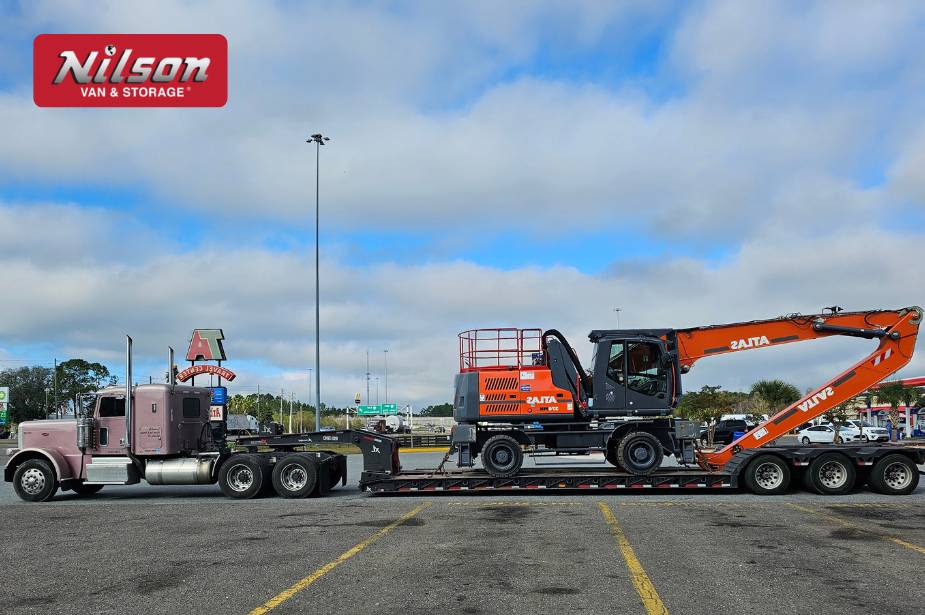
Lowboy trailers place the deck closer to the ground and may be considered when reduced deck height helps with overall clearance or equipment loading. They are not automatically the right choice for every heavy machine. Trailer capacity, deck dimensions, axle configuration, loading method, and route requirements still need to be reviewed.
Ask the carrier to explain why a particular trailer is being recommended. A professional review should connect the equipment’s actual measurements and loading condition to the proposed transport method rather than choosing a trailer by name alone.
When Special Handling May Be Needed
Some equipment can be driven onto a trailer. Other machines must be loaded with a ramp, crane, winch, forklift, or specialized site equipment. If the machine is inoperable, partially dismantled, or located where normal loading is not possible, state that clearly when requesting a quote.
You should also disclose whether the equipment contains loose materials, fuel, batteries, hydraulic components, or other items that require special preparation. Applicable requirements can vary by equipment type, carrier, location, and governing authority. The carrier should confirm what preparation is required for the specific move.
A common mistake is assuming the loading service is included simply because transportation is included. Ask whether loading, unloading, blocking, securing, disassembly, reassembly, escorts, permits, and site labor are included or handled by someone else.
You may also like: Heavy Equipment Transport Services in Columbia, SC: A Step-by-Step Guide to Booking Your Move
Compare Carriers by Questions, Not Just Price
When evaluating a heavy haul company in Savannah, compare the completeness of the planning process. A carrier that asks about dimensions, access, loading conditions, facility appointments, and destination placement is giving you a better basis for decision-making than one that provides a quick number without reviewing the load.
Ask these practical questions before booking:
- What equipment information is required to confirm the transport method?
- Who handles loading, unloading, securing, permits, and any required escorts?
- How are changes handled if the dimensions, access conditions, or schedule differ?
- What valuation coverage is available, and what documentation applies to the shipment?
Nilson Van and Storage discusses valuation coverage rather than calling it insurance. Review the available terms and documentation for your specific move so you understand what is included and what responsibilities remain with the customer. For local and intrastate moves in South Carolina, estimates are non-binding; Georgia moves and other transportation arrangements should be reviewed according to the applicable service terms.
A carrier’s willingness to explain assumptions is important. Clear assumptions help you compare proposals and reduce the chance that a quote leaves out a required part of the move.
Understand Permits, Route Planning, and the Final Quote
Oversize load permits in Georgia may be required when a shipment exceeds applicable legal dimensions or weight limits. The exact requirements depend on the load, vehicle configuration, route, jurisdiction, and current rules. Do not assume a permit is unnecessary because another machine traveled a similar route without one.
What Permit Planning Can Affect
Permit review may influence the proposed route, travel schedule, vehicle configuration, restrictions, and coordination with other parties. Some moves may require additional planning for bridge clearances, construction zones, restricted roads, utility conflicts, or local access conditions. The carrier or responsible transportation professional should confirm the requirements for the specific shipment.
Savannah-area moves can also involve facility scheduling and local access considerations beyond the state permit question. A shipment may satisfy one requirement but still need a separate appointment, gate instruction, local approval, or property-specific arrangement. Confirm every layer that applies to the origin and destination.
Permit costs, escorts, route changes, and special handling may be included in a proposal or listed separately. Ask for that distinction in writing. If the equipment’s dimensions change after the quote, permit and route assumptions may need to be revisited.
Why Quotes Change
A transport quote can change when the carrier receives new information about weight, height, attachments, loading conditions, access, waiting time, or the required delivery sequence. This is not necessarily a sign of poor planning; it may reflect a material change in the work.
For example, a quote based on a machine with a removable bucket may not apply if the bucket must remain attached. A quote based on a paved staging area may need review if the vehicle must use a narrow temporary entrance. A port-related move may change if the terminal appointment is unavailable on the requested date.
Request that the proposal identify the major assumptions. At a minimum, understand whether it covers transportation only or also includes loading, unloading, permits, escorts, waiting time, labor, storage, and access-related services. Also ask how cancellations or schedule changes are handled.
Nilson Van and Storage’s policy is that there are no cancellation fees. Even so, provide notice as early as possible when a project changes. Early communication gives the moving team a better opportunity to adjust scheduling and coordinate with the people and facilities involved.
You may also like: A Contractor’s Guide to Heavy Equipment Transport Services in Myrtle Beach, SC
Questions to Ask Before You Authorize the Move
Before booking equipment transport in Savannah, confirm the following in writing:
- The equipment description, measurements, weight, attachments, and operating condition.
- The pickup and delivery addresses, site contacts, appointment requirements, and access conditions.
- The proposed trailer or transport method and who is responsible for loading and unloading.
- Permit, escort, storage, waiting-time, valuation, cancellation, and change-order terms.
You do not need to become a transportation specialist to make a good decision. You do need enough information to understand what the carrier is planning and which conditions could affect the final result.
Wrapping Up
Booking Heavy Equipment Transport Services In Savannah, GA is easier when the move is treated as a coordinated project rather than a simple delivery. Start with exact equipment measurements, complete photographs, loading and unloading information, realistic site details, named contacts, and any port or facility requirements. Then ask how the proposed trailer, route, permits, valuation coverage, labor, storage, and schedule fit those facts.
If your move involves equipment hauling in Savannah, a port-related delivery, a commercial relocation, or temporary storage between project phases, Nilson Van and Storage can help you review the information needed to plan the next step. Request a detailed moving quote and explain the full situation, including attachments, access conditions, timing, and destination requirements. The better the initial information, the clearer your transport plan can be.


FAQs - Heavy Equipment Transport Services In Savannah, GA
Our Recent Articles
Stay informed and inspired with the latest tips, insights, and updates from the Nilson Van and Storage blog. From expert packing advice and moving checklists to stories about our commitment to the community, our articles are here to make your relocation journey smoother and stress-free. Explore our recent posts to discover how we’re redefining the moving experience for Columbia, Myrtle Beach, Charleston, Sumter, Savannah, and beyond.
Logistics Planning for Business Relocation: A Step-by-Step Guide for US Companies
Office Cubicle Installation in South Carolina: Planning a Smooth Office Move