Heavy Equipment Transport Services in Columbia, SC: A Step-by-Step Guide to Booking Your Move
Heavy Equipment Transport Services In Columbia, SC can be difficult to arrange when a machine is oversized, inoperable, time-sensitive, or needed at a worksite with limited access. The right move depends on more than putting equipment on a trailer; dimensions, weight, loading requirements, route conditions, permits, scheduling, and delivery coordination all need to be addressed before the move is booked.
This guide explains how to book equipment transport, what information to prepare, how Columbia and Midlands jobsite conditions affect planning, and what to confirm before moving day. You will also learn when professional machinery movers in Columbia, SC may be a better fit than trying to coordinate hauling on your own.
Heavy Equipment Transport Services In Columbia, SC: Start With the Equipment and Route
The first step in arranging heavy equipment transport is to define exactly what is moving and where it needs to go. A vague description such as “construction equipment” is not enough to determine the appropriate equipment, loading plan, or schedule. A transport provider needs details that affect handling from pickup through delivery.
Gather Accurate Equipment Details
Prepare the manufacturer, model, approximate weight, overall length, width, height, and any attachments. If the equipment has an extended boom, bucket, mast, blade, counterweight, outriggers, or removable components, note whether those parts can be detached or retracted.
Photographs are especially helpful. Include one full view of the machine and close views of the tires or tracks, loading points, controls, attachments, and any visible damage. If the machine is not operational, explain whether it can roll, steer, brake, or be loaded under its own power.
A skid steer, excavator, telehandler, forklift, agricultural machine, and crane may require very different loading arrangements. The same model can also present a different transport challenge when attachments remain installed.
Confirm Pickup and Delivery Conditions
The address alone does not tell the whole story. A rural parcel, commercial yard, downtown Columbia location, industrial property, or active construction site may have different access limitations. Check the available entrance width, overhead clearance, turning space, surface conditions, slope, gate restrictions, and staging area.
In Columbia and across the Midlands, a site may be accessible from the main road but difficult for a large trailer to position once it reaches the property. A narrow entrance, recently poured concrete, soft ground, parked vehicles, or overhead utility lines can change the unloading plan.
Ask the site contact these practical questions:
- Where can the transport vehicle stage while the equipment is loaded or unloaded?
- Is there enough space for the trailer to align with the loading area?
- Who will operate the equipment or provide loading assistance?
- Are there property rules, gate hours, appointment requirements, or security check-ins?
The more accurate this information is at the beginning, the fewer surprises are likely to appear during scheduling. Our team at Nilson Van and Storage can use the details you provide to discuss the move requirements and identify information that still needs to be confirmed before a quote is prepared.
Decide Whether the Equipment Needs Special Handling
Some equipment can be driven onto suitable transport equipment. Other machinery must be loaded with a crane, forklift, winch, ramp system, or other site-provided method. Do not assume the transport provider supplies every piece of loading equipment unless that capability has been specifically confirmed.
If the machine is disabled, leaking, missing tires, or unable to steer, say so before booking. A non-running machine may require a different loading plan than an operating one, and the pickup location may need to provide additional assistance.
Tell us about your move and get a personalized quote based on your requirements. 
How to Book Equipment Transport in Columbia, SC
Once the equipment and locations are documented, booking becomes a process of matching the move requirements with the appropriate service plan. The goal is not simply to find an available trailer. It is to confirm that the provider understands the machine, the route, the loading conditions, and the delivery handoff.
Request a Detailed Quote
When requesting a quote, provide the equipment information, pickup and delivery addresses, preferred dates, operating condition, attachments, photographs, and access notes. Also explain whether the move is a one-time delivery, a return trip, a transfer between worksites, or part of a larger project.
A useful quote discussion should clarify what is included and what remains the customer’s responsibility. Ask about loading and unloading coordination, address changes, waiting time, site contacts, required documentation, valuation coverage, and possible changes if the dimensions or condition differ from the original information.
For local and intrastate moves in South Carolina, Nilson Van and Storage states that moves are non-binding. That means the final amount can change when the actual shipment, services, access conditions, or other move details differ from the original information. Treat the initial quote as a planning tool and provide complete information to improve its usefulness.
Nilson Van and Storage also states that it does not charge cancellation fees. Even so, canceling or changing a heavy equipment move can affect site schedules, crew arrangements, and transport availability, so communicate changes as early as possible.
Compare Service Fit, Not Just the Initial Number
The lowest initial quote may not represent the lowest total cost. A provider may have limited information about the equipment, exclude loading coordination, or require the customer to arrange site assistance. A more complete quote may account for the actual dimensions, access limitations, and timing requirements from the outset.
When comparing equipment hauling in Columbia, SC, look at these factors:
- Whether the provider has reviewed the machine’s dimensions, weight, attachments, and operating condition.
- Whether pickup and delivery access has been discussed with someone familiar with the site.
- Whether the quote explains valuation coverage and other responsibilities in understandable terms.
Valuation coverage is not the same as insurance. Ask what valuation option applies to your move and review the terms before making a decision. Do not rely on a general assumption that every type of damage, delay, attachment, or site incident is handled in the same way.
Confirm the Booking in Writing
Before the move is treated as scheduled, confirm the equipment description, addresses, contact names, requested dates, access instructions, loading responsibilities, and any special conditions. Written confirmation gives everyone the same reference point if the jobsite changes or a piece of information needs to be corrected.
If a contractor, equipment dealer, property manager, or customer is involved, identify who has authority to approve changes. This prevents conflicting instructions when the transport team reaches the site.
A professional booking conversation should leave you knowing what happens next, what information is still needed, and whom to contact if the equipment or jobsite changes. If those points are unclear, the move is not fully planned yet.
Tell us about your move and get a personalized quote based on your requirements.
Prepare the Machinery, Jobsite, and People for Pickup
Good preparation reduces delays because the transport crew is not forced to solve basic site questions after arriving. Heavy equipment moves often involve several parties, including an owner, operator, general contractor, site superintendent, property manager, and transport coordinator. Assigning responsibilities in advance keeps the handoff organized.
Prepare the Equipment for Transport
Follow the manufacturer’s instructions for shutting down, securing, draining, locking, or preparing the equipment for transport. Remove loose tools, unsecured materials, personal items, and detachable components that are not part of the transport plan.
Record the machine’s condition before pickup with dated photographs. Photograph existing dents, scratches, cracked glass, worn components, and attachments. Keep a copy of the equipment identification information and any keys or operating instructions that need to accompany the machine.
If attachments are traveling separately, label them clearly and tell the coordinator how they relate to the main machine. An attachment that is left at the wrong staging point can create a delivery problem even when the primary equipment arrives as planned.
Prepare the Pickup and Delivery Sites
The pickup location should have a clear loading area and an identified site contact. Remove vehicles, materials, temporary fencing, debris, and other obstructions from the planned staging area. Confirm whether the surface can support the equipment and transport setup without creating access problems.
At delivery, make sure the receiving contact is available and understands where the machine should be placed. A jobsite that is open in the morning may be occupied by crews, materials, or concrete work by the afternoon. Reconfirm conditions if the move is booked well in advance.
For a downtown Columbia delivery, building rules, loading zones, lane restrictions, or limited staging space may affect the appointment. At a rural or expanding Midlands site, the challenge may instead be an unpaved entrance, soft shoulder, narrow gate, or changing site layout. These conditions should be described during the quote process rather than discovered at arrival.
Coordinate the Loading Method
Clarify who is responsible for loading and unloading. If the equipment can be driven onto the transport setup, confirm who will operate it and whether that person will be present at the agreed time. If a crane, forklift, ramp, or other machinery is needed, identify the party supplying it and confirm that the equipment is appropriate for the machine being moved.
Do not ask an unqualified person to operate unfamiliar machinery simply to keep the appointment on schedule. If the equipment cannot be loaded as planned, the move may need to pause while the site arranges a workable method.
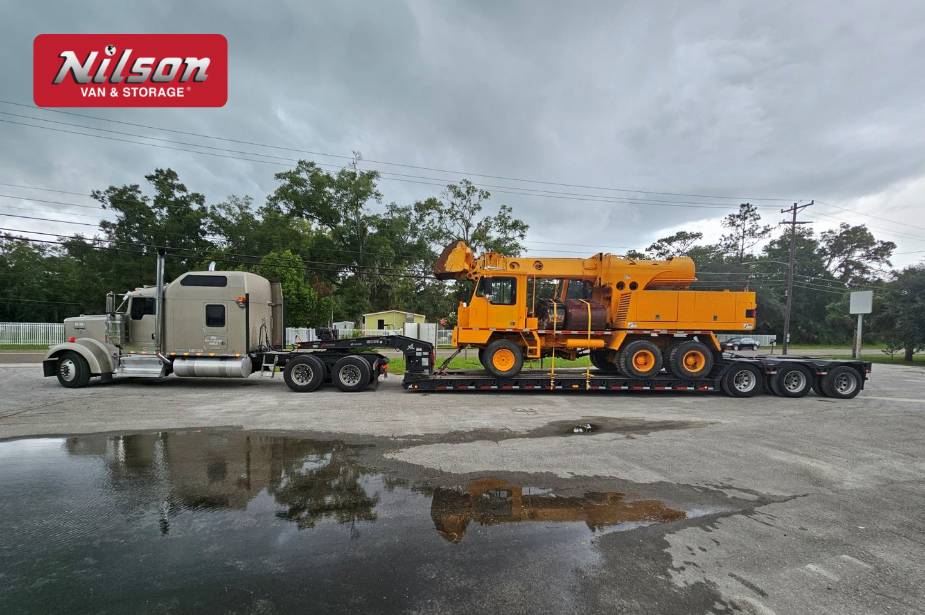
A lowboy trailer service in Columbia may be appropriate for some heavy or tall machinery, but trailer selection depends on the machine’s actual dimensions, weight distribution, loading method, route, and provider capability. Ask for the transport setup to be confirmed rather than assuming a particular trailer is automatically suitable.
Keep Communication Simple on Moving Day
Use one primary contact for the pickup and one for delivery whenever possible. Provide phone numbers that will be answered during the appointment window. If a site requires check-in, escort, personal protective equipment, or special documentation, communicate those conditions before the move date.
Share changes immediately. A different attachment, a new delivery address, equipment that no longer runs, or an access road that is temporarily closed can affect the plan. Early notice gives the coordinator a chance to reassess the move instead of allowing a small change to become a failed appointment.
Schedule Heavy Machinery Transport Around Your Project
The best transport date is not always the first available date. Heavy equipment is often tied to a construction sequence, rental return, industrial shutdown, dealer delivery, agricultural task, or customer commitment. Scheduling should account for the work that happens before pickup and after delivery, not just the time the machine spends in transit.
Build the Schedule Backward
Start with the date the equipment must be ready for use. Then work backward through unloading, arrival coordination, transport time, pickup preparation, equipment inspection, and any site work needed before the machine can leave.
Avoid booking a delivery for the exact moment a project depends on the equipment unless the schedule has enough flexibility for changes. Weather, jobsite delays, loading readiness, traffic conditions, route restrictions, and appointment changes can affect the timing. A practical schedule includes communication time and a backup plan for the receiving site.
If the equipment is being moved between two active projects, ask both site managers to confirm their readiness before a date is finalized. A transport appointment is much easier to manage when the pickup crew and receiving crew are working from the same information.
Understand Route and Access Considerations
A route that works for a passenger vehicle may not work for a heavy equipment transport setup. Width, height, weight, turning radius, bridge restrictions, construction activity, urban delivery rules, and site access can all affect routing. The transport provider may need additional information before confirming the plan.
For equipment hauling in Columbia and the surrounding Midlands, identify whether the move begins or ends in a congested commercial district, a residential neighborhood, an industrial corridor, or a rural area. Each setting creates different coordination needs. A location near downtown may require stricter appointment coordination, while a remote site may require clearer directions and a designated meeting point.
Do not provide a last-minute address change without discussing it first. A nearby address can still have a different entrance, surface, clearance, or staging arrangement.
Discuss Permits and Special Requirements Carefully
Oversize or overweight moves may involve permits, route review, escort requirements, or other obligations depending on the equipment and route. Requirements can vary by dimensions, weight, jurisdiction, roadway, date, and the specific transport arrangement. The responsible party should be identified during planning, and current requirements should be verified before the move.
Avoid assuming that a permit is unnecessary because the equipment has been moved before. A different trailer, attachment configuration, destination, or route can change the requirements. If your project manager or carrier is handling permits, ask what information they need from you and when those items must be supplied.
Plan for Storage or a Delayed Delivery
Sometimes the pickup date is firm but the destination is not ready. A construction schedule may shift, a lease may not begin on time, or a receiving site may temporarily lack room. In that situation, ask whether storage or a revised delivery arrangement is available for your shipment.
Nilson Van and Storage provides storage as part of its broader moving and logistics services, but storage arrangements should be discussed and confirmed for the specific equipment, timing, and location. Do not assume that temporary storage automatically includes special operating, access, or handling requirements for heavy machinery.
Our moving experts are here to assist you.
What to Confirm Before Heavy Equipment Transport Day
A final review helps catch changes while there is still time to respond. This is especially important when the equipment is part of a larger commercial move, a time-sensitive jobsite transfer, or a delivery involving several organizations.
Review the Move Details
Before pickup, confirm the equipment description, dimensions, estimated weight, attachments, operating condition, addresses, contact names, preferred date, loading method, and delivery placement. Review any instructions about gates, appointments, staging, escorts, documentation, or site access.
Confirm how changes will be handled. If the machine becomes inoperable, the site is blocked, the address changes, or the receiving contact is unavailable, call the moving coordinator instead of making assumptions at the gate. The correct response depends on the move details and the resources available at that time.
Review Valuation and Customer Responsibilities
Ask questions about valuation coverage before the move begins. Nilson Van and Storage uses the term valuation coverage rather than insurance, and the applicable options and terms should be reviewed for the specific shipment. Keep copies of the quote, written confirmations, equipment photos, condition records, and any signed documents.
For South Carolina local and intrastate moves, remember that the move is non-binding. This makes accurate information particularly important. If the equipment dimensions, services, access conditions, or requested dates change, notify the provider so the estimate and plan can be reassessed.
Plan the Handoff at Delivery
The receiving contact should know where the equipment is going and who will inspect it. After unloading, compare the equipment with the pickup condition record and note any questions promptly. Confirm that attachments, keys, manuals, and related items have been delivered as expected.
If the machine is being placed inside a facility or onto a constrained site, the delivery team needs clear instructions before arrival. Decide in advance whether the equipment should be staged near an entrance, placed in a designated bay, or left in a temporary area pending further work.
When Professional Coordination Is Worthwhile
Hiring a professional transport coordinator is often worthwhile when the equipment is large, difficult to load, inoperable, moving across multiple jurisdictions, tied to a project deadline, or being handled by several parties. The value is not only the movement itself. It is the advance review of details that can otherwise create delays, additional handling, or an unsuccessful appointment.
Machinery movers in Columbia, SC can also help when the owner does not have the right transport resources or does not want a project manager spending hours coordinating trailer selection, access questions, pickup communication, and delivery timing. The provider still needs accurate information from the customer, but experienced coordination can make the decision process more manageable.
Wrapping Up
Heavy Equipment Transport Services In Columbia, SC should begin with accurate equipment details, realistic site information, a confirmed loading method, and a schedule that allows the project to absorb changes. Before booking, document the machine, photograph its condition, identify pickup and delivery contacts, discuss access, and clarify valuation coverage and customer responsibilities.
Whether you are arranging equipment hauling in Columbia, moving machinery between Midlands worksites, or evaluating a lowboy trailer service for a specific machine, the right plan depends on the details of that move. Nilson Van and Storage can help you discuss those requirements, request a free moving quote, and determine the next practical step for your equipment transport needs.


FAQs - Heavy Equipment Transport Services In Columbia, SC
Our Recent Articles
Stay informed and inspired with the latest tips, insights, and updates from the Nilson Van and Storage blog. From expert packing advice and moving checklists to stories about our commitment to the community, our articles are here to make your relocation journey smoother and stress-free. Explore our recent posts to discover how we’re redefining the moving experience for Columbia, Myrtle Beach, Charleston, Sumter, Savannah, and beyond.
Logistics Planning for Business Relocation: A Step-by-Step Guide for US Companies
Office Cubicle Installation in South Carolina: Planning a Smooth Office Move