7 Questions to Ask Before Hiring Heavy Equipment Transport Services in Sumter SC
Heavy Equipment Transport Services in Sumter SC can become complicated quickly when a construction machine, industrial unit, or oversized load must leave one site and arrive at another without disrupting your project schedule. The right provider should understand more than basic pickup and delivery; they should be able to discuss equipment dimensions, access conditions, loading requirements, timing, valuation coverage, and communication before the move begins.
This guide explains seven questions to ask before you hire an equipment hauler in Sumter, South Carolina. You will learn how to compare a heavy haul company, prepare useful information for a quote, identify potential planning gaps, and decide whether Nilson Van and Storage is an appropriate company to contact for your project.
Heavy Equipment Transport Services in Sumter SC: Why Planning Comes First
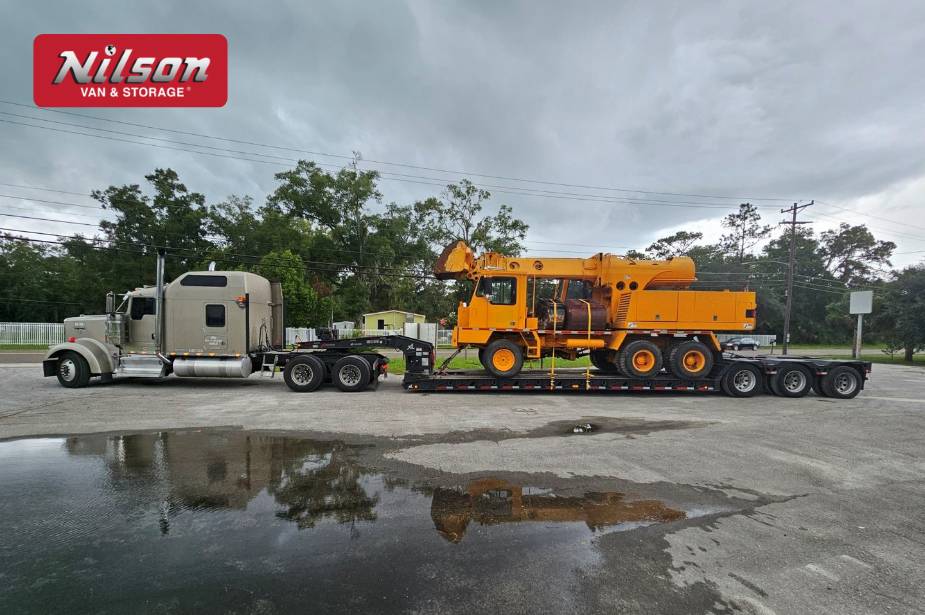
Heavy equipment transport is not a simple matter of putting a large item on a truck and sending it down the road. The equipment may be unusually heavy, tall, wide, fragile, difficult to access, or dependent on specialized loading equipment. A successful move starts with understanding the item and the route before a date is promised.
In Sumter, a project may involve a construction site, manufacturing facility, warehouse, farm property, commercial building, or municipal location. Each setting can create different access questions. A narrow entrance, soft ground, overhead obstruction, active work zone, or limited loading area may affect how the move is planned.
The Equipment Details Affect the Plan
Before requesting a quote, gather the equipment’s make, model, approximate weight, length, width, height, and operating condition. If the unit has attachments, detachable components, fluids, batteries, tracks, booms, or other parts that change its dimensions, mention those details as well.
A piece of equipment that can be driven or rolled onto a trailer may require a different approach from a machine that cannot operate. If the item is not operational, explain whether it can be lifted, winched, or otherwise positioned for loading. Do not assume the carrier will know these details from a model name alone.
Photos are often useful because they show the surrounding area, access points, ground conditions, and the equipment’s current position. A clear photo of the pickup location and delivery area can reveal issues that may not come up during a short phone conversation.
The Pickup and Delivery Locations Matter Too
Provide complete addresses and describe where the equipment sits on each property. The street address alone may not tell a mover whether a truck can reach the loading area, turn around, stage nearby, or work around other vehicles and structures.
Also ask about property rules. Commercial sites may require certificates, scheduled arrival windows, check-in procedures, escorts within the property, or coordination with a site manager. Requirements vary by property and project, so confirm them with the responsible authority rather than relying on assumptions.
That early information helps a provider determine whether the move fits its capabilities and what additional planning may be necessary. It also makes the eventual quote more meaningful.
Questions to Ask Before You Commit
The seven questions below are designed to uncover the details that most often create confusion during equipment hauling. You do not need to know every technical answer before calling. You do need to choose a provider willing to ask the right questions and explain what happens next.
Heavy Equipment Transport Services in Sumter should begin with a clear conversation about your equipment, site conditions, timing, and expectations. Nilson Van and Storage can review the project information you provide and help determine the appropriate next step rather than treating every move as identical.
What Should You Ask a Heavy Haul Company in Sumter SC?
A professional conversation should leave you with a better understanding of the work involved, not just a number. These questions help you compare providers based on planning quality, communication, and fit for the specific equipment.
Can You Handle This Equipment and Its Dimensions?
Ask the provider to discuss the equipment’s weight, dimensions, operating condition, and any attachments. A company may be experienced with commercial moves but not equipped for every type of construction or industrial unit. The answer should be specific to your item, not a general statement that the company moves large equipment.
If you have a forklift, skid steer, excavator, generator, compressor, lift, manufacturing component, or another specialized item, identify it accurately. The correct description helps the provider determine loading and handling requirements.
How Will You Plan Pickup and Delivery Access?
Ask what information the provider needs about both sites. Discuss entrances, loading docks, ramps, gates, overhead clearance, parking restrictions, ground conditions, and whether someone will be available to provide access.
The best time to discover an access problem is before the equipment is scheduled for pickup. For example, a machine may fit through a gate but still be unable to make the turn required to reach it. A warehouse may have a dock, but the dock may not be suitable for the equipment’s weight or dimensions.
Who Coordinates the Schedule?
Find out who will communicate with you before pickup, on the moving day, and during delivery. If the equipment supports an active construction or manufacturing project, a missed window can affect crews, subcontractors, production, and site access.
Ask how changes are handled if the equipment is not ready, the site becomes inaccessible, or the delivery contact changes. You should also confirm what information the provider needs from your team and when that information is due.
What Documentation and Valuation Coverage Apply?
Ask which documents are needed and how valuation coverage applies to the move. Valuation coverage is not the same as insurance, and the terms should be reviewed before you authorize transportation. Ask what is included, what information is required, and whether special equipment or unusual circumstances affect the available coverage.
Nilson Van and Storage uses valuation coverage language rather than referring to it as insurance. Asking this question in advance helps you understand the provider’s responsibilities and gives you an opportunity to raise concerns about high-value or unusually delicate equipment.
How Is the Quote Determined?
A quote may depend on the equipment’s size and weight, the distance, access conditions, loading requirements, timing, packing or preparation needs, and the amount of labor involved. Ask whether the information you provided is enough for a firm discussion or whether an on-site review or additional documentation is needed.
For local and intrastate moves in South Carolina, moving charges are non-binding. That means the final amount can change based on the actual services and conditions involved. A clear explanation of this policy is more useful than an artificially precise estimate that does not account for the project details.
Request the quote in writing and ask what assumptions it contains. If the equipment description, site access, or service scope changes, confirm how that may affect the price.
What Happens If the Date Changes?
Construction and industrial schedules can move for reasons outside your control. Ask how rescheduling works, whether the equipment must be ready within a particular window, and how much notice the provider needs when plans change.
Nilson Van and Storage has a no-cancellation-fee policy, but you should still communicate changes as early as possible. A no-cancellation-fee policy does not eliminate the practical need to coordinate labor, access, site contacts, and equipment readiness.
Who Is My Main Contact?
A single, identifiable contact can reduce missed details. Ask whether you will work with a coordinator, dispatcher, moving consultant, or another representative. Clarify who should receive updated addresses, gate instructions, equipment photos, and delivery changes.
These questions are especially important when the owner, general contractor, equipment operator, and receiving facility are different people. Write down the agreed details and share them with everyone involved.
The quality of these answers often tells you more than a broad claim about being a licensed equipment transport company. Credentials may matter, but practical project communication determines whether the plan is understandable and workable.
How Do You Prepare Equipment Hauling in Sumter?
Once you identify a potential provider, focus on preparation. Good preparation does not mean guessing at technical requirements. It means giving the carrier accurate information and making the pickup and delivery sites ready for the agreed plan.
Create an Equipment Information Sheet
Prepare one page with the equipment description, serial or identifying information if needed, dimensions, approximate weight, operating condition, attachment details, and current location. Include photos taken from several angles and note anything that cannot be removed or folded.
If the machine contains loose tools, detachable accessories, or personal items, ask what should be removed before the move. Heavy equipment may need to be prepared differently from ordinary household goods. The provider should tell you what it needs rather than leaving you to interpret a general instruction.
Confirm Site Readiness
At the pickup location, identify the person who can release the equipment and explain where it is positioned. Confirm that gates, doors, loading zones, and access lanes will be available during the scheduled window.
At delivery, make sure the receiving party knows where the equipment should go and who can authorize placement. If the item is going into a building, verify the doorway, floor, ramp, and turning requirements with the property manager or site supervisor.
Account for Sumter Site Conditions
Sumter-area projects can range from established commercial properties to active construction sites and rural locations. Conditions may differ significantly between the paved entrance and the actual loading area. Wet ground, gravel, grades, low branches, temporary fencing, and other site features can affect access.
You should not make promises about site access based only on a map or a previous delivery. Walk the route when possible, take current photos, and point out changes such as new construction, stored materials, or temporary barriers.
Build Time for Coordination
The move may need to align with a project milestone, equipment rental period, facility shutdown, or installation crew. Work backward from the date the equipment must be available. Then allow time for information gathering, quote review, site coordination, preparation, and any building or property approvals.
Exact timing depends on the equipment, origin, destination, service scope, and current scheduling conditions. A provider should confirm availability rather than guarantee a date before reviewing those factors.
Keep the Receiving Team Informed
The delivery contact should know what is arriving, when it is expected, where it should be placed, and what access will be available. If the receiving team is not prepared, the carrier may face delays or be unable to complete the intended placement.
For a commercial or industrial move, include the project manager, facility representative, equipment operator, and property contact in the communication plan when appropriate. One shared set of instructions is better than several conflicting conversations.
Nilson Van and Storage supports commercial moving, packing, storage, and related relocation needs where they fit the project. Whether the request involves one piece of equipment or a broader facility transition, the right first step is to describe the actual scope and let the moving team assess it.
You may also like: What to Know Before Booking Heavy Equipment Transport Services in Savannah, GA
How Should You Compare Equipment Haulers and Quotes?
Choosing a provider based only on the lowest number can create problems when the quote leaves out labor, access planning, preparation, or important terms. Compare the scope behind each quote so you understand what you are buying and what you must handle yourself.
Compare Scope, Not Just Price
Place competing quotes side by side and check whether each one addresses the same equipment, locations, service dates, loading conditions, and delivery expectations. A lower quote may reflect fewer services or assumptions that do not match your site.
Look for clarity about who handles preparation, whether packing or protection is included, how access is evaluated, and what happens if conditions differ from the information provided. If one quote is vague, ask for clarification before comparing it with a more detailed proposal.
Ask About the Team’s Relevant Experience
A company may have broad moving experience without handling your exact type of equipment. Ask whether the team has worked with comparable commercial, industrial, construction, or oversized items and what information it needs to evaluate your request.
You are looking for practical answers: how the equipment will be approached, what site details matter, how communication will work, and what could change the plan. Avoid relying on unsupported claims or assuming that a large item is routine for every provider.
Review Terms and Responsibilities
Read the quote and service documents carefully. Pay attention to the description of services, valuation coverage, customer responsibilities, access assumptions, scheduling language, and cancellation terms.
For South Carolina local and intrastate moves, charges are non-binding. Discuss how that applies to your project and ask what conditions could affect the final amount. Nilson Van and Storage also has no cancellation fees, but changes should still be communicated promptly so the schedule can be adjusted as efficiently as possible.
Decide Whether Storage Is Part of the Plan
Sometimes the equipment must leave one location before the new site is ready. Storage may be useful during a construction delay, facility transition, lease overlap, or phased relocation. If you need storage, ask when the equipment can enter storage, how release and delivery are coordinated, and whether the storage period changes the overall schedule.
Do not treat storage as an afterthought. The best arrangement depends on the equipment, access, timing, and intended next destination. Confirm the available service and terms with the provider before making assumptions.
Watch for Warning Signs in the Process
Be cautious when a provider gives a precise answer without asking about dimensions, weight, access, operating condition, or destination requirements. Another warning sign is a quote that does not identify what is included or who is responsible for site preparation.
Good communication does not mean every issue can be predicted in advance. It means the provider identifies the variables, explains what must be verified, and gives you a practical way to resolve open questions.
For projects in Sumter County, the right heavy haul company should help you evaluate the entire move rather than treating the equipment as an isolated object. That approach reduces surprises and gives your project team a clearer basis for scheduling.
When Is It Time to Hire an Equipment Hauler?
The right time to hire an equipment hauler is before the equipment becomes the project’s last unresolved dependency. Waiting until a crew, facility, or installation window is already committed can limit your options and make access problems more expensive to correct.
Hire Early When Equipment Supports A Deadline
Start the conversation when the equipment is tied to a construction phase, plant change, commercial opening, rental return, or scheduled installation. You may not have every detail ready, but an early assessment can show which information still needs to be collected.
For long-distance or multi-state transportation, allow additional planning because the origin, destination, route, scheduling conditions, and service requirements may vary. For a local Sumter move, the distance may be shorter, but access and timing can still determine how much preparation is needed.
Use A Site Walkthrough When The Move Is Unusual
An on-site review may be worth considering when the machine is non-operational, the property has restricted access, the item is unusually large or heavy, or the delivery requires careful placement. Ask whether the provider needs more information before confirming the service scope.
A walkthrough can also help when several parties are involved. The owner may know the equipment, the contractor may know the schedule, and the property manager may know the access rules. Bringing those details together early prevents each person from working from a different assumption.
Separate Transportation From Related Work
Equipment transport may be one part of a larger relocation. You may also need packing, disassembly coordination, temporary storage, office moving, warehouse support, or delivery scheduling. Ask the provider to separate these services clearly so you know which tasks are included and which require another specialist.
Nilson Van and Storage offers moving and storage services for residential and commercial customers, along with related services that may be relevant to a broader relocation. The appropriate scope depends on the item and project, so describe the complete situation when requesting an evaluation.
Plan For Changes Without Losing Control
A workable plan includes a process for changes. Record the confirmed equipment description, addresses, site contacts, expected timing, and outstanding questions. If any of those details changes, send the update to the designated contact rather than assuming everyone has heard about it.
Ask what happens if the equipment is not ready, the destination is unavailable, or the receiving party needs a different placement. No provider can remove every variable from a complex move, but clear communication can keep a change from becoming a surprise.
Know What You Need From A Licensed Provider
If your project requires a licensed equipment transport company, ask the provider which credentials and documentation apply to the specific service and jurisdiction. Requirements can vary based on the equipment, weight, route, state, and transportation arrangement. Do not rely on a generic label; request current information relevant to your move.
This is also the time to ask how valuation coverage applies, what documents you will receive, and how the provider records the equipment’s condition. A professional review of these details supports a better decision without creating unsupported promises about the outcome.
By this point, you should be able to determine whether you need a basic equipment move, a more involved commercial relocation, storage between locations, or additional site planning. That distinction helps you contact the right team with a realistic request.
What Should You Expect From Nilson Van and Storage?
When you contact Nilson Van and Storage about equipment hauling in Sumter, begin with the facts of the project. Share the equipment description, dimensions, approximate weight, operating condition, pickup and delivery addresses, access concerns, preferred timing, and any related moving or storage needs.
Start With A Project Review
A useful consultation should identify what is known, what still needs verification, and whether the requested service fits the project. If the move involves a commercial property, active construction site, or industrial facility, include the relevant site contacts and scheduling restrictions.
The more complete your information, the easier it is to discuss labor, preparation, access, timing, and valuation coverage. If something is uncertain, say so. A question mark is easier to manage before scheduling than after equipment is waiting at the gate.
Discuss The Applicable Moving Terms
Ask how the quote is prepared, which services are included, and what customer responsibilities apply. For local and intrastate moves in South Carolina, charges are non-binding. Review the service documents and ask what circumstances may affect the final amount.
Nilson Van and Storage does not charge cancellation fees. Even so, early notice of a change remains important because the equipment, site, labor, and receiving schedule may all need to be coordinated again.
Valuation coverage should also be discussed before the move. It should not be described as insurance, and the terms should be reviewed so you understand the available protection and your responsibilities.
Coordinate Related Services When Needed
A piece of equipment may need to move as part of an office, warehouse, facility, senior, military, or residential relocation. The correct service mix depends on the customer’s situation. Packing, storage, commercial moving, or phased scheduling may be relevant when the equipment is not moving directly from one ready site to another.
The goal is not to add services unnecessarily. It is to make sure the plan reflects what actually has to happen between the current location and the final destination.
Confirm The Next Step In Writing
Before the move, keep a written record of the equipment description, addresses, contacts, timing, access instructions, quote assumptions, service terms, and open items. Share the final instructions with the people responsible at both locations.
If the equipment changes, the route changes, or site conditions develop, contact the moving team promptly. Updated information gives everyone a better opportunity to revisit the plan before the scheduled work begins.
Nilson Van and Storage serves customers in Sumter and other communities in South Carolina and Georgia. Availability, scope, and project fit should be verified for your specific request, particularly when the move involves specialized equipment or commercial-site requirements.
Wrapping Up
The best Heavy Equipment Transport Services in Sumter SC are evaluated through questions, not slogans. Ask whether the provider understands your equipment, how pickup and delivery access will be handled, what documents and valuation coverage apply, how the quote is determined, how schedule changes work, and who will manage communication.
Prepare accurate dimensions, photos, addresses, access details, operating information, and timing before you request a quote. Then compare the scope and terms behind each proposal instead of choosing on price alone. If your equipment move connects to a broader commercial relocation, construction schedule, or storage need, explain the complete situation.
Nilson Van and Storage can review your Sumter equipment-moving request and discuss the services that fit the project. Contact the team with the details you have, ask direct questions, and make the final decision only after the scope, responsibilities, valuation coverage, and scheduling expectations are clear.


FAQs - Heavy Equipment Transport Services in Sumter SC
Our Recent Articles
Stay informed and inspired with the latest tips, insights, and updates from the Nilson Van and Storage blog. From expert packing advice and moving checklists to stories about our commitment to the community, our articles are here to make your relocation journey smoother and stress-free. Explore our recent posts to discover how we’re redefining the moving experience for Columbia, Myrtle Beach, Charleston, Sumter, Savannah, and beyond.
Logistics Planning for Business Relocation: A Step-by-Step Guide for US Companies
Office Cubicle Installation in South Carolina: Planning a Smooth Office Move