How to Choose the Right Heavy Equipment Transport Services in Charleston SC
Heavy Equipment Transport Services in Charleston SC require more than matching a machine to a truck; the right provider must understand equipment dimensions, loading requirements, route planning, job-site access, and the timing pressures behind construction and industrial work.
Whether you need a machine moved across Charleston, delivered from another South Carolina location, or coordinated as part of a larger project, the carrier you choose can affect your schedule and total project cost. This guide explains how to evaluate heavy equipment hauling companies, what information to prepare, which questions to ask, and how Nilson Van and Storage may support your planning.
How to Evaluate Heavy Equipment Transport Services in Charleston SC
A good transport decision starts with matching the shipment to the provider’s actual capabilities. Heavy equipment is not handled like household furniture or standard freight. The equipment’s weight, width, height, length, operating condition, and loading method all influence the equipment and coordination required.
Start With the Equipment Profile
Before requesting a quote, record the machine’s make, model, operating weight, overall dimensions, and any attachments that will travel with it. A compact excavator with a removable bucket creates a very different transport plan from a large wheel loader or rough-terrain crane.
If the equipment has attachments, determine whether they can be removed. Detaching a boom, bucket, counterweight, mast, or other component may reduce the shipment’s dimensions, but it can also create additional loading, packaging, and reassembly needs. The lowest apparent transport price is not always the lowest total project cost if preparation work is left unclear.
Also identify whether the machine rolls, starts, steers, and can be loaded under its own power. Inoperable equipment may require a winch, crane, forklift, or other loading arrangement. Tell the provider before the quote is prepared rather than after the truck arrives.
Confirm the Transport Method
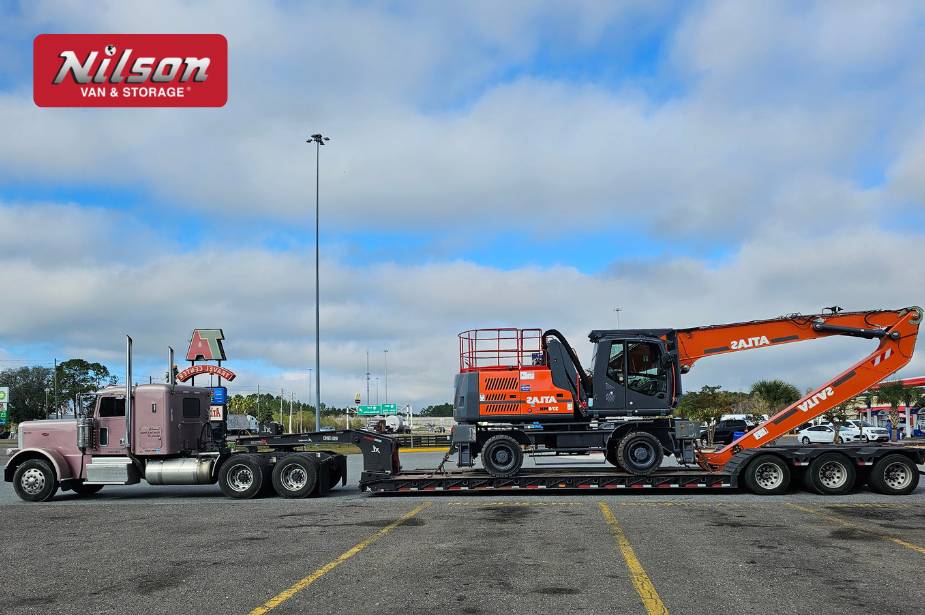
A lowboy trailer is commonly considered for construction equipment because its deck height can accommodate taller machinery than some standard trailer configurations. However, lowboy trailer transport in Charleston SC is not automatically the right choice for every shipment. The suitable equipment depends on the machine’s dimensions, weight distribution, ground clearance, loading method, and route.
Ask the provider to explain why the proposed trailer type fits your equipment. A useful conversation should address:
- The equipment’s loaded dimensions and total weight
- Whether ramps, a winch, a forklift, or a crane are needed
- How attachments will be positioned or transported
- Whether the pickup and delivery sites can accommodate the trailer
A provider that asks detailed questions early is generally better positioned to identify complications before dispatch. A provider that gives a firm answer without asking about the machine, locations, and site conditions may be overlooking important details.
Separate Local, Intrastate, and Long-Distance Needs
A move within Charleston may involve tight access, downtown traffic patterns, gated communities, active construction sites, or loading areas shared with other contractors. An intrastate shipment across South Carolina may involve greater mileage and different scheduling considerations. A long-distance move can add appointment coordination, additional route planning, and more handoffs or delivery constraints.
Explain the complete origin-to-destination plan instead of asking only for a rate from one ZIP code to another. A heavy equipment hauling company in Charleston should understand whether the machine is moving between job sites, leaving a dealer, going to a storage location, or supporting a commercial relocation.
What Charleston Conditions Should You Plan For?
Charleston-area transport planning is shaped by more than distance. The pickup and delivery environments often determine how easily a large trailer can enter, position, load, unload, and leave. Reviewing those conditions before scheduling can prevent a machine from arriving at a location that is not prepared to receive it.
Check Job-Site Access Before Booking
Walk or inspect both locations with the transport in mind. Look for narrow entrances, sharp turns, low overhead clearances, soft ground, steep grades, limited staging space, and gates that may not open wide enough for the loaded equipment.
A site may appear accessible to a passenger vehicle but still be difficult for a trailer carrying construction equipment. Ask the site superintendent, property manager, or receiving contact to confirm where the trailer can position and whether other contractors will be occupying the approach.
For downtown Charleston or other dense areas, building rules and limited staging space may affect the appointment. Some properties require advance coordination with management, a loading-zone reservation, a certificate of insurance from the carrier, or specific arrival windows. Requirements vary by property and municipality, so confirm them with the responsible authority or property representative.
Consider Height, Width, and Route Restrictions
Oversize load transport in South Carolina may require additional route review, permits, escorts, or scheduling controls depending on the shipment’s dimensions, weight, route, and applicable requirements. Those conditions can vary, and the transport provider should verify what applies to the actual shipment rather than relying on a general assumption.
Ask these practical questions before authorizing the move:
- Who is reviewing the loaded dimensions and route requirements?
- Which party is responsible for permits or other approvals if required?
- Could restrictions affect the requested pickup or delivery window?
- Does the quoted service include any access or coordination work?
Do not assume that a route that works for a standard truck will work for an oversize load. Bridges, weight limits, construction zones, turning requirements, and restricted approaches can all change the plan.
Coordinate With the People Who Control the Site
Heavy equipment moves often involve more than a shipper and a carrier. The equipment owner, general contractor, subcontractor, site superintendent, property manager, crane provider, and receiving crew may all have a role.
Assign one person to confirm the appointment and share changes. If the machine is arriving at an active construction site, communicate the delivery window to the team that will put it into service. If the equipment is being placed into storage, verify the receiving hours and unloading area in advance.
This is especially important when a machine is needed for a concrete pour, grading phase, demolition schedule, or other time-sensitive milestone. A transport plan should support the work plan, not exist as a separate conversation.
What Should You Ask a Heavy Equipment Hauling Company in Charleston?
When comparing equipment transport near me, price is only one part of the decision. You also need to understand how the company evaluates the equipment, communicates changes, handles access questions, and documents the shipment. The following questions help separate a detailed proposal from a vague estimate.
Ask About Experience With Your Equipment Type
A company may have experience moving household goods or general commercial items without regularly handling construction machinery. Ask whether the provider has coordinated shipments involving equipment similar in size, weight, and loading condition to yours.
Relevant examples may include excavators, skid steers, loaders, lifts, tractors, generators, compressors, agricultural machinery, and other commercial equipment. The goal is not to hear a broad claim. The goal is to determine whether the provider understands the specific planning issues your shipment creates.
If the equipment is non-running, unusually tall, unusually wide, or being moved with attachments, make those facts part of the initial discussion. A provider should be able to explain what additional information is needed before the equipment can be assigned to a transport plan.
Ask for a Written Scope of Service
A written quote or proposal should identify what the provider understands about the shipment. At a minimum, review whether it reflects the following:
- Pickup and delivery locations, contacts, and requested dates
- Equipment description, dimensions, weight, and operating condition
- Trailer type or transport method under consideration
- Loading and unloading responsibilities
- Access limitations or site requirements
- Any known permit, escort, appointment, or special coordination needs
- Items included in the quoted service and items that may be billed separately
If a detail is unknown, the proposal should say so. Clear uncertainty is easier to manage than an assumption that becomes a last-minute charge or delay.
Ask How Valuation and Responsibility Are Explained
Before booking, ask how the provider addresses valuation coverage for the shipment and what conditions apply. Valuation coverage is not the same as insurance, and the terms should be reviewed carefully rather than treated as interchangeable.
Nilson Van and Storage advises customers to discuss valuation coverage as part of the planning process. Confirm what applies to your particular heavy equipment shipment, especially if the machine is high-value, customized, leased, or accompanied by detachable components. Keep photographs, serial numbers, condition notes, and ownership or lease records with your project documents.
Look for Practical Communication
Large equipment moves rarely remain unchanged from the first conversation. A job site may close temporarily, the equipment may not be ready, weather may affect the work area, or a delivery window may shift. Ask who will communicate updates and how the company handles changes to the plan.
At Nilson Van and Storage, the most useful early conversations are specific: What is being moved? Where is it located? Can it be loaded? What does the destination require? What date matters to the customer? Those answers provide a stronger foundation than a quick estimate based only on mileage.
Nilson Van and Storage’s published policy states that there are no cancellation fees. Even so, confirm how a cancellation, postponement, site closure, or equipment change affects your particular order before scheduling. For local and intrastate moves in South Carolina, rates are non-binding, so the final amount may depend on the actual scope and conditions of the move.
You may also like: What to Know Before Booking Heavy Equipment Transport Services in Savannah, GA
How Can You Prepare Equipment for Transport?
Preparation is where many avoidable complications begin. A machine can be transportable in theory but not ready for pickup because it is blocked in, contains loose materials, has leaking fluids, or lacks the access needed for loading. A short preparation review can make the appointment more productive.
Prepare the Machine and Attachments
Remove personal items, loose tools, debris, and materials that are not part of the transport scope. Secure or remove detachable components according to the equipment manufacturer’s instructions and your provider’s requirements. If attachments are traveling separately, identify and measure them rather than assuming they fit within the machine’s profile.
Check fuel, batteries, hydraulic components, tires or tracks, and other operating details as appropriate for the equipment. Do not make mechanical changes solely for transport without confirming what the provider needs. The important point is to disclose the equipment’s actual condition accurately.
Photograph the machine from multiple sides before loading. Include existing dents, scratches, cracked glass, worn components, and serial-number plates. These records create a shared reference for condition discussions at pickup and delivery.
Prepare the Pickup and Delivery Areas
At pickup, remove obstacles and confirm that the equipment can be reached by the planned trailer. At delivery, make sure the receiving area is open, firm enough for the planned unloading activity, and clear of vehicles, materials, overhead obstructions, and personnel who are not part of the operation.
If a forklift, crane, or other equipment is needed to load or unload, identify who is providing it and when it will be available. Do not leave this question unresolved until the truck is at the site. Loading resources may need their own scheduling and may affect the total project cost.
For a commercial relocation or a move between construction sites, coordinate the equipment’s last use with the pickup appointment. A machine that is still operating on the site when the carrier arrives can create waiting time and disrupt other work.
Build a Simple Transport File
Keep one file, digital or physical, containing the quote, equipment details, photographs, site contacts, requested dates, access notes, and any documents requested by the provider. Give the same information to the person meeting the carrier at pickup and the person receiving the machine.
A useful transport file should also identify:
- The equipment owner or authorized representative
- The person who can approve loading or delivery decisions
- The exact pickup and delivery instructions
- Any time-sensitive project milestone
- Whether the shipment is local, intrastate, or long-distance
If you are moving machinery as part of an office, warehouse, plant, or commercial relocation, include the equipment in the broader move schedule. A machinery mover in Charleston may need to coordinate with furniture removal, electrical disconnection, rigging, storage, or building access.
How Do You Compare Cost, Timing, and Service Terms?
The right heavy equipment transport decision balances price with planning quality. A low quote can become expensive if it excludes loading assistance, assumes the machine is operational, ignores site restrictions, or uses a delivery window that does not fit the project. A higher quote may reflect additional coordination that your shipment genuinely requires.
Compare the Same Scope
Request comparable information from each provider. If one company includes loading and another assumes the customer provides a crane, the prices are not measuring the same service. Likewise, a quote based on a running machine cannot be compared directly with one that includes non-running equipment.
Ask each provider to identify assumptions. Examples include accessible pickup and delivery locations, removable attachments, standard business-hour appointments, customer-provided loading equipment, and dimensions that remain within expected limits. Any assumption that is wrong can change the plan.
Understand Timing Without Expecting a Guarantee
Heavy equipment scheduling may depend on equipment readiness, site access, route requirements, weather, permit processing where applicable, and the availability of loading resources. Request a realistic pickup and delivery window, then ask what information could change it.
If the machine supports a fixed construction milestone, build in coordination time rather than scheduling transport at the last possible moment. Share the date when the equipment is actually needed, not only the date you would prefer it picked up. That distinction helps the provider understand the consequences of a schedule change.
For Charleston projects, access conditions may also vary by neighborhood, property rules, commercial activity, and available staging space. Confirm the plan again when the appointment approaches, particularly if the site has changed since the original estimate.
Review Terms Before You Commit
Read the service terms and ask about anything unclear. Confirm the cancellation process, payment expectations, valuation coverage, included services, possible additional charges, and responsibilities for permits or loading equipment. Nilson Van and Storage’s policy states that it does not charge cancellation fees, while local and intrastate South Carolina moves are non-binding; customers should still confirm how the policy applies to the specific order.
Keep the written scope and your equipment documentation together. If the equipment changes, the pickup address changes, or site conditions become different, notify the provider promptly. A revised plan is easier to evaluate before dispatch than after the truck and crew are committed.
When customers ask us for guidance, our recommendation is straightforward: choose the provider that can explain the plan in plain language, identify its assumptions, and give you a clear next step for unresolved details. That approach is more valuable than choosing a provider based on a single number.
You may also like: A Contractor’s Guide to Heavy Equipment Transport Services in Myrtle Beach, SC
Know When Professional Coordination Makes Sense
Professional help is particularly useful when the equipment is oversized, non-running, high-value, difficult to access, moving across South Carolina, or tied to a commercial deadline. It may also make sense when the shipment is one part of a larger relocation involving packing, storage, office contents, or multiple destinations.
Nilson Van and Storage serves customers in Charleston and supports moving and storage needs that may accompany commercial, residential, long-distance, military, senior, and other relocation situations. Confirm the current scope of service for your equipment, route, and site before booking, since not every shipment has the same requirements.
Wrapping Up
Choosing Heavy Equipment Transport Services in Charleston SC is a planning decision, not simply a search for the nearest truck. Start with accurate equipment details, confirm the loading method, inspect both sites, discuss route and access requirements, compare written scopes, and review valuation coverage and service terms before committing.
The best transport arrangement is the one that matches the machine, location, timing, and responsibilities clearly. Whether you need construction equipment hauling in Charleston, a lowboy trailer evaluation, intrastate transport across South Carolina, or coordination with a broader commercial move, detailed communication reduces uncertainty before the appointment.
Nilson Van and Storage can help you discuss the information needed to evaluate your move. Request a free quote based on your equipment and locations, and ask questions before scheduling so the proposed service reflects the actual work involved.


FAQs - Heavy Equipment Transport Services in Charleston SC
Our Recent Articles
Stay informed and inspired with the latest tips, insights, and updates from the Nilson Van and Storage blog. From expert packing advice and moving checklists to stories about our commitment to the community, our articles are here to make your relocation journey smoother and stress-free. Explore our recent posts to discover how we’re redefining the moving experience for Columbia, Myrtle Beach, Charleston, Sumter, Savannah, and beyond.
Logistics Planning for Business Relocation: A Step-by-Step Guide for US Companies
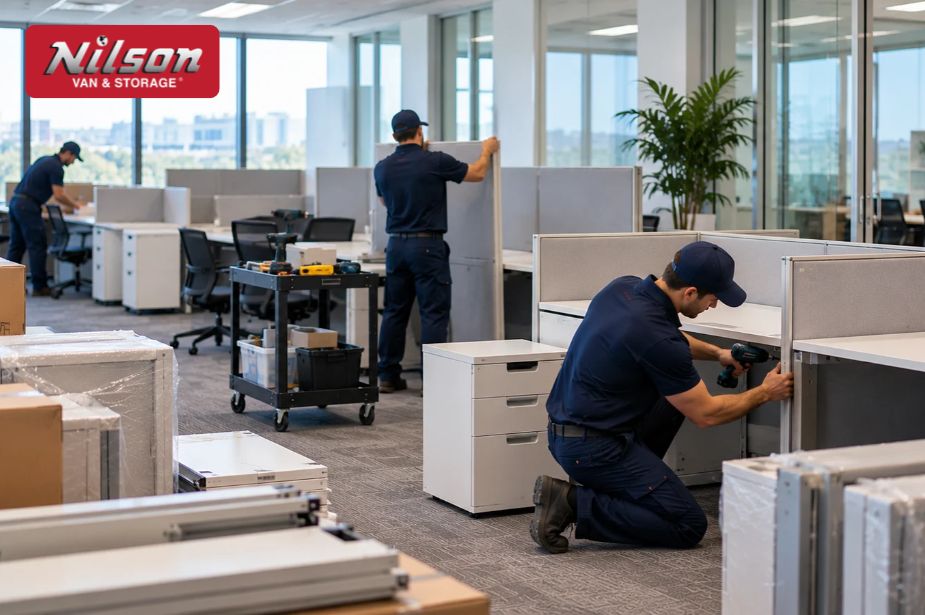
Office Cubicle Installation in South Carolina: Planning a Smooth Office Move