
Average Moving Costs In Columbia: A Complete Pricing Guide
Columbia moving services can feel expensive fast when you are trying to compare quotes, decide what to pack yourself, and figure out what is actually included.
If you are searching for the average moving costs in Columbia, the real question is not just what movers charge, but what drives that number up or down for your specific move.
That is what this guide is built to clarify. You will learn the major pricing factors, how movers typically structure estimates, where hidden costs come from, and how to judge whether a quote is fair before you commit.
What Average Moving Costs in Columbia Really Mean
The phrase average moving costs sounds simple, but in practice it covers a wide range of move sizes, service levels, and timing decisions. A studio apartment move, a full-house relocation, and a small office move can all land in very different pricing buckets even within the same city.
The most useful way to think about average moving costs is as a planning tool, not a promise. It helps you build a realistic budget, compare Columbia movers more confidently, and avoid the common mistake of choosing a quote based only on the lowest number.
Why Averages Can Be Misleading
Averages blend together easy moves and difficult moves. One customer may have elevator access, close parking, and only a few furniture pieces, while another may need stair carries, packing help, and a longer loading walk.
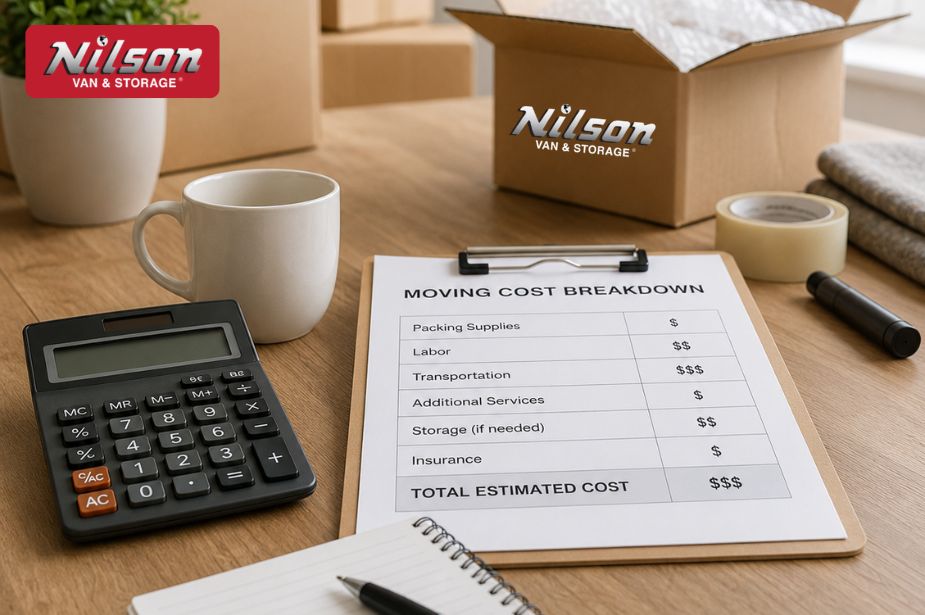
Average moving costs are easier to judge when you connect the number to labor, access, packing, and timing.
That is why two people in Columbia can pay very different amounts for what sounds like the same move. The bigger the gap in access, inventory, and labor time, the less useful a simple average becomes on its own.
What A Fair Estimate Should Include
A fair estimate should explain the labor model, travel assumptions, packing scope, and any add-on services being requested. If a quote is vague, it is hard to compare it to another mover with confidence.
At Nilson Van and Storage, we encourage customers to look past the headline number and ask what is actually included. That is the only way to compare the average cost to hire movers in a meaningful way.

Average Moving Costs in Columbia: The Main Price Drivers
Most moving bills are built from a small group of variables. Once you understand those variables, the pricing conversation becomes much easier and far less stressful. For Columbia customers, average moving costs should reflect the real size and complexity of the move.
This section breaks down the items that tend to move the price most so you can spot where your own move may land and where you may have room to control cost.
Move Size And Inventory
The amount of furniture and boxed items is one of the biggest cost drivers. More items take more time to load, protect, transport, and unload, which means more labor hours or a larger crew.
A lightly furnished one-bedroom apartment will usually cost less than a four-bedroom household with a garage, attic, and shed. Even within the same home size, a heavy inventory of book boxes, gym equipment, and oversized furniture can change the final number.
That is why average moving costs work best as a planning guide, not a fixed promise.
Distance And Route Complexity
For local moving, distance matters, but it is not the only factor. A short move with difficult parking, multiple stops, or long walking distances can take longer than a slightly farther move with easier access.
For intrastate and long-distance work, fuel, drive time, route planning, and timing all become more important. The Columbia area can also present different access conditions depending on whether the move is in a denser urban location or a more open residential area.
Packing And Materials
Packing help can be one of the most valuable add-ons, but it also adds cost. Professional packing reduces stress and can protect fragile or high-value items, yet it is a different service than basic transport.
Material costs also matter. Boxes, tape, padding, stretch wrap, and specialty protection for furniture or delicate items can all influence the final estimate. If you want more control over pricing, one of the easiest decisions is whether you pack everything, some of it, or none of it.
A clear view of average moving costs helps you compare estimates without losing important service details.
Access Conditions And Labor Time
Access issues often surprise customers because they are easy to overlook during early planning. Stairs, long hallways, elevator reservations, narrow entries, and limited truck parking can all add time to a move.
In practical terms, time is money in the moving world. If your move requires extra labor just to get items safely in and out, that labor will usually show up in the final cost.
Timing And Scheduling
Moving during peak demand periods can affect availability and pricing structure. End-of-month dates, weekends, and busy seasons tend to fill faster because many households are trying to move at the same time. When inventory or access changes, average moving costs should be reviewed again before move day.
If your schedule is flexible, that flexibility can help. A midweek or mid-month move is often easier to schedule and may give you more options when comparing estimates.
You May Also Like: Planning a long-distance move to Texas? Learn how to prepare for your relocation, choose experienced movers, manage your moving costs, and make your move easier from start to finish.
Tell us about your move and get a personalized quote based on your requirements. 
How Columbia Movers Usually Structure Estimates
Understanding estimate types is one of the best ways to avoid confusion. A quote is not just a price; it is a statement about how the mover expects the job to unfold.
If you know how the estimate is built, you can ask better questions and spot the differences between an accurate plan and a guess. Using average moving costs this way keeps the budget grounded in the work the crew will actually perform.
Hourly Versus Job-Based Pricing
Some local moves are priced by the hour, usually based on crew size and the time required to complete the work. That structure works well when the move is close by and the inventory is straightforward.
Other moves may be priced more broadly based on the scope of the job. That can be useful when the move has multiple layers, such as packing, loading, storage timing, or a longer route.
What A Non-Binding Estimate Means In South Carolina
For local and intrastate moves in South Carolina, estimates are non-binding. That means the final charge can change if the actual move takes more time or work than originally expected. Nilson Van and Storage explains average moving costs in plain language so customers know what shapes the estimate.
This is exactly why walk-throughs, detailed inventories, and honest conversations about access matter so much. A non-binding estimate should still be useful, but it is only as accurate as the information provided before move day.
Why Detailed Inventories Protect Your Budget
The more complete your inventory, the better your estimate tends to be. Movers can only plan around the information they receive, which means missing items or unmentioned access issues can throw off the final total.
A detailed inventory also helps you compare companies more fairly. If two quotes are based on different assumptions, the lower one may not actually be cheaper once the move is underway. The most useful average moving costs are tied to accurate details, not rough guesses.
You May Also Like: Considering a move to Switzerland? Discover helpful tips on international relocation, shipping and customs, important documents, and settling into your new home smoothly.
What Is The Average Cost Of Moving Company Services For Different Move Types?
There is no single number that fits every move, but there are common patterns you can use to set expectations. The average cost of moving company services usually rises as labor, time, and complexity increase.
Instead of chasing one universal price, it helps to look at the type of move you have and the support you actually need. That gives you a much clearer budgeting picture.
Local Residential Moves
Local residential moves often fall into a more straightforward pricing structure, especially when the inventory is moderate and access is easy. The final cost depends heavily on the number of movers needed and how long loading and unloading take.
Average moving costs are easier to judge when you connect the number to labor, access, packing, and timing.
A small apartment move with limited furniture may be relatively simple. A larger home with fragile items, stairs, and a full garage can take much more labor even if it stays within the Columbia area.
Apartment And Condo Moves
Apartment and condo moves often look smaller on paper but can be more time-consuming than expected. Elevators, reserved time windows, parking restrictions, and hallway distances can all slow the job down.
This is one of the reasons Columbia movers will ask detailed questions about building access. It is not just administrative clutter; it affects how the crew is scheduled and how the estimate is built. For Columbia customers, average moving costs should reflect the real size and complexity of the move.
House Moves With More Furniture And Fragile Items
Household moves with large furniture, breakables, and specialty items usually require more preparation. Items may need extra wrapping, disassembly, and careful loading to protect them during transport.
If you have family heirlooms, glass pieces, or heavy furniture, the value is not just in the move itself. It is in the reduced risk of damage, which is why packing quality and crew experience matter so much.
You May Also Like: Planning a restaurant installation project? Learn how professional FF&E Restaurant services can help with transporting, placing, and setting up furniture, fixtures, and equipment efficiently.
How To Lower Average Moving Costs Without Creating New Problems
Cutting moving costs is smart, but only if you do it in a way that does not create damage, delays, or extra labor later. The best savings usually come from reducing avoidable work rather than removing important protection.
That is why average moving costs work best as a planning guide, not a fixed promise.
This is where a little planning pays off. A few decisions made before move day can have a bigger effect on the final bill than most people expect.
Declutter Before You Request Quotes
The fewer items you move, the less labor and truck space you need. Decluttering before estimates are taken helps you avoid paying to transport items you no longer want or use. A clear view of average moving costs helps you compare estimates without losing important service details.
This step is especially useful for garages, storage rooms, closets, and old furniture that no longer belongs in the next home. It also makes your inventory more accurate, which improves your estimate.
- Sort items into keep, donate, sell, and discard groups.
- Remove anything that is broken, unused, or not worth moving.
- Separate bulky items early so they are counted correctly.
Pack Strategically
Packing yourself can save money, but only if the boxes are secure and organized. Poor packing often creates delays, and delays can erase the savings you were trying to create.
Focus on packing non-fragile items first and leave delicate, high-value, or awkwardly shaped items for more careful handling if needed. Good labeling also helps the crew work faster on move day. When inventory or access changes, average moving costs should be reviewed again before move day.
Be Honest About Access And Special Items
It is tempting to downplay stairs, tight parking, or oversized furniture when asking for a quote. That usually backfires because the move ends up taking longer than planned.
The better approach is to give a complete picture upfront. Clear information helps the mover build a stronger estimate and helps you avoid surprise labor increases on moving day.
According to Market Research Future, the global moving services market is projected to grow from USD 20.71 billion in 2024 to approximately USD 30.01 billion by 2035, reflecting a compound annual growth rate (CAGR) of 3.43% over the 2025–2035 forecast period.
When It Makes Sense To Hire Professional Columbia Movers
Not every move needs full-service help, but there are plenty of situations where hiring professionals saves time, reduces risk, and makes the day much easier to manage. The right choice depends on your inventory, schedule, and tolerance for stress.
Using average moving costs this way keeps the budget grounded in the work the crew will actually perform.
If you are trying to decide whether professional help is worth it, focus on the parts of the move that create the most strain or the highest risk.
Situations Where Professional Help Usually Pays Off
Professional movers are often worth considering when the move includes heavy furniture, multiple floors, a tight timeline, or items that require careful handling. The same is true if you are trying to coordinate a move around work, school, or closing dates.
Nilson Van and Storage explains average moving costs in plain language so customers know what shapes the estimate.
They can also be a strong fit when you need packing support, storage timing, or a more structured plan for a larger household move. In those cases, the time saved can be just as valuable as the labor itself.
Why A Low Quote Is Not Always The Best Choice
A low quote can look appealing, but it may not reflect the full scope of the work. If important details are left out, the final price can climb once the crew is on site. The most useful average moving costs are tied to accurate details, not rough guesses.
What matters more is whether the estimate is realistic, the company is transparent, and the service matches the actual demands of your move. A fair quote with clear expectations is usually safer than a bargain number that is missing key details.
How Nilson Van and Storage Fits Into The Decision
At Nilson Van and Storage, we work with customers who need local moving, intrastate moving, long-distance moving, residential moving, commercial moving, packing, storage, military moving, and senior moving support where verified by our current service offerings. That range matters because not every move needs the same type of planning.
If your Columbia move includes complicated access, a larger household inventory, or a mix of packing and transport needs, a professional mover can help you create a more predictable plan from the start.
Average moving costs are easier to judge when you connect the number to labor, access, packing, and timing.
Have questions about your upcoming move? Our team is ready to help.
How To Compare Quotes And Choose The Right Moving Partner
Once you have a few estimates, the goal is not simply to pick the cheapest one. The real goal is to choose the company that gives you the clearest, most believable plan for your move.
That decision gets easier when you compare the right details side by side instead of focusing on the bottom line alone. For Columbia customers, average moving costs should reflect the real size and complexity of the move.
Compare Scope, Not Just Price
Two quotes can look similar while covering very different services. One may include packing materials or heavier labor assumptions, while another may leave those items out.
Ask whether the quote includes truck time, labor time, fuel assumptions, stairs, access issues, and any specialty handling. When you compare scope instead of just price, the differences become much clearer. That is why average moving costs work best as a planning guide, not a fixed promise.
Watch For Gaps In Communication
The way a company handles your questions tells you a lot about how the move will go. If the estimate process feels rushed or unclear, that same lack of clarity may show up on move day.
Good movers explain their assumptions, ask follow-up questions, and help you understand how the estimate may change if the scope changes. That kind of communication is worth paying attention to. A clear view of average moving costs helps you compare estimates without losing important service details.
Use A Simple Decision Checklist
A practical comparison usually comes down to three things: transparency, fit, and confidence. If a company is transparent about pricing, is a good match for your move size, and answers questions clearly, that is a strong sign you are on the right track.
For many Columbia households, the best value comes from a mover who understands the local area, asks the right questions early, and gives you a realistic plan instead of a fast guess. When inventory or access changes, average moving costs should be reviewed again before move day.
Wrapping Up
Average moving costs in Columbia are easier to understand once you look beyond the headline number and focus on the details that shape the final bill. Inventory size, access, packing needs, distance, and timing all matter, and the best estimate is the one built from accurate information.
If you take one thing from this guide, let it be this: the cheapest quote is not always the best move. A clear estimate, honest scope, and the right level of support will usually save you more stress than chasing the lowest number alone.
When you are ready to plan your next move, Nilson Van and Storage can help you evaluate the scope and choose the service level that fits your situation.
Make us one of your preferred sources on Google!


FAQs About Average Moving Costs in Columbia
Our Recent Articles
Stay informed and inspired with the latest tips, insights, and updates from the Nilson Van and Storage blog. From expert packing advice and moving checklists to stories about our commitment to the community, our articles are here to make your relocation journey smoother and stress-free. Explore our recent posts to discover how we’re redefining the moving experience for Columbia, Myrtle Beach, Charleston, Sumter, Savannah, and beyond.

How Much Does It Cost to Move a 2 Bedroom House to Sweden?

Greece vs Italy: Moving Costs, Process, Tips & Requirements