
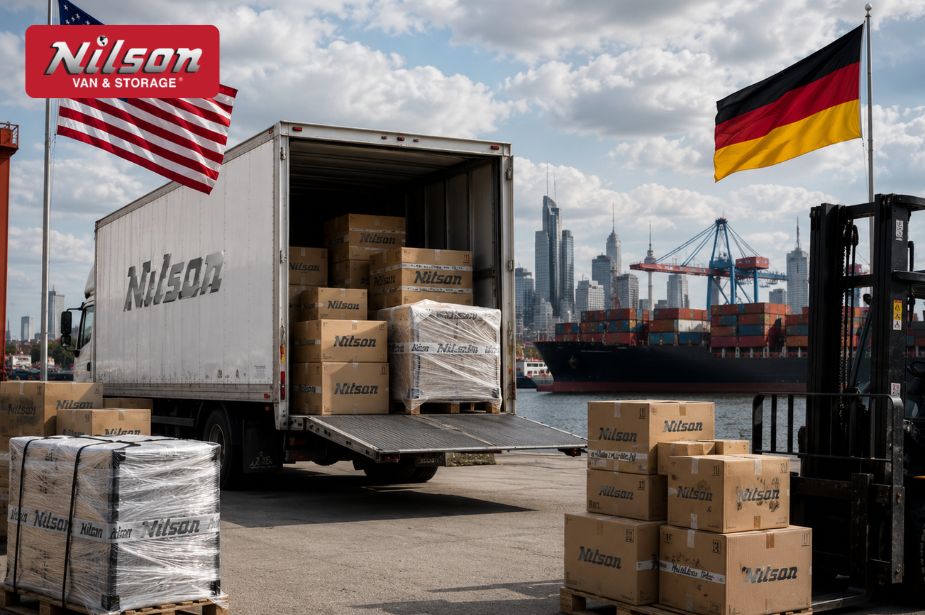
American Moving To Germany: Cost and Planning Guide
Planning an international move like an American moving to Germany raises many complex questions. From understanding customs rules to coordinating logistics, each step requires detailed preparation.
Nilson Van and Storage draws on years of experience helping clients from Myrtle Beach, Charleston, Columbia, and the Southeast manage their relocations smoothly. We’ll guide you through important considerations so you can plan confidently and avoid common pitfalls.
Understanding the Cost Factors of American Moving to Germany
When planning an international relocation, knowing the costs involved is essential to avoid surprises. For an American moving to Germany, expenses extend far beyond just packing and shipping your belongings. Upfront clarity equips you to budget effectively and make informed decisions about your move.
Major Cost Components
The largest share of expenses typically comes from international shipping fees. For anyone planning an American moving to Germany, choosing between ocean freight, air freight, or a combination will depend on your timeline and budget. Ocean freight is generally more economical for large shipments but takes longer, while air freight offers speed at a higher price.
Customs duties and taxes are another crucial consideration. Germany enforces strict regulations on imports, including household goods. Your international relocation movers, like Nilson Van and Storage, help navigate these rules and prepare required customs documentation to minimize delays and extra charges.
Quality packing and crating tailored for overseas transit protect your items during long journeys during an American moving to Germany. Proper materials and techniques reduce damage risk, and Nilson Van and Storage offers experienced packing crews who understand international shipping standards.
While moving companies provide valuation coverage to protect against loss or damage, it’s important to recognize that this is not insurance but a liability limitation. Nilson Van and Storage clearly explains valuation terms so you can consider additional coverage if desired.
Additional fees can arise from pickup and delivery locations. Moving from a downtown Charleston residence or a rural South Carolina area may involve different access logistics, leading to varied labor or vehicle fees. Similarly, delivery locations in Germany, especially in cities with narrow streets or restricted parking, can affect overall costs.
How Location Impacts Moving Costs
Where you begin your move in the US plays a bigger role than many expect when planning an American moving to Germany. Originating your shipment from metropolitan areas like Savannah, Columbia, or Myrtle Beach can be more cost-effective due to better truck access and port proximity. Conversely, moving from less accessible areas tends to increase charges for specialized equipment or labor.
On the receiving end in Germany, urban versus rural deliveries impact cost and complexity. Large cities such as Berlin or Munich usually have more stringent regulations, parking restrictions, and permit requirements. Relocation planners and international movers with local knowledge help coordinate these factors to streamline your move.

Hidden or Unexpected Expenses
Some expenses might not be apparent at first glance during an American moving to Germany. For example, storage costs during transition periods can add up if there’s a gap between shipment arrival and your availability to take delivery. Nilson Van and Storage offers storage solutions but only under specific conditions and at agreed rates, so it’s essential to clarify timing early.
Departure taxes or documentation fees may apply depending on your origin state’s regulations. Additionally, special handling charges are common for fragile antiques, musical instruments, or valuable artwork, necessitating custom crating or extra insurance.
Real-World Scenario: Cost Estimation for an American Moving to Germany from Columbia, SC
Consider a typical three-bedroom household relocating from Columbia as part of an American moving to Germany. Shipping approximately 10,000 pounds via ocean freight may cost between $4,000 and $8,000, including packing and crating. Customs duties vary but are generally minimal for used personal effects when properly declared.
Adding local pickup labor with Nilson Van and Storage, plus delivery coordination in a major German city, could add $500 to $1,500. Factoring in valuation coverage and potential storage during transition, a move of this scale typically ranges from $6,000 to $12,000 total.
To optimize costs during an American moving to Germany, it’s wise to declutter belongings, consolidate shipments, and schedule moving dates flexible with ocean transit schedules. Advanced communication with your international relocation movers ensures proper paperwork and precise coordination at both ends, reducing delays and extra fees.
Nilson Van and Storage’s regional expertise, especially in South Carolina and Georgia metro areas, combined with international shipping knowledge, makes us a reliable partner for Americans moving to Germany. Our transparent pricing and thoughtful planning support help you manage your relocation budget while maintaining peace of mind about your valuable possessions.
You May Also Like: Need trusted college moving services in Sumter? Learn how professional student movers can simplify dorm, apartment, and campus relocations with reliable packing, transportation, and storage solutions.
Essential Planning Steps for a Successful Relocation to Germany from the US
Proper planning is the foundation of a smooth move, especially when relocating internationally. For an American citizen moving to Germany, anticipating logistical hurdles and legal requirements ahead of time can prevent costly delays and reduce stress. Let’s explore the key steps you should take to ensure success.
Timing Your Move
Selecting the right time to move can significantly impact your experience during an American moving to Germany. Transit durations for ocean freight shipments usually range from four to six weeks, not counting customs clearance and inland delivery. Scheduling your move during spring or fall often avoids peak holiday seasons, which can cause shipping delays and higher prices.
Weather also plays a role. Harsh winter conditions in both the US and Germany can complicate loading, unloading, and transport, especially in regions like South Carolina or northern Germany. Keeping your moving window flexible and avoiding major holidays in both countries allows your international relocation movers, such as Nilson Van and Storage, to optimize scheduling and resources.
Legal and Documentation Requirements
Understanding paperwork requirements before your move is critical for an American moving to Germany. Americans relocating to Germany will typically apply for a residence permit or visa based on their purpose, whether work, study, or family reunion. This process can be complex, involving both German consulate and immigration office regulations.
Customs declaration for household goods is another essential step. Documentation must clearly list items, values, and origin to satisfy German customs agents and to benefit from exemptions where applicable. Pets require their own entry permits and health certificates, so early preparation is needed if you plan to bring your furry family members.
Choosing the Right International Relocation Movers
A reputable moving company experienced in transatlantic moves can ease much of the burden during an American moving to Germany. When working with Nilson Van and Storage, you can expect comprehensive services that include not only packing and loading but also shipment tracking and guidance on customs paperwork.
Our team offers optional unpacking at delivery — though limited to items we packed to ensure proper handling. Coordinating with your movers ahead of time regarding building access, elevator reservations, and parking for moving trucks is particularly important for urban locations like Charleston or busy German cities.
Preparing Your Home and Belongings
Early in the process, inventory your possessions to decide what to take, sell, or donate before an American moving to Germany. Downsizing reduces shipment volume, which lowers costs and simplifies customs clearance. Carefully appraise valuable items and keep receipts to assist with declarations.
Packing for international shipping requires sturdy materials and secure methods to protect against long transit times and multiple handling stages. Nilson Van and Storage uses professional-grade crates and cargo containment tailored for overseas moves, ensuring delicate items receive special attention.
Scheduling and Coordination
Coordinating logistics at both ends of your move is often overlooked yet crucial during an American moving to Germany. Reserve elevators and obtain any necessary parking permits for moving vehicles well in advance, whether you are moving out of a Charleston high-rise or moving into a historic building in Berlin’s city center.
German streets can be narrow and have strict delivery time windows during an American moving to Germany, so clear communication with your moving team helps prevent unexpected delays. Nilson Van and Storage provides proactive updates and works closely with clients to resolve access issues or last-minute changes.
Preparing your US home, organizing paperwork, and understanding local regulations around your departure point—as well as planning arrival logistics in Germany—combine to create a relocation experience that’s as seamless as possible for American citizens moving to Germany.
You May Also Like: Moving to New York? Explore essential tips for planning your relocation, choosing reliable movers, packing efficiently, and settling into your new home with confidence.
How Nilson Van and Storage Supports Americans Making International Moves to Germany
Moving internationally, especially from the US to Germany, demands a deep understanding of complex logistics, customs, and local nuances. At Nilson Van and Storage, our combined experience in handling international relocations and our local expertise in Southeastern U.S. markets make us a trusted partner for American citizens moving to Germany. We focus on delivering tailored solutions that anticipate challenges and simplify your journey.
Tailored Services for International Customers
Every international move is unique, and we customize our services accordingly for clients planning an American moving to Germany. Nilson Van and Storage provides expert custom packing and secure crating designed specifically for overseas transit. This specialized packing protects your belongings from the rigors of ocean or air freight, keeping valuables safe and facilitating smooth customs inspections.
Transparency and communication are equally important during an American moving to Germany. We offer reliable shipment tracking and maintain regular contact throughout the move. Knowing where your goods are at every step eases uncertainty and helps with your planning on both ends.
Instead of offering traditional insurance, we provide valuation coverage for your shipment—a standard in the moving industry—which sets clear liability limits. Our relocation specialists explain these terms in detail so you understand your protection and can arrange additional coverage if required.
Expertise in Southeastern US Origins and Export Logistics
Originating moves from cities like Myrtle Beach, Charleston, Columbia, Sumter, and Savannah for an American moving to Germany involves particular operational challenges. Narrow streets, parking restrictions, or historic district access require detailed planning. Our team has firsthand experience navigating these local conditions to arrange efficient pickup and loading, minimizing delays and unexpected fees.
Moreover, we handle all export logistics meticulously. Preparing customs documents correctly for your household goods shipment reduces hold-ups and facilitates clearance upon arrival in Germany. This expertise contributes to a smoother relocation experience and meeting your planned delivery timelines.
Seamless Delivery Coordination at Your German Destination
Arriving in Germany introduces new logistical considerations during an American moving to Germany. From tight urban streets to building access rules, local delivery can be complex. Nilson Van and Storage coordinates with trusted local partners to ensure your shipment is unloaded promptly and carefully.
We also assist with planning delivery appointments that fit your schedule and accommodate property access requirements, such as elevator reservations or restricted parking zones common in German cities. Proactive communication helps avoid surprise complications and keeps your move on track.
Handling Common Challenges Experienced by American Citizens Moving to Germany
International moves rarely go 100% as planned, but experience helps manage expectations thoughtfully during an American moving to Germany. We clearly communicate typical timing windows and potential delays due to customs or scheduling constraints. This prevents surprises and lets you plan contingencies effectively.
Customs inspections can be an intimidating step for many clients. Nilson Van and Storage helps prepare you with detailed documentation checklists and advice to streamline this process, reducing the likelihood of inspections or hold-ups.
Payment policies also need clarity, especially during an American moving to Germany. For example, if payment is by credit card, we require a card hold and may authorize it before delivery to confirm payment validity. This transparent approach avoids last-minute payment issues during delivery.
By combining seasoned international moving experience with dedicated local knowledge spanning South Carolina and Georgia’s metro areas, Nilson Van and Storage delivers comprehensive support tailored for Americans moving to Germany. Our attentive planning, clear communication, and consistent service quality reduce stress and help turn a complex endeavor into a manageable transition.
According to Market Research Future, the global moving services market is expected to grow from USD 20.71 billion in 2024 to approximately USD 30.01 billion by 2035, registering a compound annual growth rate (CAGR) of 3.43% during the forecast period from 2025 to 2035.
What Are the Most Common Concerns for Americans Moving to Germany?
Relocating internationally raises many valid concerns. From transit timelines to customs hurdles and paperwork complexity, American citizens moving to Germany face a unique set of challenges. Drawing from extensive experience with such moves, Nilson Van and Storage addresses these common questions to help you navigate your relocation with confidence.
How Long Does an International Move to Germany Usually Take?
The total transit time varies based on shipping method and logistics for an American moving to Germany. Ocean freight—the most common choice for cost-effectiveness—typically takes four to six weeks for container shipping from Southeastern U.S. ports to major German ports like Hamburg or Bremerhaven. Air freight may take a week or less but is significantly more expensive.
Customs clearance and inland delivery can add days or even weeks depending on paperwork accuracy and local restrictions. Scheduling flexibility is critical since unforeseen delays can occur during busy seasons or due to regulatory inspections. Planning with an experienced international relocation mover like Nilson Van and Storage, which understands these variables, helps set realistic expectations.
What Items Are Restricted or Prohibited for Import?
German customs restrict or prohibit a variety of items to protect public health, safety, and regulations during an American moving to Germany. Commonly restricted goods include certain foods, plants, seeds, and soil, which may require phytosanitary certificates or are entirely banned. Electronics must meet EU safety and compatibility standards, affecting voltage and plug types.
Nilson Van and Storage guides clients to identify restricted goods early, advising on paperwork or alternative shipping methods if necessary. Proper item declarations and compliance significantly reduce customs complications and protect your belongings from confiscation.
Can I Expect Delays at Customs? How Do I Prepare?
Delays at customs are a normal possibility during an American moving to Germany but often avoidable with thorough preparation. Causes include incomplete or inaccurate documentation, unclear item descriptions, or missing permits.
To minimize hold-ups, provide a detailed inventory with values and origins, complete customs forms carefully, and respond promptly to any customs queries. Working with Nilson Van and Storage means having access to documentation expertise that reduces errors and expedites processing.
What Are the Language and Documentation Barriers?
Language can complicate completing visa applications, customs declarations, and related paperwork for an American moving to Germany. While English is often understood, official documents and processes are primarily in German.
Many clients benefit from hiring immigration consultants or using relocation specialists familiar with German bureaucracy. Nilson Van and Storage supports customers by supplying checklist templates, example forms, and referring trusted service providers that can assist with visa and customs requirements.
You May Also Like: Planning to move from one state to another? Discover expert advice on long-distance moving, packing strategies, budgeting, and choosing professional movers for a smooth relocation experience.
How Do I Calculate and Manage Moving Insurance or Valuation Coverage?
Understanding the difference between insurance and valuation coverage is important for an American moving to Germany. Valuation coverage, offered by Nilson Van and Storage, limits carrier liability to a set rate per pound or item but is not full insurance. It’s often sufficient for most household moves but may not cover total replacement value.
If you require broader protection during an American moving to Germany, purchasing third-party transit insurance is advisable. Declaring your shipment’s value accurately during booking ensures proper coverage levels. In case of loss or damage, Nilson Van and Storage assists with claims by guiding documentation and procedures.
By addressing these common concerns with clear information and practical guidance, American citizens moving to Germany can approach their international relocation equipped for success. Partnering with knowledgeable movers like Nilson Van and Storage ensures expert support throughout your journey.
Wrapping Up
Relocating from the US to Germany is a major undertaking that becomes much more manageable with the right knowledge and expert assistance during an American moving to Germany. By understanding the key cost factors and investing time in thorough planning, you can avoid many common obstacles that complicate international moves.
Partnering with experienced international relocation movers like Nilson Van and Storage ensures your transition proceeds as smoothly as possible. Operating from South Carolina and Georgia and serving clients in Columbia, Charleston, Myrtle Beach, Sumter, and Savannah, Nilson Van and Storage has guided countless American citizens through successful moves overseas, including those planning an American moving to Germany.
Our focus on transparent pricing, detailed coordination, and attentive customer service means you can trust us to handle your relocation with care and professionalism from start to finish.
Whether you’re just beginning to explore the idea of moving abroad or are in the final stages of delivery in Germany, professional guidance and thorough preparation are your best tools. Contact Nilson Van and Storage to discuss your specific needs and benefit from our decades of experience tailoring international moves for Americans relocating to Germany.


FAQs - American Moving to Germany
Our Recent Articles
Stay informed and inspired with the latest tips, insights, and updates from the Nilson Van and Storage blog. From expert packing advice and moving checklists to stories about our commitment to the community, our articles are here to make your relocation journey smoother and stress-free. Explore our recent posts to discover how we’re redefining the moving experience for Columbia, Myrtle Beach, Charleston, Sumter, Savannah, and beyond.
How Much Does It Cost to Move a 2 Bedroom House to Sweden?

Greece vs Italy: Moving Costs, Process, Tips & Requirements