
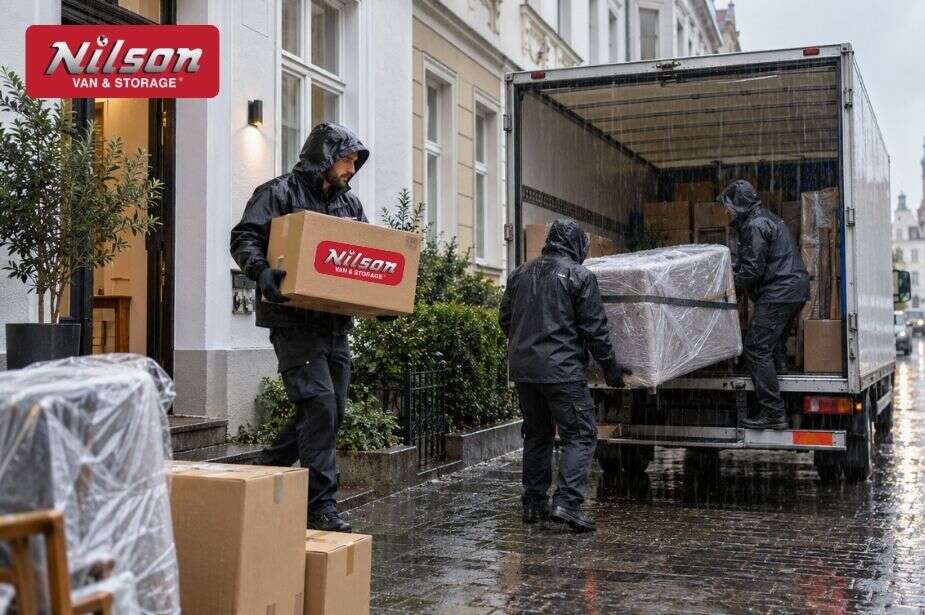
Moving in the Rain in Germany: Pros, Cons & Tips
moving in the rain can turn an already complicated relocation to Germany from the USA into a slower, more detailed process, especially when you are coordinating flights, building access, elevators, customs paperwork, and belongings across two countries. For moving in the rain, this detail helps keep the plan practical and clear.
Rain does not automatically mean you should postpone moving day. It does mean your plan needs more flexibility. This guide explains the practical advantages and drawbacks of moving on a rainy day, how to protect furniture and cartons, and what to confirm before your shipment is loaded or delivered.
moving in the rain in Germany: What Changes?
Rain affects more than the condition of the pavement. It changes how movers approach entrances, how long loading may take, where cartons can be staged, and how carefully wet items must be separated from packed belongings.
These details matter even more when relocating to Germany from the USA because an international move may involve multiple handoffs and a delivery appointment that cannot be changed casually. moving in the rain planning works better when this point is confirmed early.
Rain Is a Planning Issue, Not Automatically a Cancellation Reason
A light shower is very different from a prolonged downpour, strong wind, standing water, or weather that makes access difficult. The right decision depends on the forecast, the condition of the property, the distance between the truck and the entrance, and whether the move is being loaded, delivered, or transferred into storage.
For many moves, the crew can continue by adjusting the sequence. They may load items in smaller groups, use additional floor protection, keep cartons under cover longer, or pause briefly when heavier rain passes. That approach usually takes more coordination than moving in dry weather, so realistic expectations are important.
A stronger moving in the rain starts with clear information rather than guesses.
For a move from the United States to Germany, also consider the difference between your origin and destination weather. Your U. S. residence may have dry conditions while the German delivery location is receiving rain, or the weather may change during a long transit period.
A plan based on only one location’s forecast can leave an important gap.
The Property Can Matter More Than the Weather
A ground-level home with a covered entrance may be easier to manage than a dry-day move in a building with a narrow stairwell, a long walk from the truck, or a small elevator. Before moving day, identify: That is why moving in the rain should be organized around access, timing, and services.
- The closest practical truck access point and the walking distance to the entrance.
- Whether the building requires advance elevator reservations, loading-area permits, or move-in time windows.
- Which floors, hallways, and door thresholds need protection from water and tracked-in dirt.
Building requirements vary by property and municipality. If you are moving into an apartment, ask the landlord, property manager, or building administrator for the current rules rather than relying on a previous tenant’s experience.
What Rain Means for Your Schedule
Rain commonly slows loading and unloading because belongings cannot be placed as quickly in an uncovered staging area. A crew may need to carry fewer items at once, wipe furniture between handling points, or wait before wrapping damp exterior items with materials that limit ventilation.
That does not mean every rainy move will take the same amount of extra time. The size of the shipment, access conditions, packing level, elevator availability, and intensity of the rain all make a difference.
Keep your schedule flexible enough to absorb delays, particularly if you have a flight, temporary lodging, key handoff, or utility appointment tied to the delivery date. With moving in the rain, small details can change the schedule and final scope.
moving in the rain from Columbia, Charleston, Myrtle Beach, Sumter, or another U.S. origin requires the same basic discipline: verify access, communicate the weather concern early, and make sure everyone understands which parts of the schedule are fixed and which may need adjustment.

The Pros and Cons of Moving on a Rainy Day
The decision to proceed should be based on trade-offs rather than frustration with the forecast. Rain creates real handling challenges, but postponing can also create costs and scheduling problems. Weigh both sides before changing a confirmed move date. Nilson Van and Storage can use this moving in the rain information to coordinate the right support.
Potential Advantages of moving in the rain
One advantage is that a rainy day may be less congested than a popular dry weekend, depending on the season and location. If your building, elevator, and moving crew are available, continuing may help you avoid a chain reaction involving temporary housing, lease dates, travel arrangements, or missed work.
A planned rainy-day move can also be easier than an unexpected postponement. You have time to gather floor coverings, towels, plastic bins, replacement carton tape, and extra wrapping materials. When the weather is known in advance, the crew and customer can agree on a handling sequence instead of improvising after the truck arrives.
Good moving in the rain preparation also gives customers more control over the next step.
Another benefit is decision clarity. If you have already confirmed the building rules, access route, and weather response, you can move forward without repeatedly reconsidering the same question. That reduces uncertainty during an already demanding relocation.
Potential Drawbacks and Delays
The main drawback is moisture transfer. Rain can reach exterior carton surfaces, furniture padding, rugs, entry floors, and the bottom of boxes placed on wet pavement. Cardboard may weaken when exposed to water, particularly at seams and corners. A damp item sealed too quickly can also retain moisture during storage or transit.
The right moving in the rain plan reduces confusion before the move is underway.
Other concerns include:
- Slower carrying speeds and longer distances between the vehicle and entrance.
- More difficult handling of smooth, wet, or bulky surfaces.
- Greater risk of floor, wall, and threshold damage if protection is insufficient.
- Delays caused by elevator restrictions, building time windows, or a temporary pause in heavy rain.
These issues do not make a rainy move impossible, but they make preparation more valuable. The key question is not whether one raindrop reaches the truck. It is whether the entire process has enough control points to keep moisture from spreading through the shipment or property.
When Postponing May Be More Practical
Postponement may deserve consideration when the weather forecast involves prolonged heavy rain, strong wind, flooding near access points, or conditions that prevent a reasonable path between the truck and the entrance.
It may also be practical when the property manager will not permit a move during wet conditions or when the only available route requires carrying belongings through an exposed area for an extended distance. Every moving in the rain decision should connect back to the actual inventory and access conditions.
Do not make a last-minute decision based only on a weather app. Ask the moving coordinator how the forecast affects the specific origin or destination, what rescheduling options are available, and whether your agreement contains any relevant terms.
Nilson Van and Storage states that it does not charge cancellation fees, but schedule changes should still be discussed as early as possible because building appointments, crew planning, travel, and delivery arrangements may be affected.
For local and intrastate moves in South Carolina, estimates are non-binding. That means the final charge can depend on the actual work and circumstances of the move, including changes in access or handling time. Ask for an explanation of how your particular move is evaluated before making assumptions based on a preliminary estimate.
Clear moving in the rain communication helps prevent last-minute surprises.
You May Also Like: Comparing Greece and Italy for your next move? Explore the differences in lifestyle, relocation planning, moving requirements, and what to consider before choosing your new home.
Tell us about your move and get a personalized quote based on your requirements. 
How to Prepare for Rain on Moving Day
Preparation works best when it is divided into three areas: access, materials, and communication. Customers often focus on covering furniture but overlook the route that furniture must travel. A dry loading entrance does little good if the crew must cross an uncovered driveway or carry items through a puddled walkway.
Confirm Access With the Property
Contact the building manager or landlord several days before the move, then confirm again close to the appointment if the weather is worsening. Ask whether the elevator reservation remains valid, whether a loading zone is available, and whether the building has rules about floor coverings, wet furniture, or moving during rain.
For a German apartment, clarify how keys will be transferred, where the vehicle may stop, and whether the entrance is reached through a courtyard, underground garage, side street, or shared passage. Access arrangements vary widely between properties.
A street that looks close on a map may not be the practical loading point for a large moving vehicle. Early moving in the rain coordination can make the moving process easier to manage.
If you are moving into a city center, include the property manager in the conversation early. Narrow streets, limited stopping space, building schedules, and pedestrian areas can make the final portion of delivery more complicated than the distance between the truck and the address suggests.
Create a Dry Route Through the Property
Use absorbent runners or floor protection from the entrance to the main staging area. Protect elevator floors, door thresholds, hardwood, finished concrete, and carpeted areas where water and grit may be tracked in. Keep towels available at both ends of the route rather than placing all supplies beside the front door.
Professional moving in the rain support is most useful when the details are documented in advance.
The route should be wide enough for the largest items. A narrow protected path may work for cartons but force furniture onto unprotected flooring. Measure doorways and turns in advance, especially if rain will make it harder to pause and reorganize inside the building.
Keep a separate place for wet materials. Used runners, damp cardboard, and wet outer wrapping should not be stacked beside dry cartons. This simple separation prevents moisture from transferring back onto items that were not exposed to the weather. For moving in the rain, this detail helps keep the plan practical and clear.
Protect Items According to Their Materials
Not every belonging needs the same approach. Wood furniture may need exterior protection while still requiring careful handling before it is sealed for transit. Upholstered pieces should be covered appropriately and checked for dampness before being placed in a confined area. Electronics, documents, photographs, and other moisture-sensitive belongings deserve extra attention.
Avoid placing important papers, passports, medication, chargers, or travel documents in the moving shipment. Keep them with you in a clearly identified personal bag. This is especially important for an international relocation, where you may need those items during travel, customs processing, temporary lodging, or the first days in Germany.
moving in the rain planning works better when this point is confirmed early.
For cartons you pack yourself, use strong boxes in good condition, close the bottoms securely, and avoid overfilling them. Label boxes on more than one side so the information remains visible if one face becomes wet or is placed against a wall.
Use plastic bins selectively for items that benefit from additional moisture resistance, but remember that bins can be heavy and may not stack or carry like standard cartons.
Decide What You Will Carry Personally
A small personal shipment can make the first night much easier. Pack clothing, toiletries, towels, basic kitchen items, phone and laptop chargers, important documents, and a change of clothes in luggage you control. Include an extra pair of shoes if rain is likely at either end of the trip.
A stronger moving in the rain starts with clear information rather than guesses.
This is not a substitute for professional packing or shipment planning. It is a practical buffer against delays. If the delivery takes longer than expected, you will not need to open multiple cartons looking for basic necessities.
Use a Weather-Specific Moving Checklist
Before the crew arrives, make sure you have confirmed the forecast at both ends, building access, elevator timing, a protected route, personal essentials, and a place to separate damp materials. A short written checklist helps when several family members, landlords, coordinators, and property managers are communicating at once.
That is why moving in the rain should be organized around access, timing, and services.
Nilson Van and Storage can discuss packing, storage timing, and move coordination as part of your planning conversation. The right service mix depends on the shipment, origin, destination, access, and the amount of preparation you want to handle yourself.
You May Also Like: Planning a move to Chicago? Learn what to consider before hiring movers, from comparing services and budgeting to preparing your belongings for moving day.
How Professional Movers Manage a Wet Loading or Delivery
Professional handling on a rainy day is less about one large covering and more about managing transitions. Belongings move through several environments: inside the residence, across an exposed route, into the vehicle, and sometimes into storage or another building. Each transition is an opportunity for moisture, dirt, or confusion to enter the process.
Loading: Keep the Shipment Organized
At origin, separate items by handling needs. Items that can tolerate brief exposure should not be used as a reason to leave moisture-sensitive belongings unprotected. Furniture, cartons, rugs, and outdoor items may need different wrapping, staging, or loading decisions. With moving in the rain, small details can change the schedule and final scope.
A well-organized load also helps at delivery. If essentials or bedroom furniture are buried behind less urgent items, you may spend longer opening the shipment in a wet or crowded environment. Tell the coordinator which items you need first, particularly if you are arriving in Germany with limited temporary accommodation.
Wrapping and Moisture Control
Exterior wrapping helps limit direct contact with rain, but wrapping is not a guarantee that an item remains completely dry. Materials can become damp at seams, bottoms, edges, and handling points. Items should be checked during the process rather than assumed to be unaffected because the outside covering looks intact.
Nilson Van and Storage can use this moving in the rain information to coordinate the right support.
Moisture management also means avoiding unnecessary sealing of visibly damp materials. If a rug, pad, or piece of furniture has absorbed water, ask how it should be handled before being placed in a confined shipment or storage area.
The appropriate approach can depend on the material, the amount of moisture, ventilation, and the length of time before unpacking.
Floors, Walls, and Building Protection
Rain affects the property as well as the shipment. Grit carried in on footwear or equipment can mark flooring, while wet corners can brush against painted walls. Protect the route before the first large item moves, not after the first puddle appears.
Good moving in the rain preparation also gives customers more control over the next step.
Photograph the condition of the entryway, hallways, elevator, and major rooms before loading or delivery. These photos are not a substitute for a careful walkthrough, but they provide a useful record of pre-existing marks and help everyone identify any issue promptly.
Storage Between Homes
Some international relocations require a gap between departure and delivery. Storage may be useful when a lease begins before the shipment arrives, when housing is not ready, or when travel dates and delivery timing do not align. Rain at the loading or receiving point makes inventory accuracy and moisture separation particularly important during that transition.
The right moving in the rain plan reduces confusion before the move is underway.
Ask which items are going into storage, how they will be identified, and what the expected release or delivery process involves. Do not assume that a storage arrangement automatically solves every weather concern. Discuss packing condition, labeling, access, and the timing between collection and delivery before finalizing the plan.
Valuation Coverage and Documentation
Moving quotes and service agreements should be reviewed for valuation coverage, which is different from using unclear coverage terminology. Ask what valuation option applies, what documentation is needed, and how claims or exceptions are handled under your agreement. Do not wait until a rainy-day concern becomes a loss question.
Every moving in the rain decision should connect back to the actual inventory and access conditions.
Nilson Van and Storage provides valuation coverage options, and the specific terms should be reviewed for your move. Keep photographs, inventories, receipts for high-value items, and written notes about pre-existing condition where appropriate. Clear documentation helps set expectations before loading begins.
A rainy-day move is easier to manage when the crew, customer, property manager, and coordinator are working from the same information. If you have a concern about a particular item, identify it before the item is wrapped or moved rather than assuming the concern will be noticed later.
Clear moving in the rain communication helps prevent last-minute surprises.
Have questions about your upcoming move? Our team is ready to help.
How to Decide Whether Your Germany Move Should Proceed
The best decision comes from combining weather information with operational facts. A forecast alone cannot tell you whether your move can proceed smoothly because the same rainfall may be manageable at one property and difficult at another.
Use a Four-Part Decision Check
Review the forecast, access, shipment, and schedule together. Ask these questions:
- Forecast: Is the rain light and intermittent, or prolonged and accompanied by conditions that could disrupt access?
- Access: Can the vehicle, crew, and belongings reach the entrance through a practical protected route?
- Shipment: Are there fragile, upholstered, wooden, electronic, or high-value items requiring special handling?
- Schedule: What happens if loading or delivery takes longer, and which appointments cannot move?
If access is straightforward, the shipment is prepared, and the schedule has flexibility, continuing may be reasonable. If the property has strict rules, the route is exposed, and the forecast is persistent, postponement may reduce complications.
The decision should be discussed with the moving company and property contact, not made by the customer alone from a general forecast.
Questions to Ask Before Confirming the Plan
Ask how the rainy conditions may affect loading or delivery, whether the crew needs any property-specific instructions, how damp materials will be handled, and whether your appointment has a fixed building window. Confirm who will communicate a schedule change if conditions deteriorate.
Early moving in the rain coordination can make the moving process easier to manage.
For a relocation to Germany from the USA, also ask about the broader handoff: where the shipment will be collected, how delivery access will be coordinated, what happens if the residence is not ready, and whether storage or temporary arrangements need to be considered.
International moves involve more dependencies than a same-city move, so a written communication plan is valuable.
Avoid Last-Minute Packing Decisions
Rain often tempts customers to rush packing, place items in unsuitable bags, or leave loose belongings near the entrance. That creates confusion precisely when the crew needs a clear path and accurate inventory. Professional moving in the rain support is most useful when the details are documented in advance.
Finish packing according to the agreed service plan, set aside personal essentials, and clearly identify items that are not moving. If you decide to add furniture, cartons, storage, or packing assistance, tell the coordinator before moving day. Changes may affect labor, materials, vehicle space, or documentation.
Choose the Right Level of Help
A self-managed move may work when you have a small shipment, flexible timing, easy access, and enough help to protect the route. Professional packing or moving assistance becomes more useful when you are managing a full household, coordinating an apartment building, traveling internationally, or handling a narrow delivery window.
For moving in the rain, this detail helps keep the plan practical and clear.
Nilson Van and Storage offers moving-related services including residential moving, packing, storage services, long-distance moving, and military moving services where those services fit the customer’s situation. Availability and scope should be confirmed for the specific Germany relocation rather than assumed from a general service description.
If the move involves military orders, employer timing, senior household needs, or a major change in residence, explain those circumstances early. They may affect what needs to be packed, stored, transported, or accessible first. moving in the rain planning works better when this point is confirmed early.
You May Also Like: Moving from Sumter to Dallas? Discover helpful tips for planning your long-distance move, organizing your belongings, managing costs, and settling into your new home.
Build a Backup Plan Without Assuming Failure
A backup plan can be simple: identify temporary lodging, keep essential belongings with you, confirm how keys will be handled, and know whom to call if the building access window changes. You do not need to expect a problem to benefit from having an answer ready.
For a rainy move, flexibility is a form of preparation. It allows the team to pause, adjust the carrying sequence, or protect the property without turning a small weather issue into a larger scheduling problem. A stronger moving in the rain starts with clear information rather than guesses.
According to Market Research Future, the global moving services market is expected to grow from USD 20.71 billion in 2024 to approximately USD 30.01 billion by 2035, representing a compound annual growth rate (CAGR) of 3.43% during the 2025–2035 forecast period.
Wrapping Up
moving in the rain in Germany is manageable when you plan for the route, the property, the shipment, and the schedule instead of focusing only on the forecast. Light rain may be workable with additional floor protection, thoughtful staging, suitable wrapping, and clear communication.
Persistent heavy rain, difficult access, building restrictions, and moisture-sensitive belongings may justify a closer review of the date.
For relocating to Germany from the USA, the most important step is to discuss the complete move rather than treating rainy weather as an isolated issue. Origin conditions, destination access, storage timing, packing choices, valuation coverage, building rules, and travel plans all influence the right approach.
That is why moving in the rain should be organized around access, timing, and services.
Nilson Van and Storage can help you evaluate the moving and storage services that fit your circumstances, including packing, residential moving, long-distance planning, and storage where applicable. Ask specific questions, verify the arrangements for both locations, and give yourself enough flexibility to make a practical decision.
With a clear plan, rain becomes a condition to manage rather than an unexpected disruption.
Make us one of your preferred sources on Google!


FAQs - Moving in the Rain in Germany
Our Recent Articles
Stay informed and inspired with the latest tips, insights, and updates from the Nilson Van and Storage blog. From expert packing advice and moving checklists to stories about our commitment to the community, our articles are here to make your relocation journey smoother and stress-free. Explore our recent posts to discover how we’re redefining the moving experience for Columbia, Myrtle Beach, Charleston, Sumter, Savannah, and beyond.
Healthcare Relocation: 7 Tips for a Smooth Relocation
How Much Does It Cost to Move a 2 Bedroom House to Sweden?